

Master authentic Japanese conversation to build genuine friendships in Vancouver and beyond
📋 Quick View
Reading Time: 15 minutes
Level: Beginner to Intermediate
What You’ll Learn:
- ✨ 30+ natural Japanese friendship phrases native speakers actually use
- 💬 How to text in Japanese (LINE etiquette, emoji usage, and casual messaging)
- 🎌 Cultural differences in expressing friendship between English and Japanese
- 🚫 Common mistakes that make you sound unnatural or overly formal
- 💪 How to encourage, decline politely, and navigate tricky social situations
- 🗣️ Real-life dialogue examples for everyday friendship scenarios
Perfect for:
- Japanese learners in Vancouver building local connections 🍁
- Students preparing for study abroad or language exchange 📚
- Professionals working with Japanese colleagues 💼
- Anyone wanting to deepen friendships with Japanese speakers 🤝
Location-Specific Value:
This guide includes Vancouver-specific tips for practicing with the local Japanese community, plus strategies that work anywhere in Canada, the US, or worldwide through online connections.
- 📋 Quick View
- 🌸 What "Friendship" Means in Japanese Culture
- 💬 Casual Friendship Phrases (友達に使う自然な日本語)
- 📱 LINE & Text Messaging: How Japanese Friends Actually Communicate
- 💪 Encouraging & Supportive Phrases (励まし・相談)
- 🙅 Soft Declining Phrases (断り方:日本人の曖昧な言い方)
- ❌ Common Mistakes English Speakers Make
- 🗣️ Short Dialogues in Real-Life Situations
- 📚 Summary and Practice Exercises
- 🇨🇦 Vancouver-Specific Practice Opportunities
- 🇨🇦 Vancouver-Specific Practice Opportunities
- 🌍 Expanding Beyond Vancouver: Canada, US & Worldwide
- 🚀 Your Next Steps: From Reading to Real Friendships
- 🌟 Why NihongoKnow Is Your Best Choice for Japanese Friendship Success
- 🎌 Final Thoughts: The Real Magic of Japanese Friendships
🌸 What “Friendship” Means in Japanese Culture
Before diving into phrases, understanding how Japanese people conceptualize friendship will transform how naturally you use these expressions.
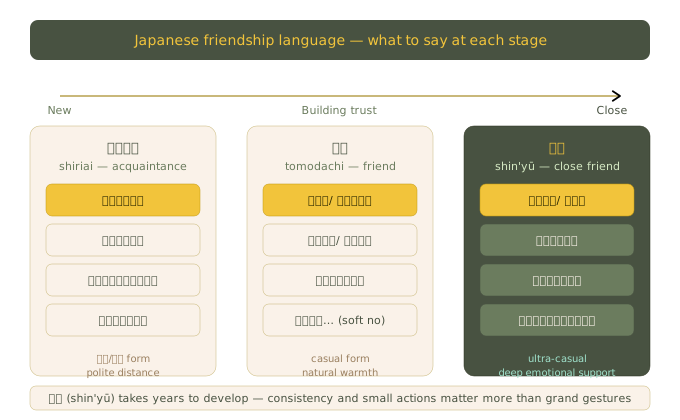
The Friendship Spectrum: 友達 vs 親友 vs 知り合い
Japanese has specific words that mark different friendship levels:
知り合い (shiriai) — “Acquaintance” Someone you know but aren’t close to. You’ve met a few times, maybe exchanged contact info, but haven’t developed a deeper bond yet.
友達 (tomodachi) — “Friend” The standard word for friend — someone you hang out with, share interests with, and feel comfortable around. It’s less intense than the English “best friend.”
親友 (shin’yū) — “Close friend/Best friend” Reserved for truly deep friendships built over years. Japanese people use this term sparingly and thoughtfully.
🔑 Cultural Insight: Unlike English speakers who might call someone their “best friend” after a few weeks, Japanese friendship develops slowly and deliberately. Trust builds through consistent, low-key interactions rather than intense emotional declarations.
Why Japanese Friendship Language Sounds “Reserved”
You might notice Japanese friends don’t say “I love you” or “You’re my best friend!” as casually as English speakers. This isn’t coldness — it’s a different communication style:
- Context over words 📱 — Japanese culture values showing care through actions (checking in, remembering details, being reliable) rather than verbal declarations.
- Humility is valued 🙇 — Being too direct about emotions can seem boastful or put pressure on others. Restraint shows consideration.
- Reading the air (空気を読む) 🌬️ — much is communicated non-verbally. Your consistent presence and small gestures speak volumes.
🎯 Practical Application: when building Japanese friendships in Vancouver or online, focus on being consistent and attentive rather than making grand emotional statements. Regular check-ins and remembering small details matter more than dramatic expressions of affection.
A note from Haruka: “I moved from Tokyo to Osaka at age 9, and the first thing I noticed was that the way people talked to each other felt completely different, even though it was the same country, the same language. That experience shaped how I think about friendship in Japanese: it’s not just vocabulary, it’s a whole way of being with people. When my Vancouver students ask me why their Japanese friends seem ‘distant,’ I always tell them the same thing: they’re not distant — they’re just showing care in a different register. Once you learn to read that register, everything changes.”
💬 Casual Friendship Phrases (友達に使う自然な日本語)
These are the phrases native Japanese speakers use constantly with friends. Master these, and you’ll sound natural and comfortable in everyday conversations.
Greetings & Daily Check-ins
1. おはよ!/ おっす!(Ohayo! / Ossu!) — “Morning!” / “Yo!” When: casual greetings with friends your age. Note: drop the ございます from おはようございます with friends; guys often use おっす for a casual vibe.
2. 久しぶり〜!(Hisashiburi~!) — “Long time no see!” When: meeting a friend you haven’t seen in a while. Variation: add 超 (chō) for 超久しぶり!(“It’s been SO long!”).
3. 元気?/ 最近どう?(Genki? / Saikin dō?) — “How are you?” / “How’ve you been lately?” When: checking in on a friend. Response: 元気だよ!(Genki da yo! — I’m good!) or まあまあかな (Māmā kana — So-so).
4. 何してた?(Nani shiteta?) — “What have you been up to?” When: casual catch-up conversations; a natural lead-in to deeper conversation.
Showing Interest & Agreement
5. マジで?!/ 本当に?(Maji de?! / Hontō ni?) — “Seriously?!” / “Really?!” When: expressing surprise or interest. Note: マジで is more casual and commonly used by younger speakers.
6. いいね!/ それいいね!(Ii ne! / Sore ii ne!) — “That’s great!” / “That sounds good!” When: showing approval or enthusiasm — super common, like a verbal thumbs up 👍.
7. わかる〜!(Wakaru~!) — “I know, right!” / “I totally get it!” When: showing empathy or agreement. Cultural note: the extended “ru~” sound adds emotional emphasis and connection.
8. そうそう!(Sō sō!) — “Exactly!” / “Yes, that’s right!” When: agreeing enthusiastically. Variation: repeat multiple times, そうそうそう!, for extra enthusiasm.
9. やばい!(Yabai!) — “Wow!” / “Amazing!” / “Crazy!” / “Oh no!” When: expressing strong emotion (positive or negative — context matters!). Note: 超やばい (chō yabai) means “super amazing/crazy.” Want to go deeper into casual Japanese slang? 10 Japanese Slang Words You’ll Hear in Anime covers many of these expressions in full context.
10. すごい!/ すごいね!(Sugoi! / Sugoi ne!) — “Amazing!” / “That’s impressive!” When: praising or showing admiration — more positive than やばい and appropriate in more situations.
Making Plans & Invitations
11. 今度、一緒に行かない?(Kondo, issho ni ikanai?) — “Wanna go together sometime?” When: casually suggesting future plans. Note: 今度 (kondo) is beautifully vague — means “next time” without pressure.
12. 暇?/ 時間ある?(Hima? / Jikan aru?) — “Are you free?” / “Do you have time?” When: checking availability before suggesting plans. Response: ある!(Aru! — Yes!) or ちょっと忙しい…(Chotto isogashii — Kinda busy…).
13. ご飯行こうよ!(Gohan ikō yo!) — “Let’s go eat!” When: inviting friends for a meal, the most common Japanese social activity. Cultural note: ご飯 (gohan) literally means “rice” but is used for any meal.
14. どこにする?(Doko ni suru?) — “Where should we go?” When: deciding on a location together. Response: どこでもいいよ (Doko demo ii yo — Anywhere is fine).
15. 何時がいい?(Nanji ga ii?) — “What time works for you?” When: coordinating schedules. Note: Japanese coordination is typically collaborative rather than one person deciding.
Expressing Thanks & Appreciation
16. ありがとう!/ ありがと!(Arigatō! / Arigato!) — “Thanks!” When: casual thanks with friends. Note: drop the final う for ultra-casual; never use ございます with close friends.
17. 助かった!/ 助かる!(Tasukatta! / Tasukaru!) — “You saved me!” / “That helps!” When: someone does you a favor — shows deeper appreciation than simple ありがとう.
18. 悪いね / ごめんね (Warui ne / Gomen ne) — “Sorry about that” / “My bad” When: casual apology or acknowledging minor inconvenience — much lighter than すみません, used between friends constantly.
Reactions & Responses
19. うん / ううん (Un / Uun) — “Yeah” / “Nope” When: casual agreement or disagreement. Important: うん = yes, ううん = no — the extra う and tone make all the difference!
20. へー / そうなんだ (Hē / Sō nanda) — “Oh, really?” / “I see” When: showing you’re listening and interested — essential for natural conversation flow, like verbal nodding.
21. 知らなかった!(Shiranakatta!) — “I didn’t know that!” When: learning something new from your friend — shows engagement and makes the other person feel heard.
22. 面白いね!(Omoshiroi ne!) — “That’s interesting!” When: reacting to something intriguing. Variation: 面白そう (omoshirosō) = “That sounds interesting.”
23. いいな〜 (Ii na~) — “Lucky you!” / “I’m jealous!” When: friend shares good news. Note: the extended “na~” adds a playful, friendly envy tone.
24. お疲れ〜 (Otsukarē~) — “Good work!” / “You must be tired” When: acknowledging someone’s effort or ending a hangout — incredibly common, used when parting ways or after activities together.
Staying Connected
25. また連絡するね!(Mata renraku suru ne!) — “I’ll message you again!” When: wrapping up conversation but maintaining connection.
26. 気をつけてね (Ki wo tsukete ne) — “Take care” / “Be careful” When: saying goodbye, especially if weather is bad or friend has travel plans.
27. 楽しみにしてる!(Tanoshimi ni shiteru!) — “Looking forward to it!” When: after making plans — expresses genuine excitement about a future meetup.
28. よろしく!(Yoroshiku!) — “Cheers!” / “Let’s keep in touch!” / “Take care of things!” When: versatile phrase for many situations. Note: much more casual than よろしくお願いします, used between friends constantly.
📱 LINE & Text Messaging: How Japanese Friends Actually Communicate
LINE dominates Japanese messaging (95%+ usage in Japan, and widely used in Vancouver’s Japanese community). Understanding LINE etiquette is crucial for maintaining Japanese friendships.
Reading and writing naturally in Japanese starts with understanding how particles work — Why Japanese Particles Are So Difficult — And How to Master Them gives you the foundation for everything in this section.
Casual Texting Phrases
29. おつ!(Otsu!) — shorthand for お疲れ様 (good work/thanks). When: quick acknowledgment in group chats — super casual, only with close friends.
30. りょ!/ りょうかい!(Ryo! / Ryōkai!) — “Got it!” / “Roger that!” Note: shortened from 了解 (ryōkai).
31. おけ!/ おっけー!(Oke! / Okkē!) — “Okay!” / “Sounds good!” Note: from English “okay” but with Japanese pronunciation.
32. あざす!/ あざっす!(Azasu! / Azassu!) — super casual “thanks!” Note: heavily shortened from ありがとうございます — use only with very close friends.
33. 了解です (Ryōkai desu) — “Understood” (polite casual). More polite than りょ but less formal than business language.
34. そうだね (Sō da ne) — “That’s true” / “You’re right.” Variation: だね is even more casual.
35. 今いい?(Ima ii?) — “Is now a good time?” (to call or talk). Cultural note: Japanese people often text before calling — important etiquette!
Polite Casual Messages (For Newer Friendships)
36. お疲れ様です (Otsukaresama desu) — “Thank you for your hard work.” For friends you’re still building comfort with, or in mixed-age groups.
37. ありがとうございます (Arigatō gozaimasu) — “Thank you” (polite). As friendship deepens, you’ll naturally shift to ありがとう.
38. すみません (Sumimasen) — “Excuse me” / “Sorry” (polite). Becomes ごめん as friendship deepens.
39. 大丈夫ですか?(Daijōbu desu ka?) — “Are you okay?” (polite concern). Casual version: 大丈夫?
40. お願いします (Onegaishimasu) — “Please” / “I’d appreciate it.” Casual shift: becomes お願い with closer friends.
Japanese Emoji & Emoticon Culture 😊🎌
Japanese texting has a unique emoticon culture that differs from Western emoji usage.
Kaomoji (顔文字) — Japanese Emoticons:
- (笑) or w or wwww = lol (laughing)
- (泣) = crying
- (^^) or (^_^) = happy/smiling
- (>_<) = embarrassed/frustrated
- (・_・;) = nervous/awkward
- (`・ω・´) = determined/serious
- m(_ _)m = deep apology/thank you
🔥 Pro tip: Japanese emoticons read sideways without tilting your head — they’re more expressive than Western 🙂 because they include more facial features.
Common Emoji Usage:
- 🙏 = please/thank you/sorry (extremely common!)
- 💦 = nervousness/awkwardness
- ✨ = emphasis/something sparkly or nice
- 🙇 = apology/request
- 👍 = okay/got it (universal!)
- 🙌 = yay/celebration
- 😂 = laughing (but use moderately — overuse seems immature)
Cultural note: Japanese friends tend to use fewer emojis per message than Western texters, but more expressive ones. Quality over quantity!
はい vs うん vs ええ: The Nuances of “Yes”
| Word | Formality | When | Example |
|---|---|---|---|
| はい (Hai) | Polite/formal | Superiors, first meetings, formal situations | 「はい、わかりました」 |
| うん (Un) | Casual | With friends your age or younger | 「うん、いいよ」 |
| ええ (Ee) | Soft/gentle polite | With people you’re friendly with but not super close | 「ええ、そうですね」 (more common in Kansai, understood everywhere) |
Responding in LINE: very close friends use “うん!” or just “!”; regular friends use “うん” or “そうだね”; acquaintances use “はい” or “そうですね.”
Understanding when to use formal vs. casual speech is one of the trickiest parts of Japanese. Natural Japanese Fillers: Mastering “Etto,” “Anoo,” and More explains how native speakers actually sound in real conversation.
The Dreaded 既読 (Kidoku) — “Read Receipt” Culture
既読無視 (kidoku mushi) — “read but ignored” — is a significant concern in Japanese messaging culture.
Cultural understanding: seeing a message marked “read” but getting no reply can cause anxiety. Japanese friends often reply even just to acknowledge (“りょ!” or “👍”). Leaving someone on “read” for days without explanation can damage friendships.
Proper etiquette:
- Reply quickly for invitations or questions (within a few hours)
- If busy, send a quick response: 「今忙しいから後で返信するね!」(I’m busy now, will reply later!)
- Don’t stress about instant replies for casual chats
- If you’ll be unavailable, mention it: 「今日は返信遅れるかも」(Might be slow to reply today)
🎯 Vancouver Context: the Japanese community here blends Japanese and Canadian communication styles. Some have adapted to slower Western response times, but many still appreciate quick acknowledgments — when in doubt, send a quick 👍 or りょ to show you saw the message!
💪 Encouraging & Supportive Phrases (励まし・相談)
Japanese friendship deepens through mutual support during challenges. These phrases help you be there for your friends authentically.
When Friends Are Struggling
41. 大丈夫?(Daijōbu?) — “Are you okay?” Follow-up: 話聞くよ (Hanashi kiku yo — I’m here to listen).
42. 無理しないでね (Muri shinai de ne) — “Don’t push yourself too hard.” Shows you care about their wellbeing over their productivity.
43. 頑張って!/ 頑張ってね!(Ganbatte! / Ganbatte ne!) — “Do your best!” / “You can do it!” Important: use thoughtfully — can add pressure if overused.
44. 大丈夫だよ (Daijōbu da yo) — “It’ll be okay” / “You’ll be fine.” Variation: 絶対大丈夫 (zettai daijōbu — it’ll definitely be okay).
45. 気にしないで (Ki ni shinai de) — “Don’t worry about it.” Helps ease a friend’s concern when they apologize unnecessarily.
46. 疲れてない?(Tsukarete nai?) — “Aren’t you tired?” Acknowledging someone’s tiredness shows care.
47. ゆっくり休んでね (Yukkuri yasunde ne) — “Get some good rest” / “Take it easy.” Note: ゆっくり (yukkuri) means slowly/leisurely — an important self-care concept.
Being a Good Listener
48. そうだったんだ (Sō datta n da) — “So that’s what happened” / “I see.” Shows you’re listening and processing what they said.
49. 大変だったね (Taihen datta ne) — “That must have been tough.” Validates their experience without dismissing it.
50. わかるよ (Wakaru yo) — “I understand” / “I get it.” More personal than just わかる — the よ adds warmth.
51. 辛かったね (Tsura katta ne) — “That must have been painful/hard.” Acknowledges emotional pain specifically.
52. 話してくれてありがとう (Hanashite kurete arigatō) — “Thank you for sharing/talking to me.” Makes a friend feel heard and valued after they open up.
Celebrating Success
53. やったね!(Yatta ne!) — “You did it!” / “Awesome!” Celebratory and excited.
54. おめでとう!(Omedetō!) — “Congratulations!” Formal version: おめでとうございます for bigger occasions.
55. すごいじゃん!(Sugoi jan!) — “That’s amazing!” / “How impressive!” じゃん is a casual ending that adds enthusiasm.
56. さすが!(Sasuga!) — “That’s what I expected from you!” Shows you recognize their consistent excellence.
🙅 Soft Declining Phrases (断り方:日本人の曖昧な言い方)
Japanese culture values group harmony, so direct refusals are rare. Learning to decline politely — and recognize when others are declining — is essential for natural friendships.
The Art of Gentle Refusal
57. ちょっと…(Chotto…) — “Well…” / “Um…” Cultural key: trailing off IS the refusal — Japanese friends will understand.
58. 今度にしない?(Kondo ni shinai?) — “How about next time?” Sometimes means “maybe,” sometimes means a gentle “no.”
59. 予定があって…(Yotei ga atte…) — “I have plans…” You don’t need to explain the plans — this is sufficient.
60. ちょっと厳しいかも (Chotto kibishii kamo) — “That might be a bit difficult.” More clear than just ちょっと but still indirect.
61. 考えとくね (Kangae toku ne) — “Let me think about it.” Often means “probably no” but keeps the door open.
62. また誘ってね (Mata sasotte ne) — “Invite me again sometime.” Softens the rejection and maintains the relationship.
Recognizing When Others Are Declining YOU
🚨 Subtle “no” signals Japanese friends use:
- Long pauses before answering
- 「ちょっと…」followed by silence
- 「今度ね」(kondo ne — next time) without specific follow-up
- Repeatedly saying 「忙しい」(isogashii — busy)
- 「考えとく」(kangae toku — I’ll think about it) without later confirmation
- Changing the subject after your invitation
How to respond gracefully: don’t push or ask “why?” Say 「わかった!また今度ね」(Wakatta! Mata kondo ne — Got it! Some other time). Give them space — if interested, they’ll reach out. Don’t take it personally — this is normal Japanese communication.
🌟 Vancouver Cultural Note: Japanese Canadians often blend communication styles. Some are more direct due to North American influence, while others maintain traditional indirectness — pay attention to individual patterns and adjust accordingly.
Expressing Hesitation
63. どうしよう…(Dō shiyō…) — “What should I do…” Shows you’re considering but not committed.
64. うーん…(Ūn…) — “Hmm…” Often accompanied by a tilted head or uncertain expression.
65. 微妙かも (Bimyō kamo) — “It’s kind of iffy.” Literally “subtle” — means neither yes nor no, leaning toward no.
❌ Common Mistakes English Speakers Make
Understanding what NOT to say is just as important as learning correct phrases. These mistakes can make you sound unnatural or create awkward situations.
Haruka’s take: “The most common thing I see with English-speaking students isn’t bad grammar — it’s mismatched expectations. They say something perfectly correct and then feel confused when the response is lukewarm. Usually it’s not what they said, it’s the timing or the intensity. I grew up code-switching between Tokyo and Osaka speech styles, so I know firsthand how much a small shift in register can change the entire feeling of a conversation. These mistakes are completely normal, and fixable once you know what to look for.”
Mistake #1: Calling Someone Your “Best Friend” Too Soon ❌ “You’re my best friend!” — Japanese friendships develop slowly; declaring someone your 親友 after a few meetings feels premature and can create pressure. ✅ Instead: 「いつもありがとう」(Thanks for always being there) or 「一緒にいて楽しい」(I enjoy spending time with you) — let the friendship speak through actions, not declarations.
Mistake #2: Using “I Love You” (愛してる) with Friends ❌ “I love you!” (casual platonic) — 愛してる (aishiteru) is only for romantic love and extremely serious, rarely said even in romantic relationships. 🚨 Never say 愛してる to friends — it will sound like a romantic confession! ✅ Instead: 「大好き!」(can be used for friends, things, or romantic interest depending on context), 「本当にいい友達だと思う」, or 「あなたがいてくれて嬉しい」. Even with more Westernized Japanese Canadian friends, avoid 愛してる — it still carries romantic weight.
Mistake #3: Being Too Direct About Emotions ❌ “I’m really upset with you” — Japanese communication prefers indirectness to preserve harmony and face-saving. ✅ Instead: 「ちょっと悲しかった」(I was a bit sad) — express feelings but soften intensity. Mastering natural intonation and rhythm helps your emotional expressions land correctly; The Complete Guide to Shadowing is the most effective way to train this. Japanese friends often address issues through third parties or written messages rather than face-to-face confrontation, and might signal something bothered them through shorter messages or less frequent contact rather than saying so directly.
Mistake #4: Not Understanding Physical Distance ❌ Hugging hello/goodbye, touching arm during conversation — Japanese culture has larger personal space boundaries, especially for newer friendships. ✅ Stick with bows or waves for greetings, keep arm’s-length physical distance, and let physical touch increase very gradually over years. Some Japanese Canadians adapt to Western touch norms, but let them initiate. Exception: very close friends of the same gender may link arms or walk close, but this develops naturally over time.
Mistake #5: Over-Using “ごめんなさい” (Gomen nasai) ❌ Apologizing formally for everything — ごめんなさい is fairly serious; using it constantly sounds overly formal or dramatic. ✅ Small things: 「ごめん」or「悪い」. Medium things: 「ごめんね」. Serious things: 「ごめんなさい」or「本当にごめん」. Casual alternative: 「すまん」(more masculine, very casual “my bad”).
Mistake #6: Talking Too Much About Yourself ❌ Focusing heavily on your own experiences — Japanese conversation culture values reciprocity and listening more than self-promotion. ✅ Ask questions about your friend, share then ask about similar experiences, use 「私も」to create connection. Aim for roughly 40% talking about yourself, 60% asking about them and listening.
Mistake #7: Misunderstanding “お世話になりました” (Osewa ni narimashita) ❌ Not expressing gratitude for someone’s help or hospitality — this phrase (“thank you for taking care of me”) is culturally essential after someone helps you: after staying at someone’s home, after help with job/school, after mentorship, or when leaving a group. Casual version: お世話になりました (formal) → 色々ありがとう (Iroiro arigatō — thanks for everything).
Mistake #8: Not Reading “Tatemae” (本音 vs 建前) 本音 (honne) is true feelings; 建前 (tatemae) is the public facade/polite response. Taking everything at face value causes problems, because Japanese friends often say polite things they don’t fully mean to maintain harmony. For example, 「今度飲みに行きましょう」(“let’s grab drinks sometime”) often just means “nice talking to you,” not a real invitation; 「大丈夫です」might mean “I’m struggling but don’t want to burden you”; 「考えます」usually means “no.” Watch for follow-through on statements, notice energy and enthusiasm levels, don’t put people on the spot, and learn to read context and nonverbal cues.
🗣️ Short Dialogues in Real-Life Situations
Seeing phrases in context helps you understand natural conversation flow. Here are authentic scenarios you’ll encounter building Japanese friendships.
Scenario 1: 予定を合わせる (Coordinating Plans)
Setting: you and your Japanese friend want to meet up in Vancouver.
You: 今週末、暇? (Konshūmatsu, hima?) — Are you free this weekend?
Friend: うーん、土曜日はちょっと予定があって…日曜日なら大丈夫!— Hmm, Saturday I have plans… but Sunday works!
You: 日曜日いいね!何時がいい? — Sunday sounds good! What time works?
Friend: 午後からがいいな。1時とか? — Afternoon would be good. Like 1pm?
You: 完璧!じゃあ、どこで会う? — Perfect! So where should we meet?
Friend: スタバでいい?ロブソンのやつ — Is Starbucks okay? The Robson one.
You: りょ!楽しみにしてる! — Got it! Looking forward to it!
Friend: 私も!また連絡するね — Me too! I’ll message you again.
💡 Learning points: notice the soft negotiation style — neither person demands specific times. 「ちょっと予定があって」is a complete explanation, no details needed. Casual confirmations like りょ keep the conversation light, and both express excitement to maintain positive energy.
Scenario 2: ご飯に誘う (Inviting to Eat)
Setting: you want to invite a Japanese coworker to lunch.
You: お疲れ様です!お昼まだですか?— Good work! Haven’t had lunch yet?
Coworker: あ、まだです — Oh, not yet.
You: 良かったら一緒に行きませんか?— Would you like to go together if you’re free?
Coworker: いいですね!何食べたいですか?— That sounds good! What do you want to eat?
You: 何でもいいですよ。〇〇さんは?— Anything is fine with me. How about you?
Coworker: ラーメンとか?あそこの店、美味しいですよ — How about ramen? That shop over there is delicious.
You: いいですね!行きましょう!— Sounds great! Let’s go!
💡 Learning points: start with polite 「お疲れ様です」in workplace context. Use the invitation style 〜ませんか for coworkers you’re building friendship with. The 何でも (anything) back-and-forth is standard — eventually someone suggests. Notice it stays in です/ます form even while building friendship — appropriate for workplace relationships.
Scenario 3: 励ます (Encouraging a Friend)
Setting: your Japanese friend failed an important exam.
You: 今日はどうだった?— How did it go today?
Friend: だめだった…全然できなかった — It was terrible… I couldn’t do it at all.
You: そっか…大変だったね — I see… that must have been tough.
Friend: 頑張ったのに… — Even though I worked hard…
You: めっちゃ頑張ってたの知ってるよ。まだ次があるし!— I know you worked really hard. And there’s still next time!
Friend: うん…でも落ち込んでる — Yeah… but I’m feeling down.
You: 無理しないでね。今日はゆっくり休んで — Don’t push yourself. Get some good rest today.
Friend: ありがとう。話聞いてくれて — Thanks. For listening.
You: いつでも!元気出してね — Anytime! Cheer up.
💡 Learning points: keep advice minimal — Japanese friends often just want a listening ear. Start with an open question, not “did you pass?” (which assumes the outcome). Use そっか to acknowledge without immediately trying to fix. 大変だったね validates their experience. Balance encouragement with permission to feel bad (無理しないで).
Scenario 4: 断る (Declining Politely)
Setting: a friend invites you to karaoke but you’re exhausted.
Friend: 今晩カラオケ行かない?みんな行くよ!— Want to go to karaoke tonight? Everyone’s going!
You: あー、今晩かぁ…ちょっと今日は疲れててさ…— Ah, tonight huh… I’m kind of tired today…
Friend: そうなんだ!無理しないでね — Oh I see! Don’t push yourself.
You: ごめんね。また今度誘ってね!— Sorry. Invite me again next time!
Friend: もちろん!ゆっくり休んでね — Of course! Get some rest.
You: ありがとう。みんなに楽しんでって伝えて!— Thanks. Tell everyone to have fun!
Friend: わかった!おやすみ〜 — Got it! Good night~
💡 Learning points: ちょっと softens the refusal; the trailing 「てさ…」indicates difficulty without a direct “no.” The friend immediately accepts and doesn’t push — proper etiquette. また今度誘って keeps the relationship warm, and wishing them fun shows you’re declining the situation, not the friendship.
Scenario 5: LINEの既読問題 (The “Read” Issue)
Setting: you left your friend on “read” for 6 hours and they’re checking in.
Friend (LINE): 見た?— Did you see it?
You: ごめん!さっき見た!忙しくてすぐ返信できなかった💦 — Sorry! Just saw it! Was busy and couldn’t reply right away 💦
Friend: あ、大丈夫大丈夫!気にしないで — Oh, it’s totally fine! Don’t worry about it.
You: 何だっけ?あ、週末の話?— What was it? Oh, about the weekend?
Friend: そうそう!予定どう?— Yes yes! How’s your schedule?
You: 土曜日なら空いてる!— Saturday I’m free!
Friend: やった!じゃあ土曜日で👍 — Great! Saturday then 👍
💡 Learning points: apologize briefly for the delayed response with a reason; the 💦 emoji shows slight embarrassment. The friend reassures quickly to ease tension, and the conversation moves forward naturally without dwelling on the delay. In Japanese friendships, reading but not responding for hours generally calls for some acknowledgment.
📚 Summary and Practice Exercises
Quick Reference: Your Essential Phrases Checklist
Daily Greetings: おはよ (Ohayo), 久しぶり (Hisashiburi), 元気?(Genki?)
Showing Interest: マジで?(Maji de?), いいね!(Ii ne!), わかる (Wakaru), そうそう (Sō sō), やばい (Yabai)
Making Plans: 今度、一緒に行かない?, 暇?(Hima?), ご飯行こうよ (Gohan ikō yo), LINE交換しない?(LINE kōkan shinai?)
Support & Encouragement: 大丈夫?(Daijōbu?), 無理しないで (Muri shinai de), 頑張って (Ganbatte), お疲れ (Otsukare)
Polite Declining: ちょっと…(Chotto…), 今度にしない?(Kondo ni shinai?), また誘って (Mata sasotte)
30-Day Practice Challenge 🎯
Week 1 — Foundation Building: Days 1–3, memorize 10 phrases daily (greeting, interest, planning phrases). Days 4–5, record yourself saying phrases and compare to native audio. Days 6–7, use 3 greeting phrases with Japanese speakers or language exchange partners online.
Week 2 — Active Application: Days 8–10, attend a Vancouver Japanese event or online language exchange, using at least 5 phrases. Days 11–12, start a LINE conversation with a Japanese friend and practice text phrases. Days 13–14, watch a Japanese variety show and count how many phrases you recognize.
Week 3 — Building Connections: Days 15–17, invite a Japanese friend to an activity using phrases learned. Days 18–19, practice encouraging phrases by sending a supportive message. Days 20–21, record yourself in a mock conversation and note areas for improvement.
Week 4 — Integration & Reflection: Days 22–24, use declining phrases when appropriate. Days 25–27, join a conversation at a Japanese restaurant/café in Vancouver. Days 28–30, reflect on progress, identify the next 10 phrases to learn, and celebrate wins! 🎉
Interactive Practice Exercises
Exercise 1 — Conversation Building: create a 10-line dialogue using only phrases from this guide. Topic: meeting a friend at a café in Vancouver. Include a greeting, asking about them, making future plans, and saying goodbye — bonus points for one encouraging phrase.
Exercise 2 — Context Matching: match the situation to the appropriate phrase — friend looks stressed; friend achieved something; can’t make Friday plans; seeing a friend after 2 months; friend shares bad news.
Exercise 3 — LINE Simulation: write a realistic LINE conversation where a friend invites you somewhere, you decline politely, make an alternative suggestion, confirm plans, and use appropriate emoji/kaomoji.
Exercise 4 — Formality Assessment: mark each phrase as New Friend / Close Friend / Either — おっす!, お疲れ様です, ありがとう, りょ!, また会えて嬉しいです.
🎓 Answers: Exercise 2: 1) 無理しないで, 2) やったね!/すごい!, 3) ちょっと…/今度にしない?, 4) 久しぶり!, 5) 大変だったね Exercise 4: 1) Close Friend, 2) New Friend, 3) Either, 4) Close Friend, 5) Either
🇨🇦 Vancouver-Specific Practice Opportunities
Where to Use These Phrases in Vancouver
Regular Events:
- Powell Street Festival (August) 🎏 — Canada’s largest Japanese cultural festival. Perfect for using greeting phrases and making friends. Try 「これ、オススメありますか?」at food stalls.
- Vancouver Cherry Blossom Festival (Spring) 🌸 — cultural programming and community events. Try 「綺麗ですね」(Kirei desu ne — It’s beautiful).
- Language Exchange Meetups — happening weekly at various Vancouver cafés. Search “Vancouver Japanese Language Exchange” on Meetup.com, or join NihongoKnow’s own community meetups.
- Japanese Film Screenings (VIFF, Cinematheque) — post-screening discussions offer natural conversation opportunities. Try 「面白かったですね」(That was interesting).
Japanese Restaurants & Businesses: Ezogiku (West End, classic ramen), Guu Restaurants (izakaya chain), Sakuraya (Kitsilano, Japanese fish market), Uwajimaya (Kerrisdale, Asian grocery), Kinokuniya (Downtown, Japanese bookstore).
💡 Pro tip: visiting the same places regularly helps build familiarity — staff will remember you and conversations become easier!
UBC & Vancouver Community College: Japanese language clubs and cultural associations — check university websites for public events.
Martial Arts & Cultural Centers: the Vancouver Japanese Language School and Japanese Hall offers classes and occasional public events; various dojos (karate, judo, aikido, kendo) often have Japanese instructors and visiting sensei, giving you built-in conversation topics around training.
Building Your Vancouver Japanese Network
Start Small Strategy: Month 1, attend one Japanese event and visit one Japanese business weekly. Month 2, exchange LINE with one Japanese speaker and maintain weekly contact. Month 3, suggest coffee or an activity with that connection. Month 4, attend a regular language exchange or cultural group.
Create value for Japanese friends in Vancouver: share local tips, recommend Vancouver spots (Stanley Park, Granville Island, hiking trails), help with Canadian culture questions, or offer an English-Japanese language exchange.
Online Vancouver communities: Vancouver Japanese Community Facebook groups, r/Vancouver + r/learnjapanese crossover discussions, Meetup.com Japanese groups, NihongoKnow’s own meetups, and HelloTalk/Tandem apps (filter for Vancouver users).
🇨🇦 Vancouver-Specific Practice Opportunities
Where to Use These Phrases in Vancouver
Regular Events:
Powell Street Festival (August) 🎏
- Canada’s largest Japanese cultural festival
- Perfect for: Using greeting phrases, asking about recommendations, making friends
- What to say: “これ、オススメありますか?” at food stalls
Vancouver Cherry Blossom Festival (Spring) 🌸
- Cultural programming and community events
- Perfect for: Meeting Japanese and Japanese Canadian community
- What to say: “綺麗ですね” (Kirei desu ne – It’s beautiful)
Language Exchange Meetups
- Happening weekly at various Vancouver cafés
- Search: “Vancouver Japanese Language Exchange” on Meetup.com or Join our meetup with NihongoKnow members !
- Perfect for: Practicing all phrases in low-pressure environment
Japanese Film Screenings (VIFF, Cinematheque)
- Post-screening discussions offer natural conversation opportunities
- Perfect for: “面白かったですね” (Omoshirokatta desu ne – That was interesting)
Japanese Restaurants & Businesses:
Ezogiku (West End) – Classic ramen spot with friendly Japanese staff
Guu Restaurants – Izakaya chain with authentic atmosphere
Sakuraya (Kitsilano) – Japanese fish market with helpful staff
Uwajimaya (Kerrisdale) – Asian grocery with Japanese products
Kinokuniya (Downtown) – Japanese bookstore, connect with staff and customers
💡 Pro Tip: Visiting same places regularly helps build familiarity—staff will remember you and conversations become easier!
UBC & Vancouver Community College
- Japanese language clubs and cultural associations
- Perfect for: Meeting students and attending conversation practice
- Check university websites for public events
Martial Arts & Cultural Centers:
Vancouver Japanese Language School and Japanese Hall
- Community center offering classes and events
- Sometimes open public cultural events
Various Dojo (Karate, Judo, Aikido, Kendo)
- Many have Japanese instructors and visiting sensei
- Built-in conversation topics around training
Building Your Vancouver Japanese Network
Start Small Strategy:
Month 1: Attend one Japanese event, visit one Japanese business weekly
Month 2: Exchange LINE with one Japanese speaker, maintain weekly contact
Month 3: Suggest coffee/activity with Japanese connection
Month 4: Attend regular language exchange or cultural group
Create Value for Japanese Friends in Vancouver:
- Share local English tips
- Recommend Vancouver spots (Stanley Park, Granville Island, hiking trails)
- Help with Canadian culture questions
- Offer English-Japanese language exchange
Online Vancouver Communities:
- Vancouver Japanese Community Facebook groups
- Reddit r/Vancouver + r/learnjapanese crossover
- Meetup.com Japanese groups, Nihongoknow meet up!
- HelloTalk/Tandem apps (filter for Vancouver users)
🌍 Expanding Beyond Vancouver: Canada, US & Worldwide
Other Canadian Cities
- Toronto 🍁 — J-Town (Japanese cultural center), Japanese Canadian Cultural Centre events, Toronto Japanese Film Festival
- Montreal 🍁 — Marché Miyamoto (Japanese grocery), Montreal Japanese community events, McGill/Concordia Japanese student associations
- Calgary & Edmonton 🍁 — Momotaro (Calgary) and EJCA (Edmonton) Japanese cultural associations, Heritage Festival (Edmonton) Japanese pavilion
US Cities with Strong Japanese Communities
Seattle 🇺🇸 (very close to Vancouver, huge Japanese community), Los Angeles 🇺🇸 (Little Tokyo), New York 🇺🇸 (East Village Japanese area), San Francisco 🇺🇸 (Japantown), Honolulu 🇺🇸 (massive Japanese cultural influence).
What to search: “[City name] Japanese language exchange,” “[City name] Japanese cultural center,” “[City name] Japanese American community,” “[City name] Japan Society.”
🎯 NihongoKnow.com Advantage: we offer online lessons worldwide, connecting you with experienced native Japanese speakers who understand Western learning challenges — perfect for those outside Vancouver wanting structured conversation practice!
🚀 Your Next Steps: From Reading to Real Friendships
Immediate Actions (Do Today!)
✅ Step 1: Choose Your Starter 5 — pick 5 phrases from this guide you’ll use this week (1 greeting, 2 interest-showing, 1 planning, 1 encouraging). Write them down, record yourself saying them, and practice until automatic.
✅ Step 2: Find Your First Practice Opportunity — check the calendar for this week’s Japanese events in Vancouver, download HelloTalk or join a Discord Japanese server, visit a Japanese restaurant or store this weekend, or book a NihongoKnow trial lesson.
✅ Step 3: Set Up Your Success System — set a daily phone reminder, block 15 minutes daily for practice, tell an accountability partner your goals, and track which phrases you used and how it felt.
This Week’s Mini-Challenge 📅
Monday–Tuesday: memorize 10 phrases (record yourself saying each 5 times). Wednesday: use 1 phrase with a Japanese speaker or in a HelloTalk message. Thursday–Friday: add 5 more phrases and review the first 10. Weekend: attend a Japanese event or have a 10-minute language exchange online.
Reward yourself! Celebrate using your first phrase in real conversation — this is huge! 🎉
Month 1 Goals
Week 1: master pronunciation of 20 core phrases. Week 2: use phrases in at least 3 real conversations. Week 3: exchange LINE with one Japanese speaker. Week 4: maintain a LINE conversation using text phrases from this guide.
Long-term Friendship Building Strategy
Months 1–3 — Foundation Phase: attend 1–2 Japanese events monthly, practice phrases weekly, build 2–3 regular language exchange partnerships, learn cultural concepts alongside phrases.
Months 4–6 — Deepening Phase: invite Japanese friends to activities, introduce Japanese friends to each other, join a regular Japanese community group, start having spontaneous Japanese conversations.
Months 7–12 — Integration Phase: Japanese friendships become a natural part of your life, mixing Japanese and English comfortably, navigating cultural differences smoothly, and building lasting cross-cultural relationships.
🌟 Why NihongoKnow Is Your Best Choice for Japanese Friendship Success
Our Unique Vancouver + Global Approach
Local Vancouver Expertise 🍁 — we’re embedded in Vancouver’s Japanese community. We know which events are best for meeting people, which businesses welcome conversation practice, how Japanese Canadians blend cultural styles, and where students have built real friendships.
Cultural Bridge Specialists 🌉 — our instructors understand Western learning challenges (we’ve taught there!) and Japanese communication subtleties (we’re native speakers!), bridging the cultural gap naturally and explaining why textbook Japanese alone doesn’t build real friendships.
Conversation-First Methodology 💬 — unlike traditional programs, we start with phrases you’ll use today, explain grammar through real conversations, give cultural context for every phrase, practice in realistic scenarios, and give immediate feedback on natural usage.
Community Connection 🤝 — beyond just lessons: introductions to Vancouver’s Japanese community, student meetups and practice groups, connections to language exchange partners, insider access to cultural events, and long-term friendship support.
Flexible Worldwide Access 🌍 — Vancouver (in-person at our studio), the rest of Canada, the United States, or anywhere globally (online) — the same high-quality instruction and cultural coaching regardless of location!
🎌 Final Thoughts: The Real Magic of Japanese Friendships
Learning Japanese phrases is just the beginning. The real transformation happens when you use these tools to build genuine connections with Japanese speakers — friendships that enrich your life, broaden your worldview, and create memories that last forever.
Japanese friendships might develop differently than Western ones — slower, more subtle, built on consistent small actions rather than grand gestures. But once established, they’re often incredibly loyal, supportive, and deep.
Every Japanese phrase you learn is a key that unlocks new relationship opportunities. Every conversation you have in Japanese — no matter how simple — is a bridge between cultures. Every friendship you build makes the world a little more connected.
Your Japanese friendship journey starts with a single phrase. Tomorrow, use just one phrase from this guide. Watch what happens. Feel the connection. Build from there.
The Japanese friends you haven’t met yet are waiting for you to take that first step.
頑張ってね!(Ganbatte ne! — Do your best!)
Ready to start your Japanese friendship journey? Visit NihongoKnow.com today! 🌸


