

📋 Quick View: Find Your Perfect Japanese Textbook
🎯 What You’ll Discover:
- 12+ top-rated Japanese textbooks with detailed reviews
- Personalized recommendations based on your learning style
- Cost-effective study combinations under $100
- Free resources that rival expensive textbooks
- Expert tips from Vancouver’s top Japanese instructors
⚡ Quick Recommendations:
- Complete Beginner: Japanese From Zero! + Genki I
- Self-Study Focused: Genki Series + Anki flashcards
- Classroom Style: Minna no Nihongo + grammar supplements
- Culture Enthusiast: Marugoto Series + cultural immersion
- Budget-Conscious: Tae Kim’s Guide + free online resources
Preparing specifically for the JLPT? Best Books for JLPT Preparation covers exam-focused materials for every level from N5 to N1.
🌟 Success Rate: Students who choose the right textbook from the start consistently reach conversational level faster, usually within 12 months of regular study.
- 📋 Quick View: Find Your Perfect Japanese Textbook
- 🌍 Why Your Japanese Textbook Choice Can Make or Break Your Learning Journey
- 🔍 How to Choose the Perfect Japanese Textbook for Your Situation
- 📖 The Ultimate Japanese Textbook Rankings for 2026
- 🥇 #1: Genki I & II – The Gold Standard for Self-Learners
- 🥈 #2: Minna no Nihongo I & II – The Immersion Champion
- 🥉 #3: Marugoto Series – The Cultural Experience
- 🏆 #4: Tae Kim's Guide to Japanese Grammar — free, comprehensive, beginner to advanced
- 🌟 #5: Japanese From Zero! – The Absolute Beginner's Friend
- 📚 Specialized Textbooks for Specific Goals
- 📊 Textbook Comparison: Quick Decision Matrix
- 💡 Expert Tips: How to Use Your Textbook Effectively
- 🎓 Why NihongoKnow Students Succeed Faster
- 🎯 Your 30-Day Textbook Success Plan
🌍 Why Your Japanese Textbook Choice Can Make or Break Your Learning Journey
Picture this: You’re sitting in a coffee shop, excited to start your Japanese learning adventure. You’ve bought three different textbooks, but after two weeks, you’re confused, overwhelmed, and ready to give up.
Sound familiar? You’re not alone. Every month, we meet students in Vancouver, Toronto, Seattle, and cities worldwide who’ve struggled with the wrong textbook choice.
Here’s the reality: The right textbook acts as your personal sensei, guiding you from “こんにちは” (hello) to fluent conversations. The wrong one? It’s like trying to navigate Tokyo with a map of Osaka, you’ll get lost fast.
Whether you’re a busy professional in Vancouver, a student in Toronto, or someone learning online from anywhere in the world, choosing the right textbook is your first step toward Japanese fluency.
A note from Haruka: The first question almost every new student asks me is ‘which textbook should I buy?’ And my honest answer is always: it depends less on the book than on whether you’ll actually open it. I’ve seen students pass N3 with Genki and a notebook. I’ve seen students quit after spending $200 on a full series. What I tell everyone is this: pick one, commit to it for 90 days, and come to class with questions. The textbook is the map, but you still have to walk.
🔍 How to Choose the Perfect Japanese Textbook for Your Situation
🎯 Consider Your Learning Environment
🏠 Self-Study at Home:
- Need comprehensive English explanations
- Require answer keys for self-checking
- Benefit from audio resources
- Want flexible pacing
🏫 Classroom + Home Study:
- Can handle more Japanese-only content
- Benefit from structured progression
- Need textbooks that match class curriculum
- Want supplementary materials
🌐 Online Learning:
- Need digital-friendly formats
- Benefit from interactive elements
- Require strong audio components
- Want cloud-based resources
📊 Assess Your Learning Style
📝 Visual Learner:
- Colorful layouts and diagrams
- Charts and infographics
- Cultural photos and illustrations
🎧 Auditory Learner:
- Strong audio components
- Pronunciation guides
- Listening exercises
🎮 Kinesthetic Learner:
- Interactive exercises
- Writing practice
- Hands-on activities
💰 Budget Considerations
Budget Range Guide:
- Under $50: Free resources + one core textbook
- $50-100: Complete textbook series + workbooks
- $100-200: Premium textbooks + digital resources
- $200+: Full multimedia packages + supplements
📖 The Ultimate Japanese Textbook Rankings for 2026
🥇 #1: Genki I & II – The Gold Standard for Self-Learners
📊 Rating: 9.5/10
- Level: Absolute Beginner to Lower Intermediate (A1-B1)
- Price: $40-50 per book
- Best For: Self-study, mixed classroom/home learning
🌟 Why Most of Our Vancouver Students Choose Genki:
✅ Pros:
- Crystal-clear English explanations – No guessing what grammar means
- Real-world dialogues – Learn phrases you’ll actually use
- Comprehensive workbook – 200+ exercises with answer keys
- Excellent audio quality – Native speaker recordings
- Cultural integration – Learn about Japan while learning Japanese
- Self-study friendly – Complete explanations don’t require a teacher
❌ Cons:
- Slower pace – Takes time to build momentum
- Western learning style – May feel too structured for some
- Limited advanced content – Stops at intermediate level
Haruka’s take: Genki was the first textbook I used when I started training as a language teacher, and I still recommend it because of one thing: the answer key. Self-study learners need to be able to check themselves. Without that feedback loop, mistakes solidify into habits. Genki gives you that loop. Use Genki I for your first 6 months, then Genki II. Most students reach conversational level by the end.
📱 Digital Resources:
- Genki Study Resources app (free)
- Online audio files
- Interactive exercises
🥈 #2: Minna no Nihongo I & II – The Immersion Champion
📊 Rating: 9.0/10
- Level: Beginner to Intermediate (A1-B1)
- Price: $35-45 per book + $25 for English supplement
- Best For: Structured learners, classroom use
🌟 Why Japanese Schools Worldwide Choose Minna:
✅ Pros:
- Pure Japanese immersion – Main textbook is 100% Japanese
- Solid grammar foundation – Methodical, thorough approach
- International standard – Used in Japanese schools globally
- Extensive support materials – Workbooks, audio, supplements
- Natural progression – Each lesson builds perfectly on the previous
❌ Cons:
- Requires English supplement – Main book has no English explanations
- Less cultural context – Focuses more on grammar than culture
- Traditional approach – May feel dry compared to modern textbooks
💡 Vancouver Student Success Story: “I struggled with Genki’s pace, but Minna’s structure helped me master N4 grammar in 8 months. The English supplement was essential!” – Sarah, UBC student
📦 Complete Minna Package:
- Main textbook (Japanese only)
- Translation & Grammar Notes (English)
- Workbook with audio CD
- Character practice sheets
🥉 #3: Marugoto Series – The Cultural Experience
📊 Rating: 8.5/10
- Level: Beginner to Intermediate (A1-B1)
- Price: $30-40 per book (FREE online version available!)
- Best For: Culture enthusiasts, modern learners
🌟 Japan Foundation’s Official Curriculum:
✅ Pros:
- Marugoto Plus — free online access to the complete course
- Cultural immersion – Learn language through Japanese culture
- Modern design – Beautiful, engaging layout
- Balanced skills – Equal focus on speaking, listening, reading, writing
- Can-do approach – Clear goals for each lesson
❌ Cons:
- Less grammar detail – May need supplementary grammar books
- Slower vocabulary building – Focuses more on communication than vocab
- Limited offline resources – Best experienced online
🆓 Free Online Resources:
- Marugoto Plus (interactive website)
- Video content
- Cultural learning materials
- Progress tracking
🏆 #4: Tae Kim’s Guide to Japanese Grammar — free, comprehensive, beginner to advanced
📊 Rating: 8.0/10
- Level: Beginner to Advanced (A1-C1)
- Price: FREE online, $15-25 for printed version
- Best For: Grammar-focused learners, supplement to other textbooks
🌟 Why Millions of Learners Use Tae Kim:
✅ Pros:
- Completely free – Full guide available online
- Comprehensive coverage – Beginner to advanced grammar
- Clear explanations – Written by a successful learner
- Practical approach – Focuses on how Japanese really works
- No fluff – Straight to the point
❌ Cons:
- No audio – Text-only resource
- Limited exercises – Need separate practice materials
- No cultural context – Pure grammar focus
💡 Best Used For: Grammar reference, supplement to main textbook, review material
Just starting out and not sure where to begin? Steps to Pass the JLPT N5: A Complete Study Guide for Beginners gives you a full roadmap before you open any textbook.
🌟 #5: Japanese From Zero! – The Absolute Beginner’s Friend
📊 Rating: 8.0/10
- Level: Absolute Beginner (A1)
- Price: $25-35 per book
- Best For: Complete beginners, gentle introduction
🌟 Perfect First Step:
✅ Pros:
- Ultra-beginner friendly – Assumes zero Japanese knowledge
- Gradual kana introduction – Learn hiragana/katakana slowly
- American perspective – Written by Western learner
- Encouraging approach – Builds confidence step by step
- YouTube support – Free video lessons
❌ Cons:
- Very slow pace – May frustrate faster learners
- Limited depth – Covers basics only
- Simplified approach – May miss some nuances
👨🏫 Creator’s Note: George Trombley learned Japanese from scratch and designed this series based on his experience.
New to hiragana and looking for something more structured?
The NK Hiragana Mastery Workbook teaches all 46 characters through real vocabulary, not isolated shapes. 180 pages, 200 essential JLPT-related words, at your own pace.

A native teacher designed it. Hundreds of students refined it.
→ nihongoknow.com/product/hiragana-workbook-10-days/
📚 Specialized Textbooks for Specific Goals
🏢 Business Japanese
- BJT Business Japanese Proficiency Test Official Practice Guide
- Speak Business Japanese – For workplace communication
- Business Japanese for Beginners – Entry-level business focus
🎌 Cultural Focus
- Exploring Japanese Culture Through Rare Books
- Japanese Culture Through Film
- Traditional Japanese Literature for Modern Learners
🗣️ Conversation Focus
- Japanese Conversation Practice
- Shadowing: Let’s Speak Japanese!
- Daily Japanese Conversation
📖 Reading Comprehension
- Japanese Reading Comprehension
- Graded Readers for Japanese Learners
- News in Slow Japanese
📊 Textbook Comparison: Quick Decision Matrix
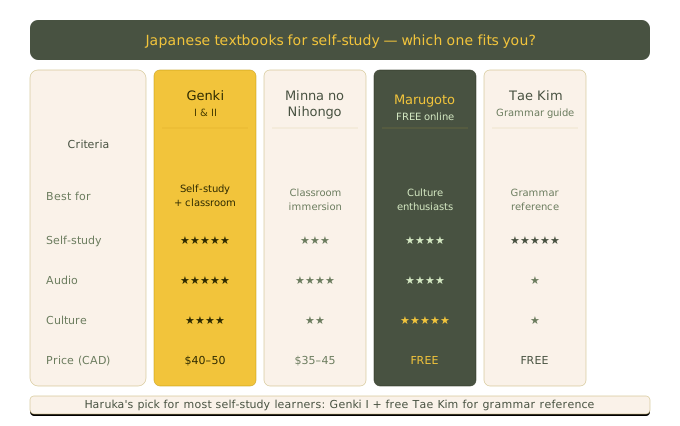
💡 Expert Tips: How to Use Your Textbook Effectively
📅 Study Schedule Optimization
Daily Routine (30-45 minutes):
- 5 minutes: Review previous lesson
- 20 minutes: New material from textbook
- 10 minutes: Practice exercises
- 5 minutes: Anki flashcard review
Weekly Goals:
- Monday-Wednesday: New grammar and vocabulary
- Thursday-Friday: Practice and consolidation
- Saturday: Review and speaking practice
- Sunday: Cultural content and fun activities
🎯 Maximizing Retention
The 3-2-1 Method:
- 3 times: Read new material
- 2 times: Practice exercises
- 1 time: Teach someone else (or explain to yourself)
Active Learning Strategies:
- Write summaries in Japanese after each chapter
- Create your own examples using new grammar
- Record yourself reading dialogues
- Join online study groups for accountability
🔄 Progress Tracking
Monthly Assessments:
- Grammar: Can you explain the last 5 patterns learned?
- Vocabulary: Test yourself on 50 random words
- Listening: Understand 70% of textbook audio?
- Speaking: Can you create 10 sentences using new grammar?
🎓 Why NihongoKnow Students Succeed Faster
🏫 For Vancouver Students:
- Textbook Integration: We use your chosen textbook in class
- Personalized Pace: Adjust speed based on your textbook progress
- Cultural Context: Add real-world Vancouver Japanese community connections
- Speaking Practice: Turn textbook dialogues into real conversations
🌐 For Online Students Worldwide:
- Flexible Scheduling: Study with your textbook, practice with us
- Expert Guidance: Avoid common textbook pitfalls
- Community Support: Connect with other learners using similar textbooks
- Progress Monitoring: Ensure you’re getting the most from your textbook
🎯 Your 30-Day Textbook Success Plan
Need a daily structure to go with your textbook? The Ultimate Daily Japanese Study Routine: From Beginner to Intermediate maps out exactly how to spend each session.
📅 Week 1: Foundation Setting
- Day 1-2: Choose your textbook based on this guide
- Day 3-4: Set up your study space and schedule
- Day 5-7: Complete first chapter, establish routine
📅 Week 2: Rhythm Building
- Day 8-10: Add Anki flashcards to routine
- Day 11-12: Practice first conversations
- Day 13-14: Review and assess progress
📅 Week 3: Acceleration
- Day 15-17: Increase study time by 15 minutes
- Day 18-19: Add listening practice
- Day 20-21: Start writing practice
📅 Week 4: Optimization
- Day 22-24: Fine-tune study methods
- Day 25-26: Connect with other learners
- Day 27-30: Plan next month’s goals
Before any textbook, one thing makes everything else easier: being able to read hiragana fluently.
The NK Hiragana Mastery Series gives you exactly that, workbook, flashcards, and word search puzzles, all built around the same vocabulary you’ll meet in Genki and Minna.
📗 Start here → nihongoknow.com/store
Ready to choose your perfect Japanese textbook? Let NihongoKnow guide you to fluency with the right materials and expert support. Your Japanese journey starts with the right textbook – let’s find yours today!


