
Hello everyone, this is Haruka.
Last winter has been very warm. In Vancouver, where I live, there were even days when I didn’t need a coat at all.
Even while feeling the daily changes in temperature, I’m reminded that human connection and conversation remain just as important.
Challenges of Learning Japanese Independently
Have you ever felt that, while studying Japanese on your own, you don’t have enough opportunities to speak?
A little while ago, I wanted to write about the December meetup.
For Japanese people, December means New Year’s Eve. “Ōmisoka” is another way of saying December 31st.
It’s the same as the word “misoka,” which refers to the last day of any month.
So, “Ōmisoka” literally means the biggest and most important final day of the year.
New Year’s Eve Traditions
On this day, Japanese people gather with their families to welcome the New Year together.
That’s why the end of the year is such a busy time for them.
How did you spend New Year’s Eve with your family and friends?
On New Year’s Eve, people clean every corner of their homes to prepare for the new year. Doing all the cleaning in one day can be overwhelming, and honestly, sometimes it’s hard to clean thoroughly.
Personally, I prefer not to do all the cleaning at once. I start in December and gradually clean places I normally don’t touch.
I feel this is similar to my teaching philosophy. Even small, steady opportunities to practice speaking and expression allow learners to study in a safe environment. Learning, like my cleaning method, is better done little by little rather than trying to be perfect all at once.
December Events|Christmas Party
Returning to December in Japan, of course, it’s Ōmisoka. But globally, December is also Christmas.
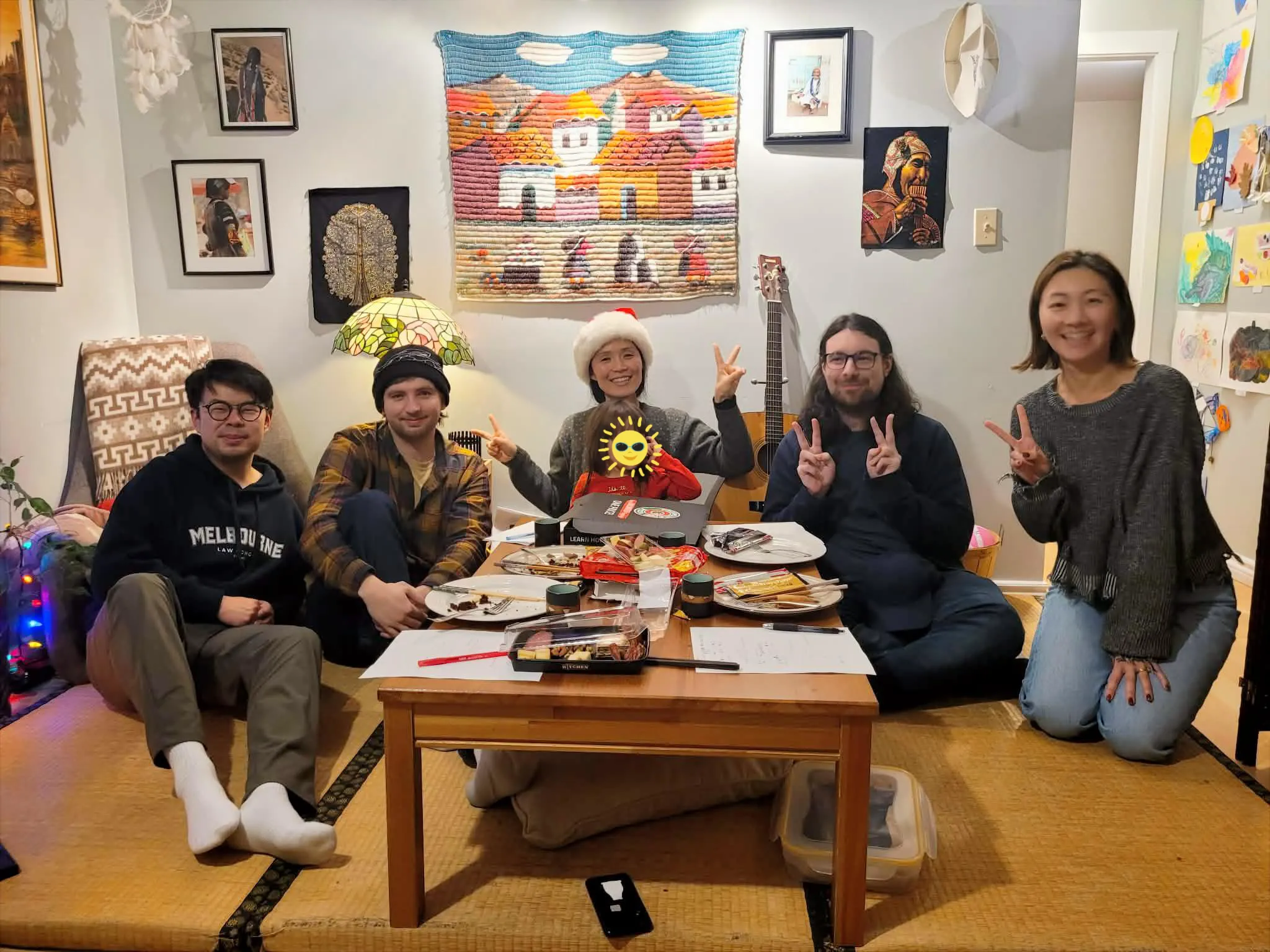
At Nihongoknow, we held a Christmas party.
In previous years, it was organized differently, but in 2025, we decided to run level-specific classes every Saturday.
Some people couldn’t attend due to scheduling conflicts, but we prepared different activities for each class so everyone could take on challenges.
On the day of the event, it was wonderful to see the students enjoying themselves.
Activities in Each Class

Week 1
We held a class for students at Genki 2 and intermediate levels of Minna no Nihongo.
In this session, students met new people and did self-introductions through others.
Afterward, we had snacks, played Japanese games, and concluded with a listening exercise of the classic Christmas song, Christmas Eve by Tatsuro Yamashita.
Everyone even sang along, making it a truly fun time.
Week 2
This session was for intermediate-level students.
We played the “Werewolf Game,” a popular game in Japan.
Even though some participants were absent or late, it was still a great experience.
At this level, students have finished internalizing the basics of Japanese and are now expressing themselves through the language.
Group conversations and interactions are therefore very valuable. Many independent learners at the intermediate level may want this kind of stimulating interaction with others.
Final Week
This class was for upper-intermediate students.
My mother also joined so students could play board games with native Japanese speakers.
The more opportunities students have to interact with real Japanese, the better.
The earlier they are exposed, the easier it is for them to internalize the language as their own.
A Safe Learning Environment
Experiences at Nihongoknow are not just about studying.
By speaking safely, taking on challenges, and interacting with others, students can feel their own growth in the moment.
Wouldn’t it be great to find a place where learning and interaction coexist?
Wouldn’t you like to participate in an online space where you can casually learn and connect?
In my community, providing a “safe place to speak” is one of our priorities.
Events also provide cultural exchange, not just language practice—for example, exploring the differences between Christmas in Japan and North America.
The Teacher’s Role and the Value of Learning
I believe a teacher’s role is to place what students need right in front of them.
The students are the main focus, and a knowledgeable teacher guides them.
Students take in what is placed before them at their own pace.
This applies to everyone, from young children to adults.
We create an environment where even beginners can feel safe speaking.
If you’ve ever wanted a small-group space to interact naturally with other learners, we’d love to have you.

The True Value for Learners
A safe environment allows students to grow little by little. This is the real value of learning, and we continue to create such opportunities.
Of course, each class is shaped by respecting individual goals and interests. At Nihongoknow, we also cover onomatopoeia, honorifics, anime Japanese, movies, and music based on student requests.
I hope each student’s life shines through Japanese.
I hope students can feel comfortable expressing themselves here and grow while learning.
Today, I continue teaching with these thoughts in my heart.
It was wonderful to host a Christmas-themed event, and we look forward to planning the next one.
I’m excited to see our students’ continued growth!


