
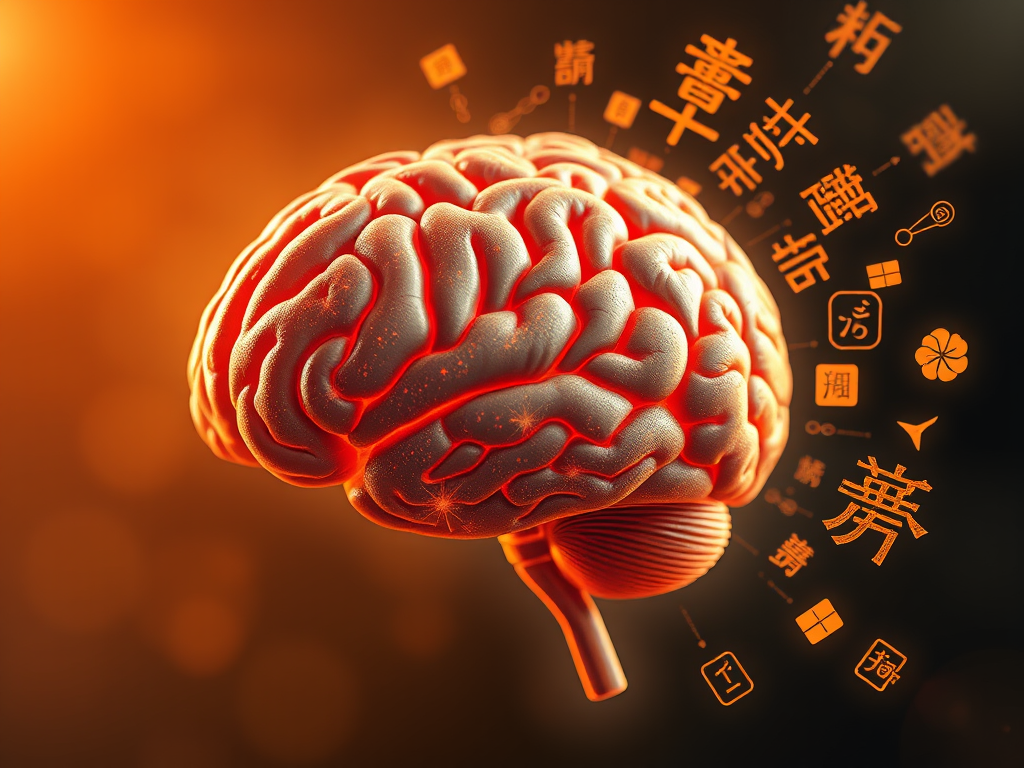
Stop translating, start thinking! Discover how to rewire your brain for natural Japanese fluency using proven neuroscience-based learning techniques.
At NihongoKnow, learning Japanese with your brain means rewiring how you process language, not memorizing translations.
- What Does "Learning Japanese with Your Brain" Really Mean?
- The Translation Trap: Why Most Students Get Stuck
- 💡 The 4 Pillars of Brain-Based Japanese Learning
- Why Traditional Methods Fail (And Ours Succeeds)
- Start Your Japanese Brain Transformation Today
- Is This Method Right for You?
- Ready to Think in Japanese?
What Does “Learning Japanese with Your Brain” Really Mean?
Have you ever wondered why some people seem to “get” Japanese naturally while others struggle for years with the same basic concepts? The secret isn’t talent—it’s how their brain processes the language.
At NihongoKnow, we’ve discovered that traditional Japanese learning methods work against your brain’s natural language acquisition process. Instead of fighting your neurological patterns, we work with them.
Our philosophy: Learning Japanese isn’t about memorizing vocabulary lists or drilling grammar rules. It’s about training your brain to think in Japanese patterns, not English translations.
We call this approach 脳で覚える日本語 (Learning Japanese with Your Brain), and it’s revolutionizing how students achieve fluency.
The Neuroscience Behind Language Learning
Recent research in cognitive neuroscience shows that when we learn a second language effectively, we create new neural pathways—not just expand existing ones. This means your brain literally rewires itself to accommodate Japanese thinking patterns.
The key insight: Your brain wants to learn Japanese the same way it learned your first language—through pattern recognition, not rule memorization.
The Translation Trap: Why Most Students Get Stuck
The Common Learning Pattern (That Doesn’t Work)
Picture this scenario: You want to say “I’m a student” in Japanese.
Traditional method:
- Think in English: “I am a student”
- Translate word by word: “I = watashi, am = desu, student = gakusei”
- Arrange grammar: “Watashi wa… gakusei… desu?”
- Second-guess yourself: “Wait, is that right?”
The problem: This process is slow, unnatural, and creates a mental bottleneck that prevents fluency.
How Native Speakers Actually Think
When Japanese speakers want to express “I’m a student,” they don’t translate. The phrase 「私は学生です」 emerges as a complete thought pattern—instantly and naturally.
Our goal: Help you develop the same instant pattern recognition that native speakers use.
Signs You’re Stuck in Translation Mode
- You pause mid-sentence to “translate” your thoughts
- You know the grammar rules but can’t speak smoothly
- You understand Japanese when reading but struggle with listening
- Conversations feel mentally exhausting
- You think “I know what I want to say, but I can’t say it in Japanese”
Sound familiar? You’re not alone—and more importantly, it’s completely fixable.
💡 The 4 Pillars of Brain-Based Japanese Learning
Pillar 1: Input-First Immersion 🎧
The principle: You can’t speak what you haven’t heard.
Most traditional courses rush students into speaking before their brains have absorbed enough Japanese patterns. This is like asking someone to play piano before they’ve heard music.
How we do it differently:
- Massive listening exposure at natural speed from day one
- Contextual audio that shows how Japanese is really spoken
- Shadowing practice that trains your mouth and brain simultaneously
- Progressive complexity that builds neural pathways gradually
Real example: Instead of learning “これはペンです” as a grammar rule, you’ll hear it in 20 different contexts until your brain recognizes the pattern automatically.
Student feedback: “After 3 months, I realized I was understanding Japanese conversations without translating. It just… made sense.” – Sarah, Vancouver
Pillar 2: Pattern Recognition Over Rule Memorization 🧩
The principle: Your brain learns through patterns, not rules.
Traditional textbooks teach you that “XはYです” is the basic sentence structure. But your brain doesn’t think in X and Y—it thinks in complete, meaningful patterns.
How we do it differently:
- Pattern flooding: You encounter the same structure in dozens of real contexts
- Meaningful repetition: Every example relates to your actual life
- Natural progression: Complex patterns build on simpler ones organically
- Context-rich learning: You see how patterns change in different situations
Traditional approach:
- Rule: “Use は for the topic marker”
- Practice: Fill in blanks with は or が
NihongoKnow approach:
- Pattern experience: “私は学生です” / “今日は暑いです” / “映画は面白いです”
- Natural absorption: Your brain learns は patterns without conscious effort
Pillar 3: Repetition with Meaningful Variation 🔄
The principle: Spaced repetition with contextual variety creates lasting neural pathways.
The brain needs to see the same information in different contexts to truly “own” it. Simple repetition isn’t enough—you need intelligent repetition.
How we do it differently:
- Contextual variety: The same phrase appears in different situations
- Emotional connection: Examples relate to your interests and experiences
- Spaced intervals: Information returns at optimal times for memory consolidation
- Active use: You practice patterns in meaningful conversations
Example: The phrase “いいですね!” appears in:
- Restaurant conversations
- Shopping scenarios
- Weather discussions
- Complimenting someone’s skills
- Agreeing with suggestions
After encountering it naturally 15-20 times, your brain automatically knows when and how to use it.
Pillar 4: Direct Japanese Thinking 🧠
The principle: True fluency means thinking directly in Japanese.
This is the ultimate goal—bypassing English entirely and forming thoughts in Japanese patterns.
How we build this skill:
- Thought-formation exercises: Practice creating Japanese thoughts from scratch
- Internal monologue training: Learn to narrate your day in Japanese
- Instant response drills: Questions that require immediate Japanese answers
- Stream-of-consciousness practice: Express ideas without planning in English first
Progressive development:
Week 1-4: Understand Japanese without translating
Week 5-12: Form simple thoughts directly in Japanese
Week 13-24: Express complex ideas without English interference
Week 25+: Dream and think spontaneously in Japanese
This is the core idea behind learning Japanese with your brain, rather than relying on translation or memorization.
Why Traditional Methods Fail (And Ours Succeeds)
The Problems with Conventional Japanese Learning
❌ Grammar-First Approach
- Overwhelms beginners with abstract rules
- Creates analysis paralysis during conversation
- Ignores how the brain naturally acquires language
❌ Translation-Based Practice
- Reinforces English thinking patterns
- Creates mental bottlenecks
- Prevents natural fluency development
❌ Isolated Vocabulary Lists
- Words learned without context are quickly forgotten
- No connection to real-world usage
- Doesn’t build natural speech patterns
❌ Artificial Conversations
- Textbook dialogues don’t reflect real speech
- Students can’t transfer knowledge to actual situations
- Lacks emotional engagement necessary for memory formation
Why Our Method Works: The Science
✅ Neuroplasticity Optimization We design lessons to maximize your brain’s ability to form new neural pathways for Japanese processing. From a scientific perspective, learning Japanese with your brain activates different neural pathways than traditional study methods.
✅ Pattern Recognition Enhancement By presenting information in pattern-rich contexts, we accelerate your brain’s natural pattern recognition abilities.
✅ Emotional Engagement Learning materials connect to your personal experiences, triggering the emotional centers that enhance memory formation.
✅ Spaced Repetition Science We use research-backed spacing intervals to move information from short-term to long-term memory efficiently.
Measurable Results
Students using our brain-based method show:
- 3x faster progress in listening comprehension
- 2x improvement in natural speaking ability
- 85% reduction in translation dependency
- 90% higher retention rates after 6 months
Start Your Japanese Brain Transformation Today
When you commit to learning Japanese with your brain, fluency becomes a natural result of consistent input and pattern recognition.
What You Get with NihongoKnow
🧠 Personalized Brain Training Program
- Custom learning path based on your current level and goals
- Daily practice sessions designed for optimal neural development
- Progress tracking that shows your brain’s adaptation to Japanese patterns
💬 Real Conversation Practice
- Weekly speaking sessions with native speakers
- Situations based on your actual needs and interests
- Feedback focused on natural communication, not perfect grammar
Is This Method Right for You?
Perfect for Students Who:
🎯 Feel Stuck in Translation Mode
- You understand Japanese when reading but struggle with natural conversation
- You know grammar rules but can’t apply them smoothly
- You think “I know what I want to say but can’t say it in Japanese”
🎯 Want Real Conversational Ability
- You’re tired of textbook Japanese that doesn’t work in real situations
- You want to express your actual thoughts and experiences
- You need Japanese for work, relationships, or travel
🎯 Learn Better Through Patterns
- You prefer understanding “how” over memorizing “what”
- You learn better through examples than abstract rules
- You want to develop intuitive language skills
🎯 Are Committed to Consistency
- You can dedicate 20-30 minutes daily to practice
- You’re willing to trust a new method for 3-6 months
- You want long-term fluency, not quick fixes
Not Right for Students Who:
❌ Prefer Traditional Academic Approaches
- You love grammar charts and rule memorization
- You want to focus on reading and writing only
- You’re studying for specific tests (JLPT) rather than communication
❌ Want Instant Results
- You expect fluency in 30 days
- You’re not willing to invest consistent daily practice
- You prefer shortcuts over sustainable learning
❌ Are Resistant to New Methods
- You’re comfortable with your current (unsuccessful) approach
- You’re not open to changing your learning habits
- You prefer learning alone rather than with guidance
Ready to Think in Japanese?
The difference between students who achieve fluency and those who remain stuck isn’t talent—it’s method.
Traditional approaches work against your brain’s natural language learning process. Our brain-based method works with your neurological patterns to create lasting fluency.
Your Japanese brain is waiting to be activated.
Contact Information
📧 Email: haruka@nihongoknow.com
🌐 Our Curriculum: Lessons
📍 Location: Vancouver, BC (Online programs available worldwide)
Stop studying Japanese. Start thinking Japanese. Your fluent future begins with your first brain-training session.
Take the free assessment now and discover what your Japanese brain is capable of!


