
Want to speak Japanese fluently but don’t have a conversation partner? You’re not alone! Many Japanese learners in Vancouver and across Canada face this exact challenge. The good news? You can build incredible speaking skills right from your own home—no partner required.
At NihongoKnow.com, we’ve helped hundreds of students in Vancouver, Toronto, and beyond master Japanese speaking through proven solo practice methods. Whether you’re preparing for a trip to Japan, advancing your career, or simply passionate about Japanese culture, this comprehensive guide will transform your speaking abilities.
Quick Overview: Master Japanese Speaking Solo 🚀
🎯 Main Goal: Learn to speak Japanese fluently without a conversation partner
⏱️ Time Needed: 15-30 minutes daily
💰 Cost: Free (using methods in this guide)
📅 Results Timeline: Noticeable improvement in 2-4 weeks, conversational confidence in 3-6 months
🏆 Success Rate: Students who follow this routine consistently for 30+ days report significant speaking improvement
🎌 Best For: Beginners to intermediate learners who feel stuck in the “I understand but can’t speak” phase
- Quick Overview: Master Japanese Speaking Solo 🚀
- 🧑🏫 Can You Really Learn to Speak Japanese Alone?
- 💡 The "Understanding vs. Speaking" Gap
- The Science: Why Solo Speaking Practice Actually Works
- 🧰 8 Proven Methods to Practice Japanese Speaking Without a Partner
- 1. Shadowing (シャドーイング): The Foundation Technique
- 2. Self-Narration: Turn Your Inner Voice Japanese
- 3. Dialogue Imitation: Become a One-Person Theater
- 4. Daily Monologue Challenge: Build Fluency Through Topics
- 5. Record and Reflect: Your Personal Speaking Coach
- 6. Question and Answer Sessions: Be Your Own Interviewer
- 7. Story Retelling: Master Natural Flow
- 8. Vocabulary Building Through Speaking: Make Words Stick
- ️💪Creating Your Daily Japanese Speaking Routine
- 🧠 Mindset Tips for Solo Speaking Practice
- 🚫 Common Mistakes to Avoid
- 📖Tracking Your Progress: From Beginner to Confident Speaker
- Your Japanese Speaking Journey Starts Today
🧑🏫 Can You Really Learn to Speak Japanese Alone?
Absolutely, yes! In fact, some of the most effective Japanese speaking practice happens when you’re alone—if you know the right techniques.
Think about it: when you practice solo, you can:
- Make mistakes without embarrassment (crucial for building confidence)
- Repeat difficult words dozens of times without boring a partner
- Practice at your own pace without feeling rushed
- Focus on your specific weak points without accommodating someone else’s level
Many of our Vancouver students start with zero speaking confidence and develop conversational fluency within 6-12 months using primarily solo practice methods. The key is structured, active output practice—not just thinking in Japanese, but actually speaking out loud.
A note from Haruka: The most common thing I hear from students who’ve been studying for months is ‘I understand Japanese but I can’t speak it.’ And almost always, when I ask how they practice speaking, the answer is ‘I don’t, I’m waiting until I’m better.’ That’s the trap. Speaking is how you get better at speaking. I tell every student the same thing on day one: talk to yourself. In the shower, on the SkyTrain, while you cook. It feels strange for about a week. Then it becomes the most natural thing you do.
💡 The “Understanding vs. Speaking” Gap
This gap has a name and a fix. I Can Understand Japanese, But I Can’t Speak It — Why? breaks down exactly what’s happening in your brain and how to close it.”
Does this sound familiar? “I can understand Japanese when I watch anime or read manga, but when I try to speak, nothing comes out!”
This is incredibly common and happens because understanding (input) and speaking (output) use different parts of your brain. Reading and listening are passive skills, while speaking requires active recall and muscle memory.
Solo practice bridges this gap by training your brain to actively retrieve and use Japanese, not just recognize it.
The Science: Why Solo Speaking Practice Actually Works
When you speak Japanese out loud—even to yourself—your brain undergoes several important processes:
1. Neuroplasticity Activation
Speaking creates new neural pathways between your language centers and motor cortex (the part that controls your mouth and tongue). This is why many polyglots emphasize speaking from day one.
2. Muscle Memory Development
Your mouth, tongue, and vocal cords need to learn Japanese sounds that don’t exist in English. Solo practice lets you repeat these sounds until they become automatic.
3. Confidence Building Through Repetition
Every time you successfully complete a Japanese sentence alone, you’re building confidence. This mental rehearsal prepares you for real conversations.
4. Active Recall Strengthening
When you force yourself to speak, you’re practicing active recall—pulling information from memory rather than just recognizing it. This dramatically improves retention.
🧰 8 Proven Methods to Practice Japanese Speaking Without a Partner
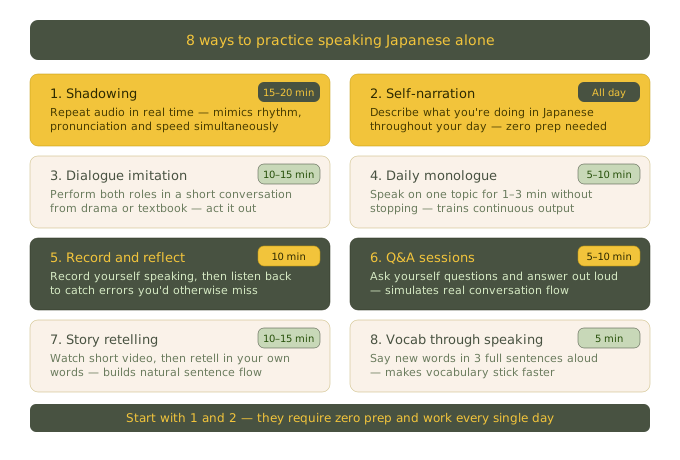
1. Shadowing (シャドーイング): The Foundation Technique
Shadowing involves listening to Japanese audio and repeating it simultaneously, like an echo. This powerful technique improves pronunciation, rhythm, and listening skills together.
Haruka’s take: Shadowing was the technique that changed everything for me as a teacher, not because I needed it for Japanese, but because I watched what it did to my students. One woman in my Vancouver class had been studying for two years and could barely string a sentence together out loud. We did shadowing for three weeks. By the end of week two she was mimicking the rhythm of a Japanese news anchor, laughing at herself, and actually enjoying it. The confidence shift was visible. That’s what shadowing does.
Want to go deeper on this technique? The NihongoKnow Method: Your Ultimate Guide to Shadowing covers everything from beginner setup to advanced practice in detail.”
How to Shadow Effectively:
- Start with slow, clear content (NHK Easy News, children’s shows)
- Don’t worry about understanding every word—focus on mimicking sounds
- Practice 15-20 minutes daily for best results
- Gradually increase speed and complexity
Best Shadowing Resources:
- NHK Easy News (perfect for beginners)
- Japanese drama series (Netflix has great options)
- YouTube channels like JapanesePod101
- Anime with clear pronunciation (avoid overly dramatic series)
Pro Tip from NihongoKnow: Start with content that’s slightly below your current level. The goal is smooth mimicking, not struggling with new vocabulary.
2. Self-Narration: Turn Your Inner Voice Japanese
This might feel awkward at first, but describing your daily activities in Japanese is incredibly effective for building fluency.
Daily Narration Examples:
- Morning routine: “今、歯を磨いています。それから、コーヒーを作ります。” (I’m brushing my teeth now. Then I’ll make coffee.)
- Cooking: “野菜を切っています。今日はカレーを作ります。” (I’m cutting vegetables. I’m making curry today.)
- Commuting: “バスを待っています。今日は会議があります。” (I’m waiting for the bus. I have a meeting today.)
Advanced Narration Techniques:
- Describe your thoughts and feelings: “今日は疲れています。でも、日本語の勉強は楽しいです。”
- Plan your day out loud: “明日は友達と映画を見に行きます。”
- Reflect on experiences: “昨日のレストランはとても美味しかったです。”
3. Dialogue Imitation: Become a One-Person Theater
Choose short conversations from anime, dramas, or textbooks and perform both roles. This technique helps you internalize natural conversation patterns.
Step-by-Step Process:
- Choose a 30-60 second dialogue with clear, natural Japanese
- Listen multiple times until you understand the context
- Practice each role separately until comfortable
- Perform the full dialogue, switching between characters
- Add emotion and gestures to make it more natural
Great Dialogue Sources:
- Japanese drama series on Netflix
- Textbook audio (Genki, Minna no Nihongo)
- Anime with realistic conversations (slice-of-life genres work well)
- YouTube Japanese conversation practice videos
4. Daily Monologue Challenge: Build Fluency Through Topics
Set a timer and speak about a specific topic for 1-3 minutes without stopping. This trains your brain to think and speak in Japanese continuously.
Beginner Topics (1 minute):
- Your family
- Your hometown (Vancouver!)
- Your favorite food
- Today’s weather
Intermediate Topics (2-3 minutes):
- A memorable vacation
- Your dream job
- Differences between Canada and Japan
- Your learning goals
Advanced Topics (3-5 minutes):
- Current events (practice giving opinions)
- Cultural differences you’ve noticed
- Your philosophy on learning languages
- Future plans and aspirations
Monologue Success Tips:
- Don’t stop talking, even if you make mistakes
- Use gestures to help express ideas
- Record yourself to track improvement
- Keep a topic list for when you’re stuck
5. Record and Reflect: Your Personal Speaking Coach
Recording yourself might feel uncomfortable, but it’s one of the most effective ways to improve pronunciation and fluency.
Recording Practice Schedule:
- Week 1-2: Record the same 30-second introduction daily
- Week 3-4: Record different topics each day
- Week 5+: Record longer conversations and monologues
What to Listen For:
- Pronunciation clarity (are you pronouncing each syllable?)
- Natural rhythm (does it sound robotic or flowing?)
- Confidence level (are you hesitating too much?)
- Grammar patterns (are you using varied sentence structures?)
6. Question and Answer Sessions: Be Your Own Interviewer
Create questions and answer them aloud. This simulates real conversation scenarios.
Self-Interview Examples:
- Basic Questions: “お名前は何ですか?” → “私の名前は[your name]です。”
- Personal Questions: “趣味は何ですか?” → “私の趣味は読書と映画鑑賞です。”
- Opinion Questions: “日本の文化についてどう思いますか?”
Advanced Technique: Research common Japanese interview questions and practice answering them. This is especially useful if you’re planning to work in Japan or with Japanese companies.
7. Story Retelling: Master Natural Flow
Watch a short Japanese video or read a simple story, then retell it in your own words. This develops your ability to organize thoughts in Japanese.
Story Retelling Process:
- Choose simple content (5-10 minutes maximum)
- Watch/read without taking notes
- Immediately retell what you remember
- Check the original and retell again with more details
- Practice retelling until it flows naturally
8. Vocabulary Building Through Speaking: Make Words Stick
Instead of just memorizing vocabulary lists, practice using new words in sentences out loud.
Speaking-Based Vocabulary Practice:
- Create three sentences using each new word
- Make personal connections: “この映画は面白いです。私も面白い映画が好きです。”
- Use emotion: Happy words with excited voice, sad words with somber tone
- Build word families: Practice related words together (食べる、食べ物、食事)
️💪Creating Your Daily Japanese Speaking Routine
Need a full daily structure beyond just speaking practice? The Ultimate Daily Japanese Study Routine: From Beginner to Intermediate maps out how speaking fits alongside reading, listening, and grammar.
Consistency beats intensity when it comes to language learning. Here’s a realistic daily routine that fits into busy Vancouver lifestyles:
Morning Routine (10 minutes)
- 5 minutes: Narrate your morning activities in Japanese
- 5 minutes: Shadow a short news segment or podcast
Commute Time (15-20 minutes)
- Perfect for: Audio shadowing or vocabulary practice
- Vancouver-specific: Practice describing your commute route in Japanese!
Evening Practice (15-20 minutes)
- 10 minutes: Daily monologue on a chosen topic
- 5-10 minutes: Record and review yourself speaking
Weekend Deep Practice (30-45 minutes)
- 15 minutes: Dialogue imitation practice
- 15 minutes: Story retelling exercise
- 15 minutes: Free conversation with yourself on any topic
🧠 Mindset Tips for Solo Speaking Practice
Embrace the Awkwardness
Talking to yourself feels weird at first—that’s completely normal! Every successful Japanese speaker has been through this phase. The awkwardness disappears with practice.
Progress Over Perfection
Your goal isn’t to speak perfectly; it’s to speak confidently and naturally. Native speakers make mistakes too—focus on communicating your ideas clearly.
Celebrate Small Wins
- Successfully completing a 2-minute monologue
- Pronouncing a difficult word correctly
- Using a new grammar pattern naturally
- Speaking faster than last week
Use Visualization
Before practicing, spend 30 seconds imagining yourself having a confident conversation in Japanese. This mental rehearsal improves actual performance.
🚫 Common Mistakes to Avoid
❌ Mistake #1: Practicing Only in Your Head
Why it fails: Silent practice doesn’t build the muscle memory needed for actual speaking.
✅ Solution: Always practice out loud, even if you’re whispering.
❌ Mistake #2: Waiting for the “Perfect” Moment
Why it fails: There’s never a perfect time to start speaking.
✅ Solution: Start speaking from day one, even if it’s just counting to ten.
❌ Mistake #3: Focusing Only on Grammar Perfection
Why it fails: Over-analyzing grammar kills fluency and confidence.
✅ Solution: Speak first, correct later. Fluency comes before accuracy.
❌ Mistake #4: Comparing Yourself to Others
Why it fails: Everyone learns at different speeds with different strengths.
✅ Solution: Track your own progress. Record yourself weekly to hear improvement.
❌ Mistake #5: Inconsistent Practice
Why it fails: Languages require regular use to maintain and improve.
✅ Solution: Even 5 minutes daily beats 2 hours once a week.
📖Tracking Your Progress: From Beginner to Confident Speaker
Week 1-2: Foundation Building
- Goal: Get comfortable speaking out loud
- Metrics: Can complete 30-second self-introduction without stopping
- Focus: Basic narration and shadowing
Month 1: Routine Establishment
- Goal: Establish daily speaking habit
- Metrics: Can speak for 2-3 minutes on familiar topics
- Focus: Daily monologues and dialogue practice
Month 2-3: Fluency Building
- Goal: Increase speaking speed and confidence
- Metrics: Can retell simple stories and express opinions
- Focus: Complex topics and longer speaking sessions
Month 4-6: Conversation Readiness
- Goal: Prepare for real conversations
- Metrics: Can handle unexpected topics and self-correct naturally
- Focus: Interactive practice and real-world scenarios
Your Japanese Speaking Journey Starts Today
Remember: every confident Japanese speaker started exactly where you are right now. The difference between those who succeed and those who give up is consistent daily practice and the courage to speak, even imperfectly.
Solo speaking practice isn’t just a stepping stone to “real” conversation—it’s a powerful skill that will serve you throughout your Japanese learning journey. Many advanced speakers continue using these techniques to maintain and improve their fluency.
Ready to Transform Your Japanese Speaking?
At NihongoKnow.com, we specialize in helping Vancouver learners build confident speaking skills through structured, personalized practice routines. Whether you’re a complete beginner or looking to break through a speaking plateau, our experienced instructors can create a custom plan that fits your schedule and goals.


