
Quick View: Your September Japan Cultural Calendar
What Makes September Special:
A transition from summer’s heat to autumn’s reflection—a month of gratitude, remembrance, and seasonal awareness in Japan.
Key Holidays:
Respect for the Aged Day (Sept 21), Autumn Equinox Day (Sept 23)
Cultural Themes:
Honoring elders, remembering ancestors, disaster preparedness, and appreciating seasonal change.
Learning Opportunities:
20+ Japanese vocabulary words, cultural phrases, and traditional customs.
At a Glance – September 2026:
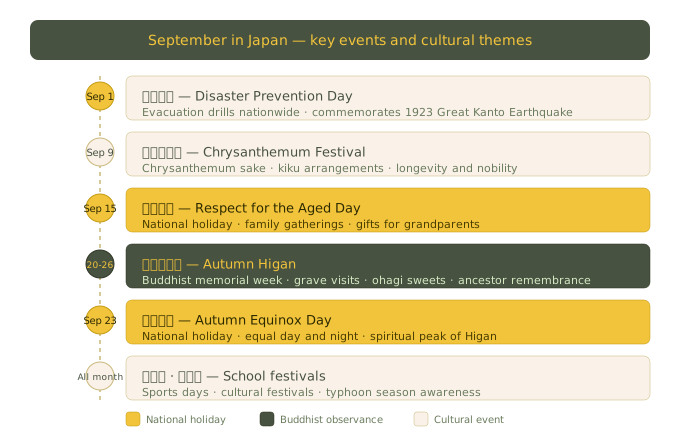
- September 1: Disaster Prevention Day (防災の日)
- September 9: Chrysanthemum Festival / Chōyō no Sekku (重陽の節句)
- September 11: The 220th Day (二百二十日) — traditional seasonal marker
- September 21: Respect for the Aged Day (敬老の日) — National Holiday
- September 20–26: Autumn Higan (秋のお彼岸) — Buddhist memorial period
- September 23: Autumn Equinox Day (秋分の日) — National Holiday
- Throughout September: School sports festivals, typhoon season awareness, and seasonal food
- Quick View: Your September Japan Cultural Calendar
- Why September is Japan's Month of Reflection and Gratitude
- The Cultural Significance of September in Japanese Society
- National Holidays: Deep Dive into September's Official Celebrations
- Traditional Festivals and Cultural Events
- School and Community Events in September
- The Spiritual Dimension: Autumn Higan (秋のお彼岸)
- Weather Patterns and Seasonal Awareness
- Food Culture: September's Seasonal Delicacies
- Japanese Language Learning Through September Culture
- Planning Your September Japan Experience
- The Deeper Meaning: What September Teaches Us About Japanese Culture
- Your September Learning Journey
- Conclusion: Embracing September's Wisdom
- The Enduring Significance of September in Japanese Culture
Why September is Japan’s Month of Reflection and Gratitude
Picture this: the oppressive heat of August finally breaking, leaves beginning their subtle transformation, and families across Japan gathering to honor both the living and the departed. September in Japan isn’t just about weather changing—it’s about hearts and minds shifting toward gratitude, remembrance, and preparation for the future.
For Japanese language learners and cultural enthusiasts, September offers a treasure trove of vocabulary, customs, and insights into Japanese values that you simply cannot find in textbooks. From the respectful observance of Respect for the Aged Day to the spiritual reflection of Autumn Equinox, this month embodies the essence of Japanese culture: harmony between tradition and modernity, respect for nature’s rhythms, and deep reverence for family bonds.
Whether you’re planning a trip to Japan, studying Japanese language, or simply curious about Japanese culture, understanding September’s significance will give you profound insights into how Japanese people view life, death, family, and community.
September is also the month when Japanese correspondence shifts to autumn seasonal greetings. Japanese Seasonal Greetings: From Uraraka Spring to Sokobie Winter explains exactly how to use them.”
A note from Haruka: Even here in Vancouver, September always makes me think of my grandparents. For me, it’s less about Respect for the Aged Day and more about that feeling after seeing my grandparents over the summer, wondering how everyone is doing and hoping they’re well. Of course I think of my grandmother too, but now when Respect for the Aged Day comes around, it’s my daughter who writes letters to my mom or gives her a call. Even though we’re far apart, I find myself wanting September to be a time when my grandmother still feels close to us.
The Cultural Significance of September in Japanese Society
The Philosophy of Seasonal Transition
In Japanese culture, September represents aki no hajimari (秋の始まり) – the beginning of autumn. This isn’t merely a meteorological change; it’s a spiritual and emotional transition that affects how people interact, what they prioritize, and how they connect with their heritage.
The concept of mono no aware (物の哀れ) – the pathos of things or the bittersweet awareness of impermanence – becomes particularly relevant in September. As summer’s vibrant energy gives way to autumn’s contemplative beauty, Japanese people naturally turn inward, reflecting on the year’s journey and preparing for the introspective months ahead.
Traditional Japanese Calendar System
Understanding September in Japan requires knowledge of the traditional calendar system still used alongside the modern Gregorian calendar:
Rokuyō (六曜) System: Each day has an associated fortune level affecting when people schedule important events Nijūshi Sekki (二十四節気): The 24 seasonal divisions that guide agricultural and cultural activities Zassetsu (雑節): Additional seasonal markers like the 220th day (二百二十日) that predict weather patterns
These systems create a rich tapestry of meaning that influences everything from when to visit graves to when farmers protect their crops from seasonal typhoons.
National Holidays: Deep Dive into September’s Official Celebrations
Respect for the Aged Day (敬老の日 / Keirō no Hi) – September 21, 2026
Historical Background: Originally called Toshiyori no Hi (としよりの日) or “Old People’s Day,” this holiday was established in 1966 to honor the elderly and their contributions to society. The name was changed to the more respectful “Keirō no Hi” in 2001, reflecting Japan’s evolving attitudes toward aging.
Cultural Significance: This holiday embodies the Confucian value of filial piety (孝行 / kōkō) that remains central to Japanese society. It’s not merely about age—it’s about wisdom, experience, and the accumulated knowledge that elders bring to families and communities.
Modern Observance:
- Family Gatherings: Multi-generational families come together, often traveling significant distances
- Gift-Giving: Traditional gifts include health supplements, comfortable clothing, and seasonal foods
- Community Events: Local governments organize festivals, health checks, and appreciation ceremonies
- Media Coverage: Television programs highlight centenarians and their life stories
Essential Vocabulary & Phrases:
- おじいさん (ojiisan) – grandfather/elderly man
- おばあさん (obaasan) – grandmother/elderly woman
- 長寿 (chōju) – longevity
- 健康 (kenkō) – health
- 感謝 (kansha) – gratitude
- 経験 (keiken) – experience
- 知恵 (chie) – wisdom
Conversation Starters:
「いつもありがとうございます。これからも元気でいてください。」"Thank you for everything. Please continue to stay healthy."「おじいさんの話をもっと聞かせてください。」"Please tell me more of your stories, grandfather."「長生きの秘訣は何ですか?」"What's the secret to a long life?"
For current statistics on Japan’s aging population, the Ministry of Health, Labour and Welfare publishes annual reports in English.
Want to go deeper into expressing gratitude in Japanese? Beyond ‘Arigatou’: The Complete Guide to Expressing Gratitude in Japanese covers every level from casual to formal.
Autumn Equinox Day (秋分の日 / Shūbun no Hi) – September 23, 2026
Astronomical and Cultural Significance: The autumn equinox marks the moment when day and night are equal in length, symbolizing balance and harmony. In Japanese Buddhism, this represents the perfect equilibrium between the world of the living and the world of the dead.
Connection to Higan (彼岸): The autumn equinox falls in the middle of Higan (彼岸), a seven-day period when the boundary between our world and the spirit world is believed to be thinnest. This makes it an ideal time for connecting with deceased ancestors.
Understanding the concept of 物の哀れ (mono no aware) deepens your appreciation of Higan. Why Learning Japanese Deepens Your Understanding of Japanese Culture explores this connection.
Haruka’s take: Higan was never something we talked about much, we just did it. As a child I didn’t really understand why we cleaned the grave so carefully or why my grandmother would stand there so quietly. It was only later, teaching Japanese culture to students, that I found the words for it: the boundary between worlds feeling thin. That’s exactly what September feels like in Japan. Not sad, just aware.
Traditional Observances:
- Grave Visits: Families clean ancestral graves and offer fresh flowers
- Food Offerings: Special sweets like ohagi (rice balls with sweet bean paste) are prepared
- Temple Visits: Buddhist temples hold special ceremonies and prayers
- Meditation: A time for personal reflection and spiritual contemplation
Regional Variations:
- Kansai Region: Emphasis on chrysanthemum decorations and sake
- Tohoku Region: Special foods made with local autumn ingredients
- Okinawa: Unique blend of Buddhist and indigenous spiritual practices
Essential Vocabulary:
- 彼岸 (higan) – Buddhist memorial period
- 墓参り (hakamairi) – grave visiting
- 先祖 (senzo) – ancestors
- 供養 (kuyō) – memorial service
- 平等 (byōdō) – equality/balance
- 昼夜 (chūya) – day and night
- 霊 (rei) – spirit/soul
Traditional Festivals and Cultural Events
Chrysanthemum Festival (重陽の節句 / Chōyō no Sekku) – September 9
Historical Origins: Dating back to the Heian period (794-1185), this festival originated from Chinese tradition but was adapted to Japanese sensibilities. The chrysanthemum, with its association with longevity and nobility, became the perfect symbol for this celebration.
The Five Sacred Festivals: Chōyō no Sekku is one of the gosekku (五節句) – five traditional seasonal festivals:
- Jinjitsu (January 7): Seven herbs festival
- Jōshi (March 3): Peach/Girls’ Day
- Tango (May 5): Children’s Day
- Tanabata (July 7): Star festival
- Chōyō (September 9): Chrysanthemum festival
Traditional Activities:
- Kiku-zake (菊酒): Chrysanthemum sake for health and longevity
- Kiku-ningyo (菊人形): Chrysanthemum dolls displayed in parks
- Poetry Competitions: Composing verses about autumn and aging
- Ikebana Arrangements: Elaborate chrysanthemum flower arrangements
Modern Celebrations: While less prominent than other festivals, many Japanese gardens, temples, and cultural centers still host chrysanthemum exhibitions. The Kiku Matsuri (菊祭り) in Tokyo’s Hibiya Park is particularly famous.
Cultural Symbolism:
- Longevity: Chrysanthemums bloom late in the year, symbolizing endurance
- Nobility: The 16-petal chrysanthemum is the imperial family’s symbol
- Purity: The flower’s perfect geometric form represents spiritual perfection
- Autumn Beauty: Celebrates the unique aesthetic of fall flowers
Disaster Prevention Day (防災の日 / Bōsai no Hi) – September 1
Historical Context: Established in 1960 to commemorate the Great Kanto Earthquake of September 1, 1923, this day reflects Japan’s ongoing relationship with natural disasters and the importance of preparedness in Japanese culture.
Cultural Significance: This observance reveals deep aspects of Japanese culture:
- Collective Responsibility: Everyone’s safety depends on everyone’s preparation
- Respect for Nature: Acknowledgment of natural forces beyond human control
- Practical Wisdom: The importance of learning from past experiences
- Community Bonds: Disasters strengthen social cohesion and mutual aid
National and Local Activities:
- Evacuation Drills: Schools, offices, and entire neighborhoods practice emergency procedures
- Emergency Kit Checks: Families review and update disaster supplies
- Educational Programs: Media coverage about earthquake preparedness and emergency response
- Community Meetings: Local planning and coordination for disaster response
Essential Emergency Vocabulary:
- 地震 (jishin) – earthquake
- 津波 (tsunami) – tsunami
- 台風 (taifū) – typhoon
- 避難 (hinan) – evacuation
- 緊急 (kinkyū) – emergency
- 安全 (anzen) – safety
- 救助 (kyūjo) – rescue
- 準備 (junbi) – preparation
Useful Emergency Phrases:
「地震です!机の下に隠れてください!」"It's an earthquake! Hide under the desk!"「避難場所はどこですか?」"Where is the evacuation site?"「大丈夫ですか?」"Are you okay?"
The 220th Day (二百二十日 / Nihyaku-tōka) – Around September 11
Traditional Calendar Significance: This ancient agricultural marker, counting 220 days from the start of spring according to the lunar calendar, traditionally signals the peak of typhoon season. It demonstrates how closely Japanese culture is tied to natural cycles and agricultural rhythms.
Agricultural Importance:
- Crop Protection: Farmers take extra precautions to protect rice crops nearing harvest
- Weather Watching: Increased attention to weather patterns and storm warnings
- Insurance Traditions: Historical practices of community support for weather-damaged crops
- Seasonal Festivals: Some regions hold festivals to pray for protection from storms
Modern Relevance: While modern meteorology has replaced traditional predictions, the 220th day remains culturally significant as a reminder of Japan’s agricultural heritage and the importance of seasonal awareness.
School and Community Events in September
Sports Festivals (運動会 / Undōkai)
Educational and Cultural Significance: September’s sports festivals are much more than athletic competitions—they’re celebrations of Japanese values like teamwork, perseverance, and collective achievement. These events reveal fundamental aspects of Japanese society and education.
Typical Events and Their Cultural Meaning:
Relay Races (リレー):
- Emphasize teamwork and individual contribution to group success
- Demonstrate the Japanese concept of wa (和) – harmony and cooperation
- Show how individual excellence serves the collective good
Tug-of-War (綱引き):
- Represents the historical struggle between communities or classes
- Demonstrates the power of unified effort
- Connects to Shinto ideas about spiritual strength through physical exertion
Traditional Dances (民踊):
- Preserve regional cultural traditions
- Connect modern students to historical heritage
- Emphasize synchronized movement and group coordination
Bento Culture: Sports festivals are famous for elaborate bento (弁当) lunches prepared by families:
- Kyaraben (キャラ弁): Character-themed lunch boxes
- Seasonal Ingredients: Foods that reflect autumn’s arrival
- Family Bonding: Multi-generational cooking and sharing
Parent and Community Involvement:
- Photography Etiquette: Complex social rules about taking pictures
- Volunteer Coordination: Extensive parent involvement in organization
- Regional Variations: Different traditions in various parts of Japan
School Cultural Festivals (文化祭 / Bunka-sai)
Often held in September or October, these events showcase student creativity and cultural activities:
- Class Presentations: Research projects, performances, and exhibitions
- Food Stalls: Students prepare and sell regional specialties
- Cultural Performances: Traditional music, dance, and drama
- Art Exhibitions: Student artwork and crafts displays
The Spiritual Dimension: Autumn Higan (秋のお彼岸)
Buddhist Philosophy and Practice
The Concept of Higan: The word “higan” literally means “the other shore,” referring to the Buddhist concept of enlightenment or the Pure Land. During this period, the boundary between the world of the living and the spirit world is believed to be thinnest.
Seven-Day Observance (September 20-26, 2026):
- Day 1-3: Preparation and reflection
- Day 4 (Equinox): Peak spiritual activity
- Day 5-7: Continued remembrance and gratitude
Traditional Practices:
Grave Maintenance (墓掃除):
- Cleaning headstones and surrounding areas
- Removing weeds and debris
- Replacing old flowers with fresh ones
- Lighting incense and offering prayers
Food Offerings:
- Ohagi (おはぎ): Rice balls covered with sweet azuki bean paste
- Seasonal Fruits: Persimmons, grapes, and pears
- Sake: For adult spirits
- Sweets: Particularly those the deceased enjoyed in life
Family Gatherings:
- Multi-generational visits to family graves
- Sharing stories about deceased family members
- Passing down family history to younger generations
- Reinforcing family bonds and continuity
Regional Variations in Higan Observance
Kansai Region:
- Elaborate food preparations with local specialties
- Extended family gatherings lasting several days
- Special temple ceremonies with community participation
Tohoku Region:
- Integration with harvest festivals
- Emphasis on seasonal food offerings
- Connection to agricultural cycles and gratitude
Okinawa:
- Unique blend of Buddhist and indigenous spiritual practices
- Different food traditions and ceremony styles
- Integration with local ancestor worship customs
Weather Patterns and Seasonal Awareness
The Transition from Summer to Autumn
Meteorological Changes:
- Temperature: Gradual cooling from 30°C+ to comfortable 20-25°C
- Humidity: Decreased humidity levels bring relief from summer’s oppression
- Rainfall: Shift from summer’s intense downpours to autumn’s gentle rains
- Wind Patterns: Changing wind directions signal seasonal transition
Typhoon Season Awareness: September is peak typhoon season in Japan, making weather awareness crucial:
- Tracking Systems: Sophisticated weather monitoring and public alerts
- Preparation Rituals: Annual checking of emergency supplies and evacuation plans
- Community Coordination: Neighborhood-level disaster preparedness
- Cultural Adaptation: How Japanese society has learned to live with natural disasters
Seasonal Aesthetics:
- Foliage Changes: Early hints of autumn colors in mountainous regions
- Light Quality: Shifting sunlight creates different photographic and artistic opportunities
- Clothing Transitions: Gradual shift from summer to autumn wardrobes
- Architectural Responses: Traditional buildings designed for seasonal transitions
Food Culture: September’s Seasonal Delicacies
Traditional Autumn Foods
Ohagi (おはぎ) – The Quintessential Higan Sweet: Made with glutinous rice and sweet azuki bean paste, ohagi represents the perfect balance of flavors and textures that characterize Japanese sweets. The preparation involves:
- Rice Preparation: Partially mashed glutinous rice for unique texture
- Bean Paste Varieties: Red azuki, white beans, or kinako (soybean flour)
- Seasonal Significance: Colors and flavors that reflect autumn’s arrival
- Family Traditions: Recipes passed down through generations
Seasonal Vegetables and Fruits:
- Nashi (梨): Asian pears with crisp texture and subtle sweetness
- Kaki (柿): Persimmons in various varieties and preparations
- Kururi (栗): Chestnuts used in both sweet and savory dishes
- Satsumaimo (さつまいも): Sweet potatoes prepared in numerous ways
Regional Specialties:
- Hokkaido: Fresh seafood and dairy products
- Tohoku: Rice-based dishes celebrating harvest season
- Kansai: Sophisticated preparations of seasonal ingredients
- Kyushu: Unique local vegetables and cooking methods
Modern Food Trends in September
Convenience Store Innovations: Japanese convenience stores introduce seasonal items that reflect September’s themes:
- Seasonal Bentō: Lunch boxes with autumn ingredients
- Limited-Time Sweets: Flavors like sweet potato, chestnut, and persimmon
- Beverage Transitions: From summer’s cold drinks to autumn’s warm options
- Snack Innovations: Seasonal flavors that capture autumn essence
Restaurant Seasonal Menus:
- Kaiseki Changes: High-end restaurants adjust menus to seasonal ingredients
- Family Restaurant Specials: Accessible seasonal dishes for general public
- Café Culture: Autumn-themed beverages and desserts
- Street Food Evolution: Seasonal variations of popular street foods
Japanese Language Learning Through September Culture
Essential Vocabulary by Theme
Family and Respect:
- 敬老 (keirō) – respect for the elderly
- 祖父母 (sofubo) – grandparents
- 家族 (kazoku) – family
- 尊敬 (sonkei) – respect/reverence
- 感謝 (kansha) – gratitude
- 孝行 (kōkō) – filial piety
Seasons and Nature:
- 季節 (kisetsu) – season
- 秋 (aki) – autumn
- 彼岸 (higan) – equinox period
- 台風 (taifū) – typhoon
- 収穫 (shūkaku) – harvest
- 紅葉 (kōyō) – autumn leaves
Spiritual and Cultural:
- 先祖 (senzo) – ancestors
- 供養 (kuyō) – memorial service
- 墓参り (hakamairi) – grave visiting
- 菊 (kiku) – chrysanthemum
- 祭り (matsuri) – festival
- 伝統 (dentō) – tradition
Safety and Preparedness:
- 防災 (bōsai) – disaster prevention
- 地震 (jishin) – earthquake
- 避難 (hinan) – evacuation
- 安全 (anzen) – safety
- 準備 (junbi) – preparation
- 訓練 (kunren) – training/drill
Grammar Patterns Common in September Contexts
Expressing Gratitude and Respect:
いつも + [action] + てくださって + ありがとうございます"Thank you for always [doing action]"Example: いつも元気でいてくださってありがとうございます"Thank you for always staying healthy"
Describing Seasonal Changes:
だんだん + [adjective] + なってきました"It's gradually becoming [adjective]"Example: だんだん涼しくなってきました"It's gradually becoming cooler"
Expressing Seasonal Activities:
[Season] には + [activity] + ます"In [season], we [do activity]"Example: 秋には墓参りをします"In autumn, we visit graves"
Cultural Context for Language Learning
Politeness Levels: September’s events require understanding various politeness levels:
- Casual Family: Used with close family members during gatherings
- Respectful: Appropriate for addressing elderly family members
- Formal: Required for community events and public ceremonies
- Honorific: Used when discussing deceased ancestors or spiritual matters
Regional Dialects: Different regions have unique expressions for September activities:
- Kansai-ben: Distinctive expressions for festival activities
- Tohoku-ben: Agricultural terminology for harvest season
- Okinawan: Unique spiritual and cultural vocabulary
Planning Your September Japan Experience
For Tourists and Visitors
Best Places to Experience September Culture:
Tokyo:
- Hibiya Park: Chrysanthemum exhibitions and autumn gardens
- Sensoji Temple: Traditional ceremonies and seasonal decorations
- Meiji Shrine: Peaceful reflection and seasonal beauty
- Local Schools: Some welcome visitors during sports festivals (with permission)
Kyoto:
- Philosopher’s Path: Early autumn scenery and temple visits
- Fushimi Inari: Spiritual significance enhanced during equinox
- Traditional Gardens: Seasonal transitions in landscape design
- Cultural Centers: Special exhibitions about autumn traditions
Regional Experiences:
- Hokkaido: Early autumn colors and seasonal foods
- Tohoku: Harvest festivals and agricultural traditions
- Okinawa: Unique blend of traditions and tropical autumn
Practical Tips for September Visitors:
- Weather Preparation: Layers for temperature variations
- Typhoon Awareness: Stay informed about weather conditions
- Cultural Sensitivity: Understand appropriate behavior during spiritual observances
- Photography Etiquette: Respect privacy during family gatherings
For Japanese Language Students
Study Strategies:
- Vocabulary Building: Focus on seasonal and cultural terms
- Cultural Context: Understand the deeper meanings behind traditions
- Media Consumption: Watch Japanese TV programs about September events
- Conversation Practice: Discuss seasonal topics with native speakers
Recommended Resources:
- NHK World: Educational programming about Japanese culture
- Japanese Newspapers: Seasonal articles and cultural explanations
- Language Exchange: Discuss September traditions with Japanese partners
- Cultural Centers: Attend events and workshops about autumn traditions
The Deeper Meaning: What September Teaches Us About Japanese Culture
Core Values Revealed
Intergenerational Respect: September’s emphasis on honoring elders reveals the deep Confucian influence on Japanese society. This isn’t mere politeness—it’s a fundamental belief that wisdom comes with age and experience, and that society benefits when this wisdom is preserved and respected.
Harmony with Nature: The careful attention to seasonal transitions, weather patterns, and natural cycles shows how Japanese culture maintains connection to natural rhythms despite rapid modernization. This harmony extends to spiritual practices, agricultural awareness, and daily life adjustments.
Community Responsibility: Disaster Prevention Day and community sports festivals demonstrate the Japanese belief in collective responsibility and mutual aid. Individual safety and success are understood as interconnected with community wellbeing.
Spiritual Continuity: The observance of Higan and ancestor remembrance reveals how Japanese culture maintains connection between past, present, and future. This spiritual continuity provides stability and meaning in rapidly changing times.
Modern Adaptations of Traditional Values
Technology Integration: Modern Japanese society has adapted traditional September observances to include:
- Digital Disaster Alerts: Smartphone apps for typhoon and earthquake warnings
- Online Memorial Services: Virtual grave visits for distant family members
- Social Media Sharing: Appropriate ways to share family gatherings and cultural events
- Modern Transportation: Efficient travel systems for holiday gatherings
Evolving Family Structures: As Japanese family structures change, September traditions adapt:
- Smaller Families: Modified observances for nuclear families
- International Families: Blending traditions from different cultures
- Urban Adaptations: Apartment-friendly ways to observe traditional practices
- Work-Life Balance: Adjusting observances for modern work schedules
Your September Learning Journey
For Complete Beginners
Week 1: Basic Vocabulary
- Learn key seasonal terms and holiday names
- Practice basic greetings appropriate for family gatherings
- Understand simple weather and seasonal expressions
- Master numbers and dates for calendar events
Week 2: Cultural Context
- Study the history and significance of national holidays
- Learn about family structures and respectful language
- Understand basic Buddhist concepts related to Higan
- Practice appropriate responses to seasonal greetings
Week 3: Practical Application
- Learn phrases for visiting elderly family members
- Practice emergency vocabulary and safety expressions
- Study food names and seasonal specialties
- Understand basic festival and event terminology
Week 4: Integration and Practice
- Combine vocabulary into natural conversations
- Practice reading simple texts about September events
- Listen to Japanese media discussing seasonal topics
- Create simple presentations about September culture
For Intermediate Students
Advanced Cultural Study:
- Research regional variations in September observances
- Study classical Japanese poetry about autumn
- Understand complex grammar patterns in cultural contexts
- Analyze modern adaptations of traditional practices
Language Skills Development:
- Practice formal and informal language for different September contexts
- Learn to express complex ideas about tradition and modernity
- Develop listening skills through cultural documentaries
- Write essays about personal connections to September themes
Cultural Immersion Projects:
- Create a detailed September calendar with cultural explanations
- Research family traditions and their historical origins
- Compare Japanese September observances with your own culture
- Develop presentations about specific aspects of September culture
For Advanced Learners
Deep Cultural Analysis:
- Study the philosophical underpinnings of September traditions
- Research academic papers about seasonal observances in Japanese culture
- Analyze how September themes appear in literature and media
- Explore regional dialects and their cultural significance
Professional Development:
- Learn business-appropriate language for September contexts
- Understand workplace etiquette during seasonal holidays
- Practice formal presentations about cultural topics
- Develop cross-cultural communication skills
Teaching and Sharing:
- Create educational materials about September in Japan
- Develop cultural workshops for other learners
- Write detailed explanations of complex cultural concepts
- Mentor beginning students in cultural understanding
Conclusion: Embracing September’s Wisdom
September in Japan offers far more than a simple calendar of events—it provides a window into the soul of Japanese culture. Through the respectful observance of Respect for the Aged Day, the spiritual reflection of Autumn Equinox, the community preparation of Disaster Prevention Day, and the countless smaller traditions that mark this transitional month, we see how Japanese society balances tradition with modernity, individual needs with collective responsibility, and spiritual depth with practical wisdom.
For Japanese language learners, September provides an unparalleled opportunity to move beyond textbook knowledge into genuine cultural understanding. The vocabulary, grammar patterns, and cultural contexts you encounter through September’s traditions will serve you well beyond the classroom, providing insights into Japanese values, social structures, and ways of thinking that persist throughout the year.
Whether you’re planning a visit to Japan, studying Japanese language, or simply curious about Japanese culture, September offers a perfect starting point for deeper exploration. The month’s themes of gratitude, remembrance, preparation, and seasonal awareness reflect universal human experiences while showing how Japanese culture approaches these themes with its own unique wisdom and grace.
As you explore September in Japan, remember that understanding culture is not just about memorizing facts or learning vocabulary—it’s about developing empathy, respect, and appreciation for different ways of being human. September’s gentle transition from summer’s energy to autumn’s reflection offers the perfect metaphor for this learning journey: gradual, respectful, and deeply rewarding.
The traditions of September remind us that some of life’s most important lessons cannot be rushed or forced—they must be experienced, reflected upon, and gradually integrated into our understanding. Just as September marks the transition to autumn in Japan, your exploration of this month’s culture can mark the beginning of a deeper, more meaningful relationship with Japanese language and culture.
The Enduring Significance of September in Japanese Culture
As we conclude this comprehensive exploration of September in Japan, it becomes clear that this month offers far more than a collection of holidays and events. September represents a microcosm of Japanese cultural values, demonstrating how tradition and modernity can coexist, how individual needs can harmonize with collective responsibility, and how spiritual depth can inform practical daily life.
The month’s themes of respect, remembrance, preparation, and seasonal awareness reflect fundamental human experiences while showcasing the unique Japanese approach to these universal concerns. For language learners, cultural enthusiasts, and anyone seeking to understand Japanese society, September provides an invaluable window into the cultural soul of Japan.
Whether you experience September in Japan through direct travel, language study, or cultural exploration, the month’s traditions offer profound lessons about living in harmony with natural cycles, honoring the wisdom of elders, preparing for challenges, and maintaining connections across generations. These lessons extend far beyond Japan’s borders, offering insights into sustainable ways of organizing society and meaningful approaches to life’s fundamental questions.
September in Japan teaches us that culture is not a museum piece to be preserved unchanged, but a living, breathing system that adapts while maintaining its essential character. As Japan continues to evolve in the 21st century, September’s traditions will undoubtedly continue changing, but their core messages of respect, gratitude, preparation, and seasonal awareness will remain relevant for generations to come.
In learning about September in Japan, we learn not just about another culture, but about the human capacity to create meaning, build community, and find beauty in the natural rhythms of life. This understanding enriches our own cultural perspectives and helps us appreciate the diverse ways human societies have learned to thrive in harmony with both natural cycles and social bonds.
This comprehensive guide to September in Japan continues to evolve as cultural practices adapt to modern circumstances while maintaining their essential significance. For the most current information about specific events and observances, consult official Japanese cultural organizations and local community resources.


