

📖 Quick View
What You’ll Learn:
- 🌸 20+ ways to say thank you in Japanese beyond basic “arigatou”
- 😊 Casual expressions for friends and family
- 🙏 Polite phrases for formal situations
- 💼 Business-appropriate gratitude expressions
- 🎯 When to use each phrase appropriately
- 💝 How to deepen gratitude with meaningful additions
- 🎌 Cultural context behind Japanese thank you customs
Reading Time: 12 minutes
Best For: Japanese language learners at all levels, business professionals, travelers to Japan, anyone wanting to express authentic gratitude in Japanese
- 📖 Quick View
- 🌸 Introduction: More Than Just "Arigatou"
- 😊 Casual "Thank You" Expressions: For Friends and Family
- 🙏 Polite "Thank You" Expressions: Standard Respect and Courtesy
- 💼 Business Japanese: Professional Gratitude Expressions
- 💖 Deepening Your Gratitude: Adding Meaningful Context
- 🎌 Cultural Insights: The Philosophy Behind Japanese Gratitude
- 🌍 Vancouver Context: Using Japanese Thank You Phrases Locally
- ✨ Final Thoughts: Gratitude as a Gift
- 📚 Quick Reference: Thank You Phrase Cheat Sheet
🌸 Introduction: More Than Just “Arigatou”
I truly hope you’ve already enjoyed our popular article, Japanese Friendship Phrases: Real Japanese Expressions to Sound Natural. And now, Let’s dig more !
In Japanese, expressing gratitude is an art form with dozens of variations, each carrying different nuances of politeness, warmth, and social context. While “ありがとう” (arigatou) is the most famous way to say thank you, it’s just the tip of the iceberg! 🗻
Why so many ways to say thank you?
Japanese communication is deeply context-dependent. The phrase you choose depends on:
- 👥 Your relationship with the person (friend, stranger, boss, customer)
- 📍 The situation (casual conversation, business meeting, written communication)
- 🎭 The formality level required (casual, polite, highly formal)
- 💝 The depth of gratitude you want to convey
- ⏰ The timing (immediate thanks vs. reflecting on past help)
This might seem complicated at first, but it’s actually a beautiful aspect of Japanese culture—it allows you to express gratitude with precision and sincerity. Using the right phrase at the right time shows cultural awareness and genuine appreciation. 🌸
In this comprehensive guide, we’ll explore gratitude expressions across three main contexts: casual, polite, and business—plus cultural insights that will help you use them naturally and effectively!
A note from Haruka: One of the things that surprised me most when I started teaching English speakers Japanese was how often they’d say ありがとう in situations where a Japanese person would say すみません. Not wrong, exactly, but it revealed something. In Japanese, gratitude and apology are closer together than in English. When someone does you a favour, you’re not just thankful, you’re aware that they went out of their way. That awareness is woven into almost every expression in this guide.
😊 Casual “Thank You” Expressions: For Friends and Family
When you’re with friends, family, classmates, or close colleagues, these relaxed expressions feel natural and warm. They show appreciation without being stiff or overly formal. 👫
Essential Casual Phrases
| Japanese | Romaji | Literal Meaning | When to Use | Nuance |
| ありがとう! | Arigatou! | Thank you! | Most common casual thanks | The standard, warm, friendly expression |
| ありがとね! | Arigatou ne! | Thanks, okay? | Among close friends | Adds gentle, friendly emphasis with ne |
| サンキュー! | Sankyuu! | Thanks! | Very casual, young people | Borrowed from English, playful |
| ほんとうにありがとう! | Hontou ni arigatou! | Really, thank you! | When genuinely grateful | “From the bottom of my heart” feeling |
| マジでありがとう! | Maji de arigatou! | Seriously, thanks! | Young people, close friends | Slang emphasizing sincerity |
| 助かったよ! | Tasukatta yo! | You saved me! | When someone helped you out | “You really helped me!” – very common |
| 助かる~! | Tasukaru~! | That helps! | Immediate relief/gratitude | Casual, often said with relief |
| どうも! | Doumo! | Thanks! | Super casual, quick thanks | Brief but friendly |
| サンキュ! | Sankyu! | Thanks! | Very casual contraction | Even shorter than sankyuu |
💬 Real Conversation Examples
Getting a birthday present:
- Friend: 「これ、誕生日プレゼント!」(Kore, tanjoubi purezento! – Here’s your birthday present!)
- You: 「わあ、ありがとう!嬉しい!」(Waa, arigatou! Ureshii! – Wow, thank you! I’m so happy!)
Friend helps you move:
- You: 「今日は手伝ってくれて、ほんとうにありがとう!」
(Kyou wa tetsudatte kurete, hontou ni arigatou!)
(Thanks so much for helping me today!) - Friend: 「いいよいいよ!」(Ii yo ii yo! – No problem!)
Borrowing notes from classmate:
- You: 「ノート貸してくれて助かった!」
(Nooto kashite kurete tasukatta!)
(You saved me by lending me your notes!)
Quick thanks when someone holds the door:
- You: 「どうも!」(Doumo! – Thanks!)
Cultural Notes on Casual Thanks
The “yo” and “ne” particles:
- ありがとうよ (arigatou yo) – Adds assertiveness, often masculine
- ありがとうね (arigatou ne) – Adds gentleness, often feminine but everyone uses it
- ありがとうな (arigatou na) – Masculine, buddy-to-buddy feeling
Body language matters:
- A slight nod or small bow accompanies even casual thanks
- Smile! Warmth in expression matters as much as words
- Eye contact (brief) shows sincerity
When casual is appropriate:
- ✅ Friends your age or younger
- ✅ Family members (though some families are more formal)
- ✅ Close coworkers you’re friendly with (outside work context)
- ✅ Classmates and peers
- ✅ Service workers in very casual settings (food trucks, casual cafes)
When to avoid casual:
- ❌ Teachers, professors, or mentors
- ❌ Anyone significantly older (unless they’ve indicated informality is okay)
- ❌ Professional settings or first meetings
- ❌ Customers or clients
- ❌ Your boss or senior colleagues
These casual expressions pair naturally with the friendship phrases in Japanese Friendship Phrases: Real Japanese Expressions to Sound Natural.
🙏 Polite “Thank You” Expressions: Standard Respect and Courtesy
This is your default level for most daily interactions in Japan—polite enough to show respect, but not so formal that it feels stiff. These phrases work in most situations where you’re not extremely close with someone. 🎌
Essential Polite Phrases
| Japanese | Romaji | Literal Meaning | When to Use | Formality Level |
| ありがとうございます | Arigatou gozaimasu | Thank you very much | Standard polite thanks | ⭐⭐⭐ Standard |
| 本当にありがとうございます | Hontou ni arigatou gozaimasu | Really, thank you very much | Deep sincere gratitude | ⭐⭐⭐⭐ Warm & sincere |
| どうもありがとうございます | Doumo arigatou gozaimasu | Thank you very much indeed | Emphasizing gratitude | ⭐⭐⭐⭐ Emphatic |
| ありがとうございました | Arigatou gozaimashita | Thank you (past tense) | After service completed | ⭐⭐⭐ Respectful |
| 感謝しております | Kansha shite orimasu | I am grateful | Formal written/spoken | ⭐⭐⭐⭐⭐ Very formal |
| 助かりました | Tasukarimashita | You helped me | Humble, appreciative | ⭐⭐⭐⭐ Grateful |
| 恐れ入ります | Osore irimasu | I’m deeply grateful/sorry to trouble | Humble gratitude | ⭐⭐⭐⭐ Humble |
| おかげさまで | Okagesama de | Thanks to you | Attributing success to them | ⭐⭐⭐⭐ Warm |
| 感謝いたします | Kansha itashimasu | I express gratitude | Formal gratitude | ⭐⭐⭐⭐⭐ Formal |
💬 Real Situation Examples
At a restaurant (paying the bill):
- You: 「ごちそうさまでした。ありがとうございました。」
(Gochisousama deshita. Arigatou gozaimashita.)
(Thank you for the meal. Thank you very much.) - Staff: 「ありがとうございました!またお越しください。」
(Arigatou gozaimashita! Mata okoshi kudasai.)
(Thank you! Please come again.)
Your boss helps you with a project:
- You: 「アドバイスをいただき、本当にありがとうございます。助かりました。」
(Adobaisu o itadaki, hontou ni arigatou gozaimasu. Tasukarimashita.)
(Thank you so much for your advice. You really helped me.)
Receiving a package delivery:
- You: 「ありがとうございます。お疲れ様です。」
(Arigatou gozaimasu. Otsukaresama desu.)
(Thank you. Thank you for your hard work.)
Someone gives up their seat for you on the train:
- You: 「すみません、ありがとうございます。」
(Sumimasen, arigatou gozaimasu.)
(Excuse me, thank you very much.)
Tour guide shows you around:
- You: 「今日は本当にありがとうございました。おかげさまで楽しい時間を過ごせました。」
(Kyou wa hontou ni arigatou gozaimashita. Okagesama de tanoshii jikan o sugosemashita.)
(Thank you so much for today. Thanks to you, I had a wonderful time.)
Understanding Past vs. Present Tense
ありがとうございます (arigatou gozaimasu) – Present tense
- Use when: Thanking in the moment, or when ongoing
- Example: Receiving a gift right now
ありがとうございました (arigatou gozaimashita) – Past tense
- Use when: Service/help is completed, or looking back
- Example: Leaving a restaurant, ending a meeting
The distinction matters! Using past tense shows the action is complete and you’re reflecting on it with gratitude.
Special Phrase Deep-Dives
おかげさまで (Okagesama de) – “Thanks to you”
This beautiful phrase attributes your success or well-being to someone else’s help or influence. It embodies the Japanese cultural value of recognizing interdependence.
Examples:
- 「おかげさまで、プロジェクトが成功しました。」
(Okagesama de, purojekuto ga seikou shimashita.)
(Thanks to you, the project succeeded.) - 「おかげさまで、元気です。」
(Okagesama de, genki desu.)
(Thanks to you / Thanks to your concern, I’m well.)
助かりました (Tasukarimashita) – “You saved me / That helped”
This humble expression is incredibly common and versatile. It literally means “I was saved/helped” and conveys genuine appreciation for assistance.
Examples:
- 「説明していただき、助かりました。」
(Setsumei shite itadaki, tasukarimashita.)
(Thank you for explaining—that really helped.) - 「急に手伝ってくれて、助かりました。」
(Kyuu ni tetsudatte kurete, tasukarimashita.)
(Thanks for helping on such short notice—you saved me!)
💼 Business Japanese: Professional Gratitude Expressions
In Japanese business culture, expressing gratitude appropriately is crucial for building and maintaining professional relationships. These phrases are more formal and show deep respect. 🏢
For the full picture of professional Japanese communication, The Complete Guide to Japanese Business Email Mastery covers these expressions in real email contexts.
Essential Business Thank You Phrases
| Japanese | Romaji | Translation | Context | Formality |
| いつもお世話になっております | Itsumo osewa ni natte orimasu | Thank you for your continued support | Standard business greeting | ⭐⭐⭐⭐ Essential |
| お忙しいところご対応いただき、ありがとうございます | Oisogashii tokoro gotaiou itadaki, arigatou gozaimasu | Thank you for responding despite being busy | Acknowledging their time | ⭐⭐⭐⭐ Considerate |
| ご協力ありがとうございます | Gokyouryoku arigatou gozaimasu | Thank you for your cooperation | Team efforts, projects | ⭐⭐⭐⭐ Professional |
| 感謝申し上げます | Kansha moushiagemasu | I express my gratitude | Very formal situations | ⭐⭐⭐⭐⭐ Formal |
| 誠にありがとうございます | Makoto ni arigatou gozaimasu | Thank you most sincerely | Emphasizing sincerity | ⭐⭐⭐⭐⭐ Formal |
| ご尽力いただき、感謝しております | Gojinryoku itadaki, kansha shite orimasu | Thank you for your efforts | Major assistance | ⭐⭐⭐⭐⭐ Deep gratitude |
| 厚く御礼申し上げます | Atsuku orei moushiagemasu | I offer my deep thanks | Written, very formal | ⭐⭐⭐⭐⭐ Formal |
| ご配慮いただきありがとうございます | Gohairyo itadaki arigatou gozaimasu | Thank you for your consideration | Thoughtfulness | ⭐⭐⭐⭐ Respectful |
Many of these expressions are rooted in keigo, Japan’s formal speech system. Japanese Keigo Made Simple explains the logic behind the formality levels.”
💬 Business Email Examples
Opening a business email:
株式会社〇〇
田中様
いつもお世話になっております。
△△株式会社の山田でございます。
先日はお忙しいところご対応いただき、
誠にありがとうございました。
Translation:
Mr./Ms. Tanaka
○○ Company
Thank you for your continued support.
I am Yamada from △△ Company.
Thank you very much for taking the time to
respond despite your busy schedule the other day.
Closing a business email:
今後ともご指導ご鞭撻のほど、
よろしくお願い申し上げます。
引き続きどうぞよろしくお願いいたします。
Translation:
I look forward to your continued guidance and encouragement.
Thank you for your continued support.
After a meeting:
本日はお時間をいただき、
誠にありがとうございました。
貴重なご意見をいただき、
深く感謝しております。
ご協力に心より御礼申し上げます。
Translation:
Thank you very much for your time today.
I am deeply grateful for your valuable opinions.
I sincerely thank you for your cooperation.
Business Gratitude Patterns
Pattern 1: Acknowledging Effort + Thanks
お忙しいところ + [action] + ありがとうございます
(Despite being busy + [action] + thank you)
Examples:
- お忙しいところご連絡いただき、ありがとうございます。
(Thank you for contacting me despite being busy.) - お忙しいところお時間を割いていただき、ありがとうございます。
(Thank you for making time despite your busy schedule.)
Pattern 2: Receiving Something + Gratitude
[noun]をいただき + 感謝しております / ありがとうございます
(Receiving [noun] + I’m grateful / thank you)
Examples:
- ご指導をいただき、感謝しております。
(I’m grateful for your guidance.) - 貴重なアドバイスをいただき、ありがとうございます。
(Thank you for your valuable advice.)
Pattern 3: Result + Attribution
おかげさまで + [positive result]
(Thanks to you + [positive result])
Examples:
- おかげさまで、プロジェクトが順調に進んでおります。
(Thanks to you, the project is progressing smoothly.) - おかげさまで、無事に完了いたしました。
(Thanks to you, we completed it successfully.)
Business Meeting Phrases
At the start:
- 「本日はお時間をいただき、ありがとうございます。」
(Honjitsu wa ojikan o itadaki, arigatou gozaimasu.)
(Thank you for your time today.)
During discussion:
- 「貴重なご意見をありがとうございます。」
(Kichou na goiken o arigatou gozaimasu.)
(Thank you for your valuable opinion.)
At the end:
- 「本日は誠にありがとうございました。今後ともよろしくお願いいたします。」
(Honjitsu wa makoto ni arigatou gozaimashita. Kongo tomo yoroshiku onegai itashimasu.)
(Thank you very much for today. I look forward to our continued relationship.)
Vancouver Business Context
When working with Japanese companies or clients in Vancouver:
Email communication:
- Always start with 「いつもお世話になっております」even in the first email (it’s standard)
- Use past tense when thanking for completed actions
- Close with forward-looking gratitude phrases
In-person meetings:
- Bow slightly when expressing thanks (even in Vancouver!)
- Use business card exchange etiquette with gratitude
- Follow up with a thank-you email the same day
Cultural consideration: Japanese business partners appreciate when you use appropriate formal language—it shows respect for their culture and business practices, even when meeting in Canada! 🇨🇦🇯🇵
💖 Deepening Your Gratitude: Adding Meaningful Context
Simply saying “thank you” is good, but explaining why you’re grateful makes it truly heartfelt and memorable. This is where Japanese gratitude becomes an art form! 🎨
The Power of Specificity
Basic: ありがとうございます。(Arigatou gozaimasu. – Thank you.)
Enhanced: 忙しいのに手伝ってくれて、ありがとうございます。
(Isogashii noni tetsudatte kurete, arigatou gozaimasu.)
(Thank you for helping me even though you were busy.)
Why it’s better: You acknowledge their sacrifice (being busy) and specify what they did (helped). This shows you truly noticed and appreciated their effort.
Gratitude Enhancement Patterns
Pattern 1: [Circumstance] + のに + [Action] + ありがとう “Despite [circumstance], thank you for [action]”
Examples:
- 雨なのに来てくれて、ありがとう。
(Ame nano ni kite kurete, arigatou.)
(Thanks for coming even though it’s raining.) - 疲れているのに付き合ってくれて、ありがとう。
(Tsukarete iru noni tsukiatte kurete, arigatou.)
(Thanks for hanging out with me even though you’re tired.)
Pattern 2: いつも + [Action] + くれて + ありがとう “Thank you for always [action]”
Examples:
- いつも気にかけてくれて、ありがとう。
(Itsumo ki ni kakete kurete, arigatou.)
(Thank you for always caring about me.) - いつもサポートしてくれて、感謝しています。
(Itsumo sapōto shite kurete, kansha shite imasu.)
(I’m grateful that you always support me.)
Pattern 3: [Your feeling/result] + の + は + あなたのおかげです “[My feeling/result] is thanks to you”
Examples:
- 今日楽しかったのは、あなたのおかげです。
(Kyou tanoshikatta no wa, anata no okage desu.)
(Today was fun thanks to you.) - プロジェクトが成功したのは、皆さんのおかげです。
(Purojekuto ga seikou shita no wa, minasan no okage desu.)
(The project’s success is thanks to all of you.)
Heartfelt Gratitude Examples
To a friend who listened: 「話を聞いてくれて、本当にありがとう。あなたがいてくれて、すごく助かった。」
(Hanashi o kiite kurete, hontou ni arigatou. Anata ga ite kurete, sugoku tasukatta.)
(Thank you so much for listening. Having you there really helped me.)
To a teacher/mentor: 「いつも熱心に教えてくださり、ありがとうございます。先生のおかげで、日本語が上達しました。」
(Itsumo nesshin ni oshiete kudasari, arigatou gozaimasu. Sensei no okage de, Nihongo ga joutatsu shimashita.)
(Thank you for always teaching me so passionately. Thanks to you, my Japanese has improved.)
To a coworker: 「締め切り前に手伝ってくれて、本当に感謝しています。あなたの協力なしでは、間に合いませんでした。」
(Shimekiri mae ni tetsudatte kurete, hontou ni kansha shite imasu. Anata no kyouryoku nashi de wa, maniaimasen deshita.)
(I’m truly grateful you helped before the deadline. Without your cooperation, I wouldn’t have made it.)
To family: 「いつも応援してくれて、ありがとう。あなたがいるから、頑張れる。」
(Itsumo ouen shite kurete, arigatou. Anata ga iru kara, gambareru.)
(Thank you for always supporting me. Because you’re here, I can do my best.)
Adding Emotional Depth
Express the impact:
- あなたのおかげで頑張れました。(Anata no okage de ganbaremashita. – Thanks to you, I could do my best.)
- とても嬉しかったです。(Totemo ureshikatta desu. – I was very happy.)
- 本当に助かりました。(Hontou ni tasukarimashita. – You really saved me.)
Show forward intention:
- これからも
よろしくお願いします。(Kore kara mo yoroshiku onegaishimasu. – Please continue to support me.)
- また一緒にやりましょう。(Mata issho ni yarimashou. – Let’s do it together again.)
- 恩返しさせてください。(Ongaeshi sasete kudasai. – Please let me return the favor.)
🎌 Cultural Insights: The Philosophy Behind Japanese Gratitude
Haruka’s take: The concept of 恩 (on) was something I grew up with without ever consciously thinking about it. It was just in the air, the way my parents would remember who helped us during a hard year, the way a thank-you note would arrive weeks after a favour. When I moved to Vancouver and started teaching, I realised how invisible this is to most Western learners. They learn the words, but miss the weight behind them. Once you feel that weight, your Japanese gratitude sounds completely different.
Understanding why Japanese has so many gratitude expressions helps you use them more naturally and meaningfully. 🌸
The Concept of On (恩) – Debt of Gratitude
In Japanese culture, receiving help creates on (恩)—a sense of indebtedness or obligation. This isn’t negative; it’s recognizing our interdependence with others.
Cultural belief: Nobody succeeds alone. We all rely on others’ kindness, and expressing gratitude acknowledges this web of mutual support.
Why this matters for language:
- Gratitude expressions often emphasize the giver’s effort (“despite being busy…”)
- Many phrases are humble, positioning yourself as the receiver of kindness
- There’s often an implicit promise to return the favor someday
Sumimasen (すみません) – The Apologetic Thank You
Interestingly, sumimasen (excuse me/I’m sorry) is often used where English speakers would say “thank you”!
Why Japanese people say “sorry” when receiving help:
- It acknowledges you’ve inconvenienced them
- Shows humility and awareness of their effort
- Expresses both gratitude AND apology for the trouble
Examples:
- Someone picks up something you dropped: すみません (Sumimasen – Sorry/Thank you)
- Someone gives you their seat: すみません、ありがとうございます (Sumimasen, arigatou gozaimasu)
Cultural note: This isn’t about low self-esteem—it’s about recognizing the burden you’ve (however small) placed on others and appreciating their kindness despite it.
The Importance of Timing
Immediate gratitude: ありがとうございます (arigatou gozaimasu)
Reflecting on past help:
- 先日はありがとうございました (Senjitsu wa arigatou gozaimashita – Thank you for the other day)
- あの時は助かりました (Ano toki wa tasukarimashita – You really helped me that time)
Ongoing gratitude:
- いつもありがとうございます (Itsumo arigatou gozaimasu – Thank you always)
- これからもよろしくお願いします (Kore kara mo yoroshiku onegaishimasu – Please continue to support me)
Japanese culture values: Remembering past kindnesses and acknowledging them later shows you haven’t forgotten—a sign of good character.
Non-Verbal Gratitude
Bowing (お辞儀 ojigi):
- Slight nod: Casual thanks
- 15-degree bow: Polite thanks
- 30-degree bow: Deep gratitude or formal thanks
- 45-degree bow: Profound gratitude (rare, very formal)
Gift-giving (お土産 omiyage):
- Bringing back souvenirs from trips
- Seasonal gifts (ochuugen 御中元 in summer, oseibo 御歳暮 in winter)
- These often accompany verbal thanks for ongoing support
Follow-up actions:
- Thank-you emails after meetings
- Thank-you cards for significant help
- Returning favors when possible (ongaeshi 恩返し)
🌍 Vancouver Context: Using Japanese Thank You Phrases Locally
How can you practice these expressions right here in Vancouver? 🇨🇦
Japanese Restaurants and Shops
When entering:
- Staff: 「いらっしゃいませ!」(Irasshaimase!)
- You can nod or say: 「こんにちは」(Konnichiwa)
When ordering:
- After they take your order: 「ありがとうございます」(Arigatou gozaimasu)
When receiving food:
- 「ありがとうございます」(Arigatou gozaimasu)
- Before eating: 「いただきます」(Itadakimasu – Thank you for this meal)
When leaving:
- 「ごちそうさまでした」(Gochisousama deshita – Thank you for the meal)
- 「ありがとうございました」(Arigatou gozaimashita)
Vancouver spots to practice:
- Guu Izakaya (multiple locations)
- Miku Restaurant (Coal Harbour)
- Hana Japanese Restaurant (Kitsilano)
- Konbiniya Japan Centre (West End)
- Darumaya (Downtown)
Japanese Cultural Events
At Japanese festivals (Powell Street Festival, JapanFest):
- When receiving information: 「ありがとうございます」
- After workshops: 「ありがとうございました。楽しかったです。」(Arigatou gozaimashita. Tanoshikatta desu. – Thank you. It was fun.)
Language Exchange Partners
Meeting Japanese language partners in Vancouver:
- Opening: 「今日は時間を作ってくれて、ありがとうございます。」(Kyou wa jikan o tsukutte kurete, arigatou gozaimasu. – Thank you for making time today.)
- Closing: 「今日は本当にありがとうございました。また会いましょう!」(Kyou wa hontou ni arigatou gozaimashita. Mata aimashou! – Thank you so much for today. Let’s meet again!)
Japanese Community Organizations
Vancouver Japanese Language School and Japanese Hall:
- To teachers: 「いつもありがとうございます」(Itsumo arigatou gozaimasu)
- To volunteers: 「お世話になっております」(Osewa ni natte orimasu)
✨ Final Thoughts: Gratitude as a Gift
In any language, expressing gratitude is one of the most beautiful things you can do. But in Japanese, with its rich variety of expressions and cultural depth, saying thank you becomes an opportunity to:
- 💝 Show respect and cultural awareness
- 🤝 Build stronger relationships
- 🌸 Express the precise shade of gratitude you feel
- 🎁 Give the gift of acknowledgment to others
The Japanese saying: 「感謝の気持ちは言葉にして伝えよう」
(Kansha no kimochi wa kotoba ni shite tsutaeyou)
“Express your feelings of gratitude in words”
Don’t let gratitude stay in your heart—speak it! Even imperfect Japanese gratitude is better than perfect silence. 🗣️
Start today:
- Use one new thank you phrase this week
- Add context to your gratitude (“Thank you for…” instead of just “Thank you”)
- Notice how people respond when you express appreciation in Japanese
- Feel the warmth that comes from genuine gratitude, given and received
Remember: どんなに小さな「ありがとう」でも、言われた人の心を温かくします。
(Donna ni chiisana “arigatou” demo, iwareta hito no kokoro o atatakaku shimasu.)
No matter how small, every “thank you” warms the heart of the person who hears it. 🌸
Ready to express heartfelt gratitude in Japanese? 🌸
At NihongoKnow.com, we teach you not just the words, but the cultural context that makes your Japanese truly natural and respectful!
What we offer:
✨ Cultural communication training
Learn when and how to use different thank you expressions appropriately
🎯 Practical conversation practice
Practice real situations: thanking teachers, friends, business partners, service staff
💬 Polite language mastery (keigo)
Master the formal expressions needed for professional and respectful communication
🌸 Natural Japanese that connects
Sound like a thoughtful, culturally-aware speaker—not a textbook
💻 Flexible online lessons
Available for Vancouver residents, across Canada, the US, and worldwide
👨🏫 Experienced, supportive teachers
We help you navigate the nuances of Japanese gratitude with confidence
Start expressing gratitude that truly resonates! Your Japanese communication deserves the depth and warmth that proper thank you expressions provide. 💝
感謝の気持ちを、心を込めて伝えましょう。
(Kansha no kimochi o, kokoro o komete tsutaemashou.)
Let’s express gratitude with all our heart. 🙏🌸
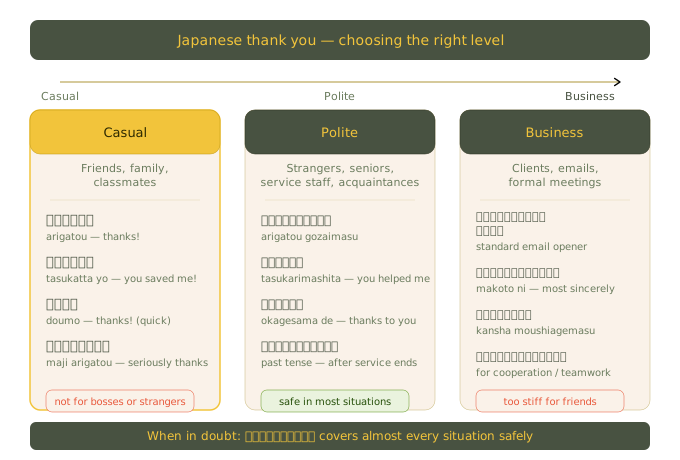
📚 Quick Reference: Thank You Phrase Cheat Sheet
Save or print this for quick reference!
Casual (Friends/Family)
- ありがとう!(Arigatou!)
- ほんとうにありがとう (Hontou ni arigatou)
- 助かったよ (Tasukatta yo)
Polite (Standard Respect)
- ありがとうございます (Arigatou gozaimasu)
- 本当にありがとうございます (Hontou ni arigatou gozaimasu)
- 助かりました (Tasukarimashita)
Business/Formal
- いつもお世話になっております (Itsumo osewa ni natte orimasu)
- ご協力ありがとうございます (Gokyouryoku arigatou gozaimasu)
- 感謝申し上げます (Kansha moushiagemasu)
Special Situations
- Before eating: いただきます (Itadakimasu)
- After eating: ごちそうさまでした (Gochisousama deshita)
- Looking back: 先日はありがとうございました (Senjitsu wa arigatou gozaimashita)
- Attributing success: おかげさまで (Okagesama de)
Remember: When in doubt, add ございます (gozaimasu) to be safe! 😊✨


