

If you’ve ever said けど in a business meeting and felt the room go slightly stiff, or used でも when you meant to sound casual but came across as blunt, you’re not alone. These three conjunctions trip up almost every Japanese learner I’ve worked with, including advanced students who’ve been studying for years.
The truth is, けど, でも, and が aren’t just three ways to say ‘but.’ They carry completely different social weight. Get them right and your Japanese sounds natural and culturally aware. Get them wrong and your meaning lands, but something feels slightly off. This guide will fix that.
Let’s dive deep into the world of Japanese conjunctions and transform your understanding from confusion to clarity!
A note from Haruka: I remember a student who had passed N3 and was genuinely confident in her Japanese, until she joined a business meeting with a Japanese client. She used けど where が was expected, and while the client understood her perfectly, she could feel the slight awkwardness in the room. She came to me afterwards saying ‘my Japanese was correct but something felt wrong.’ That’s exactly the gap these three words live in. Correct isn’t always natural.”
Quick View
What You’ll Master:
- The distinct functions of けど, でも, and が in Japanese
- Formal vs. casual usage patterns for each conjunction
- Common mistakes learners make and how to avoid them
- Natural conversation patterns using these contrasting expressions
- Regional variations and cultural context
Perfect for: Beginner to intermediate Japanese learners, anyone struggling with Japanese conjunctions, students preparing for JLPT N5-N3
Preparing for JLPT? JLPT N4 Grammar: Essential Patterns You Must Know to Pass covers the grammar patterns that appear alongside these conjunctions on the exam.
- Quick View
- Why These Three Conjunctions Matter for Japanese Fluency
- 1. けど (Kedo) – The Casual Conversation Connector
- 2. でも (Demo) – The Sentence-Starting Contrast
- 3. が (Ga) – The Formal and Literary Conjunction
- Comprehensive Comparison and Usage Guide
- Common Mistakes and Cultural Pitfalls
- Regional Variations Across Japan
- Practice Exercises for Mastery
- Advanced Applications in Professional Settings
- Why Choose NihongoKnow.com for Japanese Grammar Mastery?
- Beyond Grammar: Building Japanese Communication Confidence
- Your Next Steps to Japanese Fluency
- Ready to Transform Your Japanese Communication?
Why These Three Conjunctions Matter for Japanese Fluency
The Foundation of Natural Japanese Communication
Japanese communication relies heavily on context, register, and subtle emotional nuances. The choice between けど, でも, and が isn’t just about grammar—it’s about:
- Social Appropriateness: Using the wrong conjunction can make you sound too formal or too casual for the situation
- Emotional Nuance: Each conjunction carries different emotional weight and implications
- Cultural Integration: Native speakers unconsciously choose conjunctions based on cultural context
- Professional Communication: Business Japanese requires precise conjunction usage for clear, respectful communication
Common Learner Challenges
Most Japanese learners struggle with these conjunctions because:
- English “but” doesn’t capture the full range of Japanese contrast expressions
- Textbooks often oversimplify the usage rules
- Cultural context is rarely explained adequately
- Practice opportunities in natural conversation are limited
1. けど (Kedo) – The Casual Conversation Connector
Core Function and Usage
けど is the most frequently used conjunction in casual Japanese conversation. It serves multiple functions beyond simple contrast:
Primary Uses:
- Connecting two contrasting clauses within a sentence
- Softening statements to avoid directness
- Creating conversational flow and natural rhythm
- Expressing hesitation or uncertainty
Register: Informal to semi-formal (casual conversations, friendly interactions)
If particles like は and が still feel unclear, Why Japanese Particles Are So Difficult — And How to Master Them is the best place to start before diving into conjunctions.
Detailed Examples and Analysis
Example 1: Basic Contrast
日本語は難しいけど、楽しいです。Nihongo wa muzukashii kedo, tanoshii desu.Japanese is difficult, but it's fun.
Analysis: This shows the classic contrasting function—acknowledging difficulty while expressing enjoyment. The けど creates a natural flow that doesn’t sound abrupt.
Example 2: Time Constraint
今日行きたいけど、時間がない。Kyō ikitai kedo, jikan ga nai.I want to go today, but I don't have time.
Analysis: Here, けど expresses regret about the limitation. It’s more emotionally nuanced than a simple factual statement.
Example 3: Sentence-Ending Softener
ちょっと聞きたいけど…。Chotto kikitai kedo...I'd like to ask something, but...
Analysis: This is a uniquely Japanese usage where けど softens a request or statement, making it less direct and more culturally appropriate.
Advanced Usage Patterns
Polite Forms with けど:
- けれど (keredo) – slightly more formal
- けれども (keredomo) – most formal variation of けど
Example:
お忙しいとは思いますけれども、お時間をいただけないでしょうか。Oisogashii to wa omoimasu keredomo, ojikan wo itadakenai deshō ka.I know you're busy, but could you spare some time?
Common Mistakes and How to Avoid Them
Mistake 1: Using けど in formal business situations Correction: Use が or より formal expressions in professional contexts
Mistake 2: Overusing けど in written Japanese Correction: Written Japanese typically favors が or other formal conjunctions
Mistake 3: Placing けど incorrectly in sentence structure Correction: けど always comes after the first clause, never at the beginning of a sentence
2. でも (Demo) – The Sentence-Starting Contrast
Core Function and Usage
でも is unique among these three conjunctions because it typically starts a new sentence or thought. It’s the most direct way to express contrast in Japanese.
Primary Uses:
- Starting a new sentence with contrasting information
- Changing the topic or direction of conversation
- Expressing disagreement or alternative viewpoints
- Creating clear logical breaks in speech
Register: Neutral (appropriate for both casual and polite speech)
Detailed Examples and Analysis
Example 1: Sequential Contrast
彼は親切でした。でも、ちょっと変でした。Kare wa shinsetsu deshita. Demo, chotto hen deshita.He was kind. But he was a little strange.
Analysis: The でも clearly separates two observations, creating a logical contrast between positive and negative impressions.
Example 2: Expectation vs. Reality
パーティーに行きました。でも、楽しくなかったです。Pātī ni ikimashita. Demo, tanoshikunakatta desu.I went to the party. But it wasn't fun.
Analysis: でも introduces an unexpected outcome, emphasizing the contrast between anticipation and reality.
Example 3: Conversational Disagreement
A: 今日は暑いですね。B: でも、昨日より涼しいと思います。A: Kyō wa atsui desu ne.B: Demo, kinō yori suzushii to omoimasu.A: It's hot today, isn't it?B: But I think it's cooler than yesterday.
Analysis: でも allows the second speaker to politely disagree while maintaining conversational flow.
Advanced Usage Patterns
でも in Questions:
でも、本当にそうなんですか?Demo, hontō ni sō nan desu ka?But is that really true?
でも for Emphasis:
みんなそう言います。でも、私は違うと思います。Minna sō iimasu. Demo, watashi wa chigau to omoimasu.Everyone says so. But I think differently.
Regional and Cultural Variations
In some Japanese dialects, でも might be replaced with:
- だけど (dakedo) – common in Tokyo dialect
- やけど (yakedo) – Kansai dialect variation
3. が (Ga) – The Formal and Literary Conjunction
Core Function and Usage
が represents the most formal and literary way to express contrast in Japanese. It’s essential for academic writing, business communication, and formal speech.
Primary Uses:
- Formal written Japanese (reports, academic papers, news articles)
- Business presentations and meetings
- Official statements and announcements
- Literary and poetic expressions
Register: Formal to very formal
Detailed Examples and Analysis
Example 1: Academic Writing
日本語は難しいが、とても面白いです。Nihongo wa muzukashii ga, totemo omoshiroi desu.Japanese is difficult, but very interesting.
Analysis: The が creates a sophisticated, academic tone appropriate for formal writing or presentations.
Example 2: Business Context
売上は増加したが、利益は減少している。Uriage wa zōka shita ga, rieki wa genshō shite iru.Sales increased, but profits are decreasing.
Analysis: This business-appropriate usage demonstrates professional communication standards.
Example 3: News and Media
政府は新しい政策を発表したが、国民の反応は混合している。Seifu wa atarashii seisaku wo happyō shita ga, kokumin no hannō wa kongō shite iru.The government announced a new policy, but public reaction is mixed.
Analysis: News reporting frequently uses が for its neutral, formal tone.
Advanced Usage Patterns
が in Conditional Statements:
行きたい気持ちはあるが、時間の都合がつかない。Ikitai kimochi wa aru ga, jikan no tsugō ga tsukanai.I have the desire to go, but I can't arrange the time.
が in Polite Refusals:
ご招待いただいたが、あいにく先約があります。Goshōtai itadaita ga, ainiku sen'yaku ga arimasu.Thank you for the invitation, but unfortunately I have a prior engagement.
Professional and Academic Applications
Research Papers:
この研究は興味深い結果を示しているが、更なる検証が必要である。Kono kenkyū wa kyōmibukai kekka wo shimeshite iru ga, saranaru kenshō ga hitsuyō de aru.This research shows interesting results, but further verification is necessary.
Business Reports:
市場調査の結果は良好だが、競合他社の動向に注意が必要だ。Shijō chōsa no kekka wa ryōkō da ga, kyōgō tasha no dōkō ni chūi ga hitsuyō da.The market research results are favorable, but we need to pay attention to competitor trends.
Comprehensive Comparison and Usage Guide
Quick Reference Chart
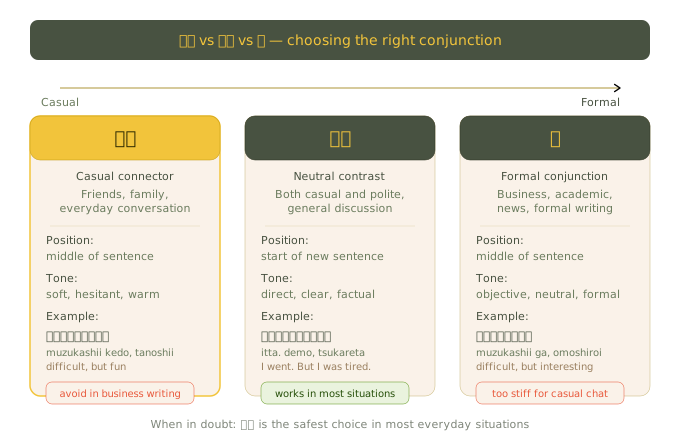
Emotional Nuance Comparison
けど: Carries emotional softness, hesitation, or consideration for the listener でも: Direct but not harsh, factual presentation of contrast が: Neutral, objective, focuses on logical relationship rather than emotion
Contextual Usage Guidelines
Casual Conversation (Friends, Family):
- Primary choice: けど
- Occasional use: でも
- Avoid: が (sounds too formal)
Polite Conversation (Colleagues, Acquaintances):
- Primary choice: でも
- Polite form: けれど
- Formal situations: が
Business/Academic:
- Primary choice: が
- Presentation: でも (for clarity)
- Avoid: けど (too casual)
Common Mistakes and Cultural Pitfalls
Haruka’s take: The register confusion mistake is the one I see most. Students learn けど first because it’s casual and easy, and then they keep using it everywhere out of habit. I grew up switching between formal and casual speech constantly, and even for native speakers, choosing the wrong conjunction in the wrong setting creates friction. The good news: once you understand the social logic behind each word, the right choice becomes almost automatic.
Mistake 1: Register Confusion
Problem: Using けど in formal business meetings Solution: Master the formality levels and choose appropriately
Incorrect: 売上は良いけど、問題があります。 Correct: 売上は良いが、問題があります。
Mistake 2: Overuse of でも
Problem: Starting every contrasting sentence with でも Solution: Vary your conjunction usage and consider flow
Mistake 3: Misunderstanding Cultural Context
Problem: Being too direct when cultural sensitivity is needed Solution: Use けど for softer, more considerate communication
Regional Variations Across Japan
Tokyo Dialect
- Standard usage of all three conjunctions
- Frequent use of だけど as けど variation
Kansai Dialect
- やけど replaces けど in casual speech
- でも remains standard
- が usage similar to standard Japanese
Kyushu Dialect
- ばってん used instead of でも in some areas
- Local variations of が in formal speech
Practice Exercises for Mastery
Strong conjunction usage builds on solid verb conjugation. If you need a refresher, The Complete Beginner’s Guide to Japanese Verb Conjugation walks through the foundations step by step.
Exercise 1: Register Identification
Identify the appropriate conjunction for each context:
- University presentation about economics
- Texting a close friend about weekend plans
- Writing a formal business proposal
- Casual conversation with a coworker
Exercise 2: Sentence Completion
Complete these sentences with the most natural conjunction:
- 今日は雨だ___、出かけたい。
- 映画を見ました。___、つまらなかった。
- この問題は複雑だ___、解決可能である。
Exercise 3: Cultural Context
Choose the most culturally appropriate conjunction:
- Declining a dinner invitation from your boss
- Explaining a problem to your best friend
- Writing a research paper conclusion
Advanced Applications in Professional Settings
Business Meeting Scenarios
Presenting Problems:
今四半期の結果は良好ですが、来四半期には課題があります。
Konshihanki no kekka wa ryōkō desu ga, raishihanki ni wa kadai ga arimasu.
This quarter’s results are good, but there are challenges for next quarter.
Diplomatic Disagreement:
ご提案は興味深いですが、予算の制約があります。
Goteian wa kyōmibukai desu ga, yosan no seiyaku ga arimasu.
Your proposal is interesting, but there are budget constraints.
Academic Writing Excellence
Research Conclusions:
この手法は有効であることが証明されたが、より大規模な実験が必要である。
Kono shuhō wa yūkō de aru koto ga shōmei sareta ga, yori daikibo na jikken ga hitsuyō de aru.
This method has been proven effective, but larger-scale experiments are necessary.
Why Choose NihongoKnow.com for Japanese Grammar Mastery?
Expert Guidance from Vancouver’s Premier Japanese Learning Center
At NihongoKnow.com, we understand that mastering Japanese conjunctions requires more than memorizing rules—it demands cultural understanding, practical application, and personalized feedback.
Our Unique Approach:
- Cultural Context Integration: Every grammar point is taught within its cultural framework
- Real-World Application: Practice with authentic scenarios from business, academia, and daily life
- Personalized Feedback: Native-speaking instructors provide detailed corrections and guidance
- Progressive Learning: Structured curriculum building from basic to advanced usage
Beyond Grammar: Building Japanese Communication Confidence
Integration with Other Language Skills
Understanding けど, でも, and が is just the beginning. These conjunctions integrate with:
Listening Skills: Recognize register and emotional nuance in conversation
Speaking Fluency: Choose appropriate conjunctions for natural flow
Reading Comprehension: Understand formal vs. casual written Japanese
Writing Proficiency: Create culturally appropriate formal and informal texts
Cultural Competency Development
Mastering these conjunctions contributes to:
- Social Appropriateness: Navigate Japanese social situations confidently
- Professional Communication: Engage effectively in business environments
- Academic Success: Excel in Japanese university programs
- Cultural Integration: Understand subtle communication patterns
Your Next Steps to Japanese Fluency
Immediate Action Plan
- Practice Daily: Use these conjunctions in your daily Japanese practice
- Listen Actively: Pay attention to conjunction usage in Japanese media
- Write Regularly: Practice formal and informal writing with appropriate conjunctions
- Seek Feedback: Get corrections from native speakers or qualified instructors
Long-Term Learning Strategy
Month 1: Master basic usage patterns and common mistakes
Month 2: Practice in different registers and contexts
Month 3: Integrate with advanced grammar structures
Ongoing: Refine cultural understanding and natural usage
Ready to Transform Your Japanese Communication?
Understanding the subtle differences between けど, でも, and が is just one piece of the Japanese language puzzle, but it’s a crucial one. These conjunctions appear in virtually every Japanese conversation, text, and media, making their mastery essential for true fluency.
At NihongoKnow.com, we’re committed to helping learners in Vancouver, across Canada, and internationally achieve their Japanese language goals through comprehensive, culturally-informed instruction. Our proven methods, expert teachers, and supportive community provide the perfect environment for mastering these challenging aspects of Japanese grammar.
Remember, every native speaker was once a learner too. With consistent practice, cultural awareness, and proper guidance, you’ll soon be using these conjunctions as naturally as you use “but” in English.
Start implementing these conjunctions in your Japanese practice today, and watch your communication become more natural, appropriate, and confident!
Ready to master Japanese conjunctions and take your communication skills to the next level? Join the NihongoKnow.com community today and discover why we’re Vancouver’s premier choice for Japanese language learning. Contact us now to begin your journey toward natural, confident Japanese communication!


