

Master Japanese N4 grammar with Vancouver’s most trusted Japanese language school – NihongoKnow.com
📋 Quick View
What You’ll Learn:
- 25+ essential JLPT N4 grammar patterns with detailed explanations
- Real-world example sentences with natural translations
- Study strategies that work for Vancouver students
- Common mistakes to avoid on test day
- How to practice grammar effectively for both JLPT and daily conversation
Reading Time: 12 minutes
Level: Upper Beginner (N4)
Best For: Students preparing for JLPT N4 in Vancouver, online learners worldwide
- 📋 Quick View
- 🎯 What Is JLPT N4 Grammar, and Why Does It Matter?
- 📘 How to Use This Grammar Guide
- 🧾 JLPT N4 Essential Grammar Patterns (Top 25+)
- 1. ~なければならない (Must/Have to)
- 2. ~なくてもいい (Don't have to)
- 3. ~でしょう (Probably/I suppose)
- 4. ~つもり (Intend to/Plan to)
- 5. ~たことがある (Have done/Experience)
- 6. ~たり~たりする (Listing multiple actions)
- 7. ~ので (Because – polite/soft)
- 8. ~すぎる (Too much/Excessive)
- 9. ~ほうがいい (It's better to/Should)
- 10. ~ながら (While doing)
- 11. ~やすい/~にくい (Easy to do/Hard to do)
- 12. ~てしまう (End up doing/Completion with regret)
- 13. ~ようにする (Make an effort to/Try to)
- 14. ~あいだに (While/During)
- 15. ~かどうか (Whether or not)
- 16. ~たら (If/When – after something happens)
- 17. ~前に/~あとで (Before/After)
- 18. ~ても (Even if/Although)
- 19. ~ことにする (Decide to do)
- 20. ~ば (If – formal conditional)
- 21. ~ようと思う (Thinking of doing)
- 22. ~ておく (Do in advance/Prepare)
- 23. ~てあげる/~てもらう/~てくれる (Giving and receiving actions)
- 24. ~ようになる (Come to be able to/Gradual change)
- 25. ~ばかり (Only/Just did)
- 📚 Proven Study Strategies for Vancouver Students
- 🎯 Test-Taking Strategies for JLPT N4 Grammar
- 🚀 Ready to Master N4 Grammar?
- ❓ Frequently Asked Questions (FAQ)
- Q: How long does it take to master N4 grammar?
- Q: Can I learn N4 grammar without taking classes?
- Q: Which N4 grammar patterns are most important for daily conversation?
- Q: How is N4 grammar different from N5?
- Q: Do I need to memorize all grammar patterns?
- Q: Can I skip some patterns and still pass N4?
- Q: How do I know if I'm ready for the JLPT N4?
- Q: Are there any free resources to practice N4 grammar?
- Q: What's the difference between studying in Vancouver vs. online?
- Q: How can I remember all these grammar patterns?
- Q: What should I do after mastering N4 grammar?
🎯 What Is JLPT N4 Grammar, and Why Does It Matter?
Have you already understood what is waiting in front of you and how long your journey will last ? I’m pretty sure many of you already got idea from How Many Months Do You Need to Pass the JLPT? Study Time Guidelines by Level.
And now, if you’re studying Japanese in Vancouver or anywhere else, you’ve probably heard about the JLPT (Japanese Language Proficiency Test). JLPT N4 is the sweet spot for upper beginners—it’s where you transition from knowing basic phrases to actually understanding how Japanese grammar works in real situations.
A note from Haruka: N4 grammar is where I see the biggest shift in my students, the moment when Japanese stops being a collection of phrases and starts feeling like an actual system. One of my Vancouver students described it perfectly after her third lesson on conditional forms: ‘I suddenly understand why Japanese sentences feel backwards to me. Now it makes sense.’ That click, that’s what N4 grammar does when you learn it in context rather than just memorizing a list.
Why N4 Grammar Is Your Gateway to Fluency
After you read this Why JLPT N4 Grammar Is Difficult. You understand that you still need to pass N4.
Think of N4 grammar as the bridge between “I can introduce myself” and “I can have meaningful conversations.” At NihongoKnow.com, we’ve helped hundreds of Vancouver students master these patterns, and here’s what makes N4 special:
- Real-world relevance: These aren’t just test patterns—they’re used daily by Japanese speakers
- Foundation building: N4 grammar sets you up for success in N3 and beyond
- Practical communication: You’ll express intentions, experiences, and complex thoughts
- Cultural understanding: Grammar patterns reveal how Japanese people think and communicate
What You Need to Know for JLPT N4
To pass N4, you’ll need to understand and use approximately 100-120 grammar points. The test evaluates your ability to:
- Understand grammar in context (reading comprehension)
- Recognize patterns in natural speech (listening)
- Choose correct forms in various situations
But here’s the good news: you don’t need to memorize all 120 patterns. Focus on the most essential ones first, and you’ll build confidence while covering 80% of what appears on the actual test.
📘 How to Use This Grammar Guide
This isn’t just another grammar list—it’s your complete study companion. For each pattern, you’ll find:
✅ Pattern Structure – The exact form you need to know
🧠 Meaning & Usage – When and why to use it
✏️ Example Sentences – Real situations, not textbook Japanese
🗣️ Natural Translation – How a native English speaker would say it
⚠️ Common Mistakes – What our Vancouver students struggle with
💡 Study Tips – Proven methods from our classroom experience
Whether you’re taking our classes in Vancouver or studying independently, this guide works for both JLPT preparation and real-life Japanese conversation.
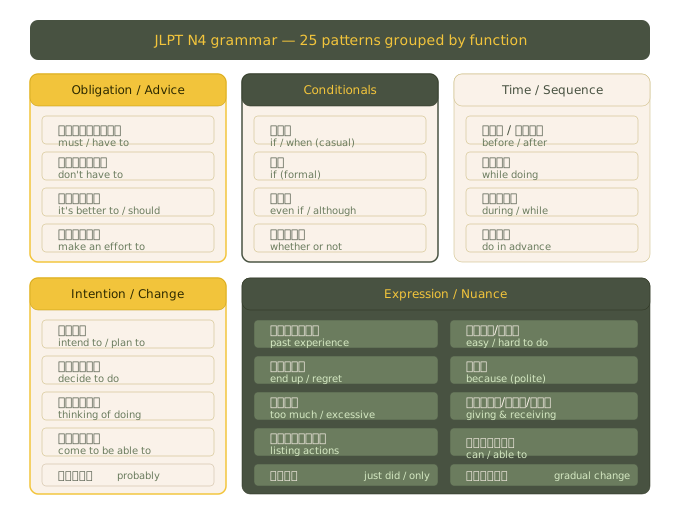
🧾 JLPT N4 Essential Grammar Patterns (Top 25+)
1. ~なければならない (Must/Have to)
Pattern: Verb negative form + なければならない
Meaning: Express obligation or necessity
Formality: Polite and formal
Example:
- 毎日勉強しなければなりません。
- (まいにち べんきょうしなければなりません)
- I have to study every day.
Natural Usage: This is quite formal. In casual conversation, Japanese people often use なきゃ or なくちゃ instead.
Common Mistake: Vancouver students often forget to use the negative form of the verb first.
2. ~なくてもいい (Don’t have to)
Pattern: Verb negative te-form + もいい
Meaning: Express that something is not necessary
Formality: Neutral
Example:
- 今日は宿題をしなくてもいいです。
- (きょうは しゅくだいを しなくてもいいです)
- You don’t have to do homework today.
Study Tip: Practice this with daily activities. “I don’t have to cook today” = 今日は料理しなくてもいい
3. ~でしょう (Probably/I suppose)
Pattern: Verb/Adjective + でしょう
Meaning: Express probability or assumption
Formality: Polite
Example:
- 明日は雨が降るでしょう。
- (あした は あめ が ふる でしょう)
- It will probably rain tomorrow.
Vancouver Context: Perfect for talking about BC’s unpredictable weather!
Natural Usage: Rising intonation makes it a question: “It’ll rain tomorrow, right?”
4. ~つもり (Intend to/Plan to)
Pattern: Verb dictionary form + つもり
Meaning: Express intention or plan
Formality: Neutral
Example:
- 来年、日本へ行くつもりです。
- (らいねん、にほん へ いく つもりです)
- I plan to go to Japan next year.
Study Tip: Use this when talking about your Japanese study goals. “I intend to pass N4” = N4に合格するつもりです
5. ~たことがある (Have done/Experience)
Pattern: Verb past tense + ことがある
Meaning: Express past experience
Formality: Neutral
Example:
- 寿司を食べたことがあります。
- (すし を たべた こと が あります)
- I’ve eaten sushi before.
Vancouver Context: Great for talking about experiences in Vancouver’s diverse food scene!
Grammar Point: The negative form is したことがありません (have never done)
6. ~たり~たりする (Listing multiple actions)
Pattern: Verb たり form + する
Meaning: List examples of activities (among others)
Formality: Neutral
Example:
- 週末は映画を見たり、買い物をしたりします。
- (しゅうまつ は えいが を みたり、かいもの を したりします)
- On weekends, I watch movies, go shopping, and do other things.
Important: This implies there are other activities not mentioned. Perfect for describing your typical weekend in Vancouver!
7. ~ので (Because – polite/soft)
Pattern: Verb/Adjective + ので
Meaning: Give reason (softer than から)
Formality: Polite
Example:
- 頭が痛いので、帰ります。
- (あたま が いたい ので、かえります)
- I’ll go home because I have a headache.
Cultural Note: ので is more polite than から, making it perfect for workplace or formal situations.
8. ~すぎる (Too much/Excessive)
Pattern: Verb stem/i-adjective stem + すぎる
Meaning: Express excess
Formality: Neutral
Example:
- 食べすぎました。
- (たべすぎました)
- I ate too much.
Vancouver Usage: 雨が降りすぎています (It’s raining too much) – very relevant for Vancouver students!
9. ~ほうがいい (It’s better to/Should)
Pattern: Verb past tense + ほうがいい (positive advice)
Verb negative form + ほうがいい (negative advice)
Meaning: Give advice or recommendation
Formality: Neutral
Example:
- 薬を飲んだほうがいいですよ。
- (くすり を のんだ ほう が いい ですよ)
- You should take some medicine.
Advice Pattern: This is essential for giving suggestions. Very useful in daily conversation!
10. ~ながら (While doing)
Pattern: Verb stem + ながら
Meaning: Simultaneous actions
Formality: Neutral
Example:
- 音楽を聞きながら、勉強します。
- (おんがく を きき ながら、べんきょう します)
- I study while listening to music.
Key Point: The main action comes after ながら. The subject must be the same for both actions.
11. ~やすい/~にくい (Easy to do/Hard to do)
Pattern: Verb stem + やすい/にくい
Meaning: Express ease or difficulty
Formality: Neutral
Example:
- この漢字は覚えにくいです。
- (この かんじ は おぼえにくい です)
- This kanji is hard to memorize.
Study Application: Perfect for describing your Japanese learning experience!
12. ~てしまう (End up doing/Completion with regret)
Pattern: Verb te-form + しまう
Meaning: Completion (often with regret or accident)
Formality: Neutral
Example:
- 財布を忘れてしまいました。
- (さいふ を わすれて しまいました)
- I accidentally forgot my wallet.
Emotional Nuance: This pattern adds a sense of “oh no!” or regret to the action.
13. ~ようにする (Make an effort to/Try to)
Pattern: Verb dictionary form + ようにする
Meaning: Make conscious effort
Formality: Neutral
Example:
- 毎日運動するようにしています。
- (まいにち うんどう する ように しています)
- I try to exercise every day.
Habit Formation: Perfect for talking about lifestyle changes and study habits!
14. ~あいだに (While/During)
Pattern: Verb ている form + あいだに
Meaning: During a period of time
Formality: Neutral
Example:
- 勉強しているあいだに、電話がありました。
- (べんきょう している あいだに、でんわ が ありました)
- While I was studying, I got a phone call.
Grammar Point: The action after あいだに is typically completed during the ongoing action.
15. ~かどうか (Whether or not)
Pattern: Verb/Adjective + かどうか
Meaning: Express uncertainty
Formality: Neutral
Example:
- 行くかどうか、まだ分かりません。
- (いく かどうか、まだ わかりません)
- I don’t know whether I’ll go yet.
Usage: Essential for expressing doubt or uncertainty in polite Japanese.
16. ~たら (If/When – after something happens)
Pattern: Verb past tense + ら
Meaning: Conditional (if/when)
Formality: Neutral
Example:
- 雨が降ったら、出かけません。
- (あめ が ふったら、でかけません)
- If it rains, I won’t go out.
Vancouver Usage: Perfect for planning outdoor activities in Vancouver’s weather!
17. ~前に/~あとで (Before/After)
Pattern: Verb dictionary form + 前に / Verb past tense + あとで
Meaning: Time relationship
Formality: Neutral
Example:
- 食べる前に、手を洗います。
- (たべる まえに、て を あらいます)
- I wash my hands before eating.
Cultural Note: Very important for describing proper etiquette and daily routines.
18. ~ても (Even if/Although)
Pattern: Verb te-form + も
Meaning: Contrast or concession
Formality: Neutral
Example:
- 高くても買います。
- (たかくても かいます)
- I’ll buy it even if it’s expensive.
Determination: Shows strong will or determination despite obstacles.
19. ~ことにする (Decide to do)
Pattern: Verb dictionary form + ことにする
Meaning: Express decision
Formality: Neutral
Example:
- 毎日早く寝ることにしました。
- (まいにち はやく ねる こと に しました)
- I decided to sleep early every day.
Life Decisions: Perfect for talking about lifestyle changes and resolutions.
20. ~ば (If – formal conditional)
Pattern: Verb ば form
Meaning: Conditional (if)
Formality: Formal
Example:
- 時間があれば、行きます。
- (じかん が あれば、いきます)
- If I have time, I’ll go.
Formality: More formal than たら, often used in written Japanese.
21. ~ようと思う (Thinking of doing)
Pattern: Verb volitional form + と思う
Meaning: Express intention
Formality: Neutral
Example:
- 日本語をもっと勉強しようと思います。
- (にほんご を もっと べんきょうしよう と おもいます)
- I’m thinking of studying more Japanese.
Motivation: Great for expressing study goals and future plans!
22. ~ておく (Do in advance/Prepare)
Pattern: Verb te-form + おく
Meaning: Do something in preparation
Formality: Neutral
Example:
- 予約しておきます。
- (よやく しておきます)
- I’ll make a reservation in advance.
Preparation: Essential for planning and getting ready for events.
23. ~てあげる/~てもらう/~てくれる (Giving and receiving actions)
Pattern: Verb te-form + あげる/もらう/くれる
Meaning: Express giving and receiving of actions
Formality: Neutral
Example:
- 母に料理を作ってあげました。
- (はは に りょうり を つくって あげました)
- I cooked for my mother.
Social Hierarchy: These patterns reflect Japanese social relationships and politeness levels.
24. ~ようになる (Come to be able to/Gradual change)
Pattern: Verb dictionary form + ようになる
Meaning: Gradual change or ability development
Formality: Neutral
Example:
- 日本語が話せるようになりました。
- (にほんご が はなせる ように なりました)
- I’ve become able to speak Japanese.
Progress: Perfect for describing language learning progress!
25. ~ばかり (Only/Just did)
Pattern: Verb past tense + ばかり
Meaning: Just completed action or “only doing”
Formality: Neutral
Example:
- 食べたばかりです。
- (たべた ばかり です)
- I just ate.
Recent Action: Emphasizes that something happened very recently.
📚 Proven Study Strategies for Vancouver Students
Haruka’s take: The students who struggle most with N4 grammar are the ones who study patterns in isolation, flash a card, read a rule, move on. The ones who make it through are the ones who use each pattern the same day they learn it. I make all my Vancouver students write one sentence about their own life for every new pattern. ‘毎日スカイトレインに乗らなければなりません’ is infinitely more memorable than any example sentence in a textbook
After teaching hundreds of students in Vancouver, here are the methods that actually work:
1. The Daily Integration Method
Don’t just memorize patterns—use them daily. When you’re in Vancouver, think:
- “It’s raining again” → また雨が降っています
- “I have to take the SkyTrain” → スカイトレインに乗らなければなりません
2. Context-Based Learning
Study grammar in meaningful contexts:
- Weather: でしょう, たら patterns
- Food: すぎる, ほうがいい patterns
- Work/School: なければならない, ようにする patterns
3. The Shadowing Technique
Listen to Japanese content and repeat, focusing on grammar patterns you’re learning. Our Vancouver students love using:
- Japanese drama with subtitles
- Language exchange apps
4. Writing Practice with Personal Examples
Create your own sentences using each pattern. Write about:
- Your life in Vancouver
- Your Japanese learning journey
- Your daily routine
- Your future plans
5. The Error Collection Method
Keep a notebook of mistakes. Our students find these patterns particularly tricky:
- Mixing up ~たら and ~ば
- Forgetting to use negative forms with なければならない
- Confusing ~ながら with ~あいだに
🎯 Test-Taking Strategies for JLPT N4 Grammar
Reading Section Tips:
- Context Clues: Look for time expressions, emotional words, and logical connections
- Elimination: Remove obviously wrong answers first
- Pattern Recognition: Focus on the function, not just the form
Listening Section Tips:
- Anticipate Patterns: Common N4 patterns appear frequently
- Listen for Intonation: でしょう sounds different as a statement vs. question
- Focus on Function: What is the speaker trying to do? (advise, explain, ask, etc.)
Common Test Mistakes to Avoid:
- Overthinking simple patterns
- Choosing formal patterns in casual contexts
- Missing the emotional nuance (like regret in ~てしまう)
🚀 Ready to Master N4 Grammar?
Learning Japanese grammar doesn’t have to be overwhelming. With the right approach, consistent practice, and proper guidance, you can master these essential N4 patterns and pass the JLPT with confidence.
Take Your Next Step:
- 📚 Join our JLPT N4 Prep Class (Vancouver classroom or online worldwide)
- 💬 Join our Vancouver Japanese Learning Community for practice partners
By the way, thinking about improving your Kanji skill ? You also had better start checking JLPT N5 Kanji List and go more and more !
❓ Frequently Asked Questions (FAQ)
Q: How long does it take to master N4 grammar?
A: For most students studying 5-10 hours per week, 3-6 months is realistic. Our Vancouver students typically see significant improvement in 3 months with structured practice.
Q: Can I learn N4 grammar without taking classes?
A: Yes, but having a teacher helps tremendously. Grammar nuances, cultural context, and error correction are much easier with guidance. Our online classes serve students worldwide.
Q: Which N4 grammar patterns are most important for daily conversation?
A: Focus on these first: ~ので, ~ほうがいい, ~たことがある, ~つもり, and ~たり~たりする. These cover most daily communication needs.
Q: How is N4 grammar different from N5?
A: N4 introduces complex expressions, conditional forms, and nuanced emotional expressions. While N5 is about basic communication, N4 is about sophisticated expression.
Q: Do I need to memorize all grammar patterns?
A: No! Focus on understanding the function and practicing in context. Memorization without understanding doesn’t help in real conversation or tests.
Q: Can I skip some patterns and still pass N4?
A: While you don’t need 100% mastery, you should understand at least 80% of common patterns. The 25 patterns in this guide cover the most essential ones.
Q: How do I know if I’m ready for the JLPT N4?
A: You should be able to:
- Use these grammar patterns naturally in conversation
- Understand Japanese texts with N4 grammar
- Listen to simple Japanese content without struggling with grammar
- Form complex sentences expressing opinions, experiences, and plans
Q: Are there any free resources to practice N4 grammar?
A: Yes! Try:
- NHK Easy News (with furigana)
- Japanese grammar apps like Bunpro
- YouTube channels focused on N4 content
- Our free weekly grammar tips (subscribe at NihongoKnow.com)
Q: What’s the difference between studying in Vancouver vs. online?
A: Vancouver classes offer:
- Face-to-face interaction with teachers and students
- Cultural immersion opportunities
- Local Japanese community connections
- Regular practice with diverse students
Online classes offer:
- Flexibility for busy schedules
- Access to the same quality instruction
- Global student community
- Recorded lessons for review
Q: How can I remember all these grammar patterns?
A: Use the “SRS” method (Spaced Repetition System):
- Learn new patterns in meaningful contexts
- Review them regularly with increasing intervals
- Practice them in conversation or writing
- Connect them to personal experiences
Q: What should I do after mastering N4 grammar?
A:
- Take the JLPT N4 test to validate your skills
- Start integrating N3 grammar patterns
- Focus on expanding vocabulary and kanji
- Increase listening and reading practice
- Join conversation groups to use grammar naturally
Ready to Start Your Japanese Grammar Journey?
Don’t let complex grammar patterns intimidate you. With proper guidance, consistent practice, and the right resources, you can master JLPT N4 grammar and take your Japanese to the next level.
Contact NihongoKnow.com today:
- 📍 Vancouver Classes
- 🌐 Online Lessons: Available worldwide
- 📧 Email: haruka@nihongoknow.com
Master Japanese Grammar. Pass JLPT N4. Speak with Confidence.


