

Dreaming of passing the Japanese Language Proficiency Test but wondering how much time you’ll need? Here’s everything you need to know about JLPT study timelines, from realistic expectations to proven strategies that actually work.
📢Quick Answer: JLPT Study Time Overview
The short version: Most learners need 6 months to 4+ years depending on their target level and study intensity. Here’s what you can realistically expect:
- N5 (Beginner): 6 months – 2 years
- N4 (Upper Beginner): 1-2 years from N5
- N3 (Intermediate): 1-6+ years from N4
- N2 (Upper Intermediate): 2-4+ years from N3
- N1 (Advanced): 4+ years from N2
But here’s the thing—your journey will be unique. Let’s dive into what really affects your timeline and how to make the most of your study time.
- 📢Quick Answer: JLPT Study Time Overview
- 🧑🎓Understanding the JLPT: What You're Actually Preparing For
- 📊 Estimated Study Hours by JLPT Level
- 🕒 The 7 Key Factors That Determine Your JLPT Timeline
- 📚 Level-by-Level Study Strategies That Actually Work
- 📍 The Truth About JLPT vs. Real-World Japanese Ability
- 🔎 Why the Difference?
- 🎯 Common JLPT Study Mistakes (And How to Avoid Them)
- ⚠️ JLPT ≠ Speaking Ability
- ⛵After the JLPT: Continuing Your Japanese Journey
- 🔄 Don’t Study Alone—Join a JLPT Supportive Community
🧑🎓Understanding the JLPT: What You’re Actually Preparing For
What is the JLPT?
The Japanese Language Proficiency Test (JLPT) is the most widely recognized Japanese language certification worldwide. It’s accepted by employers, universities, and immigration offices across Japan and internationally.
The test has five levels:
- N5: Most basic level
- N4: Elementary level
- N3: Intermediate level
- N2: Upper-intermediate level
- N1: Most advanced level
What Does Each Level Actually Mean?
N5 – Your First Step Into Japanese
- Read hiragana, katakana, and about 100 basic kanji
- Understand simple sentences and everyday expressions
- Follow slow, clear conversations about familiar topics
- Real-world ability: Basic tourist interactions, simple self-introduction
Just getting started? Follow our step-by-step guide on how to pass the JLPT N5.
N4 – Building Your Foundation
- Read simple texts on familiar topics
- Understand conversations at natural speed about everyday subjects
- Know around 300 kanji and 1,500-2,500 vocabulary words
- Real-world ability: Handle daily life situations, basic work conversations
N3 – The Game Changer
- Read and understand texts about everyday topics
- Follow coherent conversations in natural situations
- Express and understand opinions on familiar subjects
- Real-world ability: Work in Japanese environments with support, handle most daily situations
N2 – Professional Competence
- Read materials on various topics and understand their main points
- Follow news and conversations on current events
- Express yourself clearly on a wide range of topics
- Real-world ability: Work effectively in Japanese, understand most TV shows and news
N1 – Near-Native Proficiency
- Read complex texts and understand subtle nuances
- Follow rapid natural conversations and specialized discussions
- Express yourself fluently and spontaneously
- Real-world ability: Academic study in Japanese, professional presentations, complex business negotiations
Not sure if the JLPT is right for you? Explore the pros and cons of taking the JLPT.
A note from Haruka: The question I get most often isn’t ‘how do I study’, it’s ‘how long will this take?’ And I understand why. People want to know if the investment is worth it before they commit. My honest answer is always the same: the timeline matters less than you think, and consistency matters more than you think. I’ve seen students pass N2 in two years and others take five. The ones who made it weren’t the fastest, they were the ones who never fully stopped.
📊 Estimated Study Hours by JLPT Level
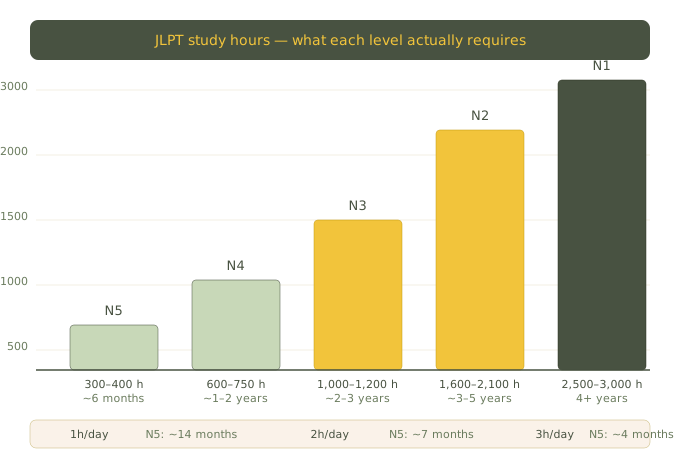
Complete Study Hours Chart
| JLPT Level | Kanji | Vocabulary | Total Study Hours (Estimated) |
|---|---|---|---|
| N5 Level : Understand basic Japanese, including simple texts and clear, slow speech. | 100 characters 👉 Try this beginner-friendly list of JLPT N5 kanji. | 800-1000 words | 300–400 hours |
| N4 Level: Understand basic Japanese, including simple texts and slow-paced conversations. | 300 characters | 1,500-2500 words | 600–750 hours |
| N3 Level : Understand natural conversations and read/write texts on everyday topics. | 650 characters | 3000-4500 words | 1000–1200 hours |
| N2 Level : Understand natural-paced conversations, news, and express opinions on common topics. | 1000 characters | 6000-8000 words | 1600–2100 hours |
| N1 Level : Understand advanced Japanese, including complex texts, and use specialized vocabulary for presentations and discussions. | 2000 characters | 10,000 words | 2500–3000 hours |
What These Hours Actually Look Like
If you study 1 hour per day:
- N5: 10-14 months
- N4: 20-25 months
- N3: 33-40 months
- N2: 53-70 months
- N1: 83+ months
If you study 2 hours per day:
- N5: 5-7 months
- N4: 10-13 months
- N3: 17-20 months
- N2: 27-35 months
- N1: 42+ months
If you study 3+ hours per day (intensive):
N1: 28+ months
N5: 3-5 months
N4: 7-8 months
N3: 11-13 months
N2: 18-23 months
You can also check : The Ultimate Daily Japanese Study Routine: From Beginner to Intermediate (15-60 Minutes)
🕒 The 7 Key Factors That Determine Your JLPT Timeline
1. Your Starting Point Matters More Than You Think
Complete Beginner (Never studied Japanese):
- Start with N5
- Focus on learning the writing systems first
- Expect slower initial progress as you build foundational skills
Some Japanese Background:
- You might skip N5 and aim directly for N4
- Previous anime/manga exposure can help with vocabulary recognition
- Travel experience in Japan provides practical context
Heritage or Partial Speakers:
- May have strong listening skills but weak reading/writing
- Could potentially start at N3 or higher for listening, but need N5-N4 foundation for kanji
- Uneven skill development requires targeted study
2. Daily Study Time: Quality Over Quantity
15-30 minutes daily (Maintenance Mode):
- Good for maintaining current level
- Very slow progress toward next level
- Best for busy professionals
1-2 hours daily (Steady Progress):
- Sustainable long-term approach
- Allows for skill-building and review
- Ideal for most working adults
3+ hours daily (Intensive Mode):
- Fastest progress possible
- Risk of burnout if not managed well
- Best for students or career-focused learners
3. Study Method Efficiency
High-Efficiency Methods:
- Spaced repetition systems (Anki, Memrise)
- Active recall practice
- Immersion through native content
- Speaking practice with natives
- Structured textbook progression
Low-Efficiency Methods:
- Passive reading without practice
- Cramming before exams
- Only studying one skill (just kanji, just grammar)
- Inconsistent study schedule
4. Age and Learning Style
Younger Learners (Teens to 20s):
- Faster memory formation
- More time availability
- Better at pronunciation acquisition
- May progress 20-30% faster
Adult Learners (30+):
- Better at understanding grammar patterns
- More disciplined study habits
- Life experience helps with context
- May need extra time for memorization
5. Language Learning Background
Multilingual Benefits:
- Faster pattern recognition
- Better study strategies
- Understanding of language learning process
- May reduce study time by 15-25%
Chinese/Korean Speakers:
- Advantage with kanji/hanja recognition
- Familiar with East Asian grammar concepts
- May progress faster through intermediate levels
6. Learning Environment
Self-Study:
- Requires strong discipline
- Need to research and choose materials
- Risk of developing bad habits
- Most affordable option
With Teacher/Tutor:
- Structured progression
- Immediate feedback
- Customized to your needs
- 30-50% faster progress typically
Immersion in Japan:
- Fastest natural acquisition
- Daily practice opportunities
- Cultural context learning
- May still need formal study for JLPT
7. Motivation and Consistency
High Motivation Factors:
- Clear goals (job, study abroad, etc.)
- Regular progress tracking
- Supportive community
- Celebration of milestones
Consistency Killers:
No clear end goal
Unrealistic expectations
Perfectionist mindset
Lack of variety in study methods
📚 Level-by-Level Study Strategies That Actually Work
N5–N4 (Beginner)
✅N5 Study Strategy: Building Your Foundation
Phase 1: Writing Systems (4-8 weeks)
- Master hiragana first (1-2 weeks of daily practice)
- Learn katakana next (1-2 weeks)
- Start basic kanji with radicals and stroke order
- Use mnemonics and visual associations
Phase 2: Core Grammar and Vocabulary (12-16 weeks)
- Essential grammar patterns (です/である, particles は/が/を/に/で)
- Daily-use vocabulary (family, food, time, colors, numbers)
- Simple sentence construction
- Basic verb conjugations (present/past, positive/negative)
→ Here is more accurate guide : JLPT N4 Grammar: Essential Patterns You Must Know to Pass (2025 Complete Guide)
Phase 3: Practice and Application (4-8 weeks)
- Reading simple texts and children’s books
- Listening to beginner audio materials
- Taking practice tests
- Speaking basic phrases aloud
Best N5 Resources:
- Textbooks: Genki I, Minna no Nihongo I, Japanese from Zero
- Apps: Duolingo, Busuu, LingoDeer
- Practice: JLPT N5 past papers, NHK Easy News
✅N4 Study Strategy: Expanding Your Skills
Key Focus Areas:
- Extend grammar knowledge (conditional forms, more complex particles)
- Build vocabulary to 2,500 words
- Improve listening comprehension
- Start reading longer texts
Weekly Study Schedule Example:
- Monday/Wednesday/Friday: Grammar study (45 min) + Vocabulary review (15 min)
- Tuesday/Thursday: Listening practice (30 min) + Speaking practice (30 min)
- Saturday: Reading practice (60 min)
- Sunday: Review and practice tests (60 min)
N4 Milestone Goals:
- Read and understand simple manga
- Follow basic anime without subtitles
- Have simple conversations about daily life
- Write short diary entries
✅N3 Study Strategy: The Intermediate Challenge
Why N3 is the Hardest Jump: N3 represents the biggest difficulty spike in the JLPT. You’re transitioning from textbook Japanese to natural Japanese, which includes:
- More nuanced grammar patterns
- Increased reading speed requirements
- Complex sentence structures
- Cultural context understanding
Advanced Study Techniques:
- Immersion Reading: Start with graded readers, progress to light novels
- Active Listening: Japanese podcasts, YouTube channels, drama series
- Output Practice: Join language exchange, write essays, record yourself speaking
- Cultural Study: Learn about Japanese society, business customs, historical context
N3 Success Timeline:
- Months 1-6: Grammar intensive study
- Months 7-12: Vocabulary building and reading practice
- Months 13-18: Listening comprehension and speed practice
- Months 19-24: Test preparation and weak area focus
✅N2 Study Strategy: Professional Proficiency
Advanced Skills Development:
- Read authentic materials (news, magazines, novels)
- Understand rapid natural speech
- Express complex ideas and opinions
- Navigate professional and academic contexts
Want to boost your reading score? Don’t miss our guide to JLPT N2 reading tips.
Sophisticated Study Methods:
- Shadow Reading: Read along with audio to improve speed and comprehension
- News Analysis: Daily reading of NHK News, Asahi Shimbun
- Academic Practice: University lecture listening, research paper reading
- Business Japanese: Keigo (honorific language), meeting participation
N2 Content Focus:
- Abstract concepts and academic vocabulary
- Formal writing styles and expressions
- Regional dialects and colloquialisms
- Specialized field terminology
✅N1 Study Strategy: Mastering Japanese
Near-Native Competency: N1 isn’t just about passing a test—it’s about demonstrating true mastery of Japanese language and culture.
Elite Study Approaches:
- Literary Analysis: Classical Japanese literature, poetry, advanced novels
- Professional Communication: Business presentations, academic writing, research participation
- Cultural Immersion: Understanding humor, sarcasm, cultural references
- Specialized Fields: Technical manuals, legal documents, medical texts
N1 Mastery Indicators:
- Understand classical Japanese and historical texts
- Follow rapid group conversations with multiple speakers
- Write formal reports and academic papers
- Give presentations to native speaker audiences
📍 The Truth About JLPT vs. Real-World Japanese Ability
What the JLPT Tests (And What It Doesn’t)
JLPT Strengths:
- Comprehensive grammar knowledge
- Extensive vocabulary recognition
- Reading comprehension skills
- Listening comprehension ability
- Standardized measurement of progress
JLPT Limitations:
- No speaking assessment
- No writing production test
- Limited real-world context
- Academic focus over practical usage
- No cultural competency measurement
The “N2 Paradox” Explained
Haruka’s take: I see this every year. A student passes N2, comes back to class beaming, and then freezes the first time a native speaker talks to them at natural speed. It’s not a failure of the test or the student. It’s a gap between recognition and production that formal study alone can’t close. This is exactly why at NihongoKnow I push students to start speaking long before they feel ‘ready.’ Waiting until you’re ready is the surest way to never feel ready.
Many learners experience the “N2 Paradox”—passing the test but struggling in real conversations. This happens because:
JLPT N2 Covers:
- Recognition of 6,000-8,000 vocabulary words
- Understanding of complex grammar patterns
- Reading comprehension of various text types
- Listening to structured conversations and presentations
Real Conversation Requires:
- Active vocabulary production (not just recognition)
- Spontaneous grammar usage under time pressure
- Cultural context and non-verbal communication
- Handling interruptions, unclear speech, and slang
- Emotional expression and nuanced communication
Bridging the Gap: Beyond JLPT Preparation
Speaking Development:
- Regular conversation practice with native speakers
- Recording yourself and analyzing pronunciation
- Participating in Japanese social activities
- Joining debate clubs or discussion groups
Writing Development:
- Daily journaling in Japanese
- Essay writing on various topics
- Business email and formal letter writing
- Creative writing and storytelling
Cultural Competency:
- Understanding context and subtext
- Recognizing humor and sarcasm
- Appropriate register and formality levels
- Non-verbal communication awareness
🔎 Why the Difference?
Your Goal Ideal Timeline (Often Seen Online) Realistic Timeline for someone who study Japanese abroad, not in Japan (From Experience) Pass N5 from zero 6 months (with daily study) 6 months – 2 years Pass N3 from N4 6–9 months 1 – 6 years Pass N1 from N2 9–12 months 4 years and up Realistically, how fast you progress depends on:
- Your age
Younger learners or full-time students tend to learn faster due to flexible memory and more available time.- Time available per day
15 minutes a day vs. 3 hours a day makes a huge difference.- Focus and consistency
Studying without distractions is far more powerful than long but unfocused sessions.- Your language sense
If you already speak multiple languages or are good at mimicking sounds, you may move up faster.🎯 Common JLPT Study Mistakes (And How to Avoid Them)
Mistake #1: Focusing Only on Test Preparation
The Problem: Studying solely for the test creates passive knowledge without active skills.
The Solution: Balance test prep with practical application
- Use Japanese in real situations
- Join conversation groups
- Write essays and diary entries
- Watch content for enjoyment, not just study
Mistake #2: Perfectionist Grammar Study
The Problem: Trying to master every grammar point before moving forward.
The Solution: Learn progressively and in context
- Understand core usage patterns first
- Accept that mastery comes through practice
- Focus on high-frequency patterns
- Learn through example sentences and situations
Mistake #3: Ignoring Weak Areas
The Problem: Spending time on skills you’re already good at while avoiding difficult areas.
The Solution: Targeted practice on weaknesses
- Take diagnostic tests to identify gaps
- Spend 60% of time on weak areas, 40% on maintenance
- Use different study methods for different skills
- Track progress in all four skill areas
Mistake #4: Inconsistent Study Schedule
The Problem: Cramming before exams or studying sporadically.
The Solution: Build sustainable daily habits
- Start with small, achievable daily goals
- Use habit-stacking (study after morning coffee)
- Track your study streak
- Plan for breaks and recovery time
Mistake #5: Not Getting Enough Input
The Problem: Studying from textbooks without exposure to natural Japanese.
The Solution: Immerse yourself in authentic content
Play Japanese video games
Watch Japanese YouTube channels
Read Japanese blogs and social media
Listen to Japanese podcasts and music
⚠️ JLPT ≠ Speaking Ability
The JLPT is a great tool to motivate you, give you structure, and prove your progress. But remember:
Passing the JLPT doesn’t automatically make you a good speaker.
Fluency comes from using the language actively in conversation, writing, and real-life situations—not just from understanding it.
⛵After the JLPT: Continuing Your Japanese Journey
If You Pass: What’s Next?
Consolidate Your Level:
- Use Japanese actively in work/study contexts
- Read books and watch content at your level
- Practice speaking and writing regularly
- Help others learning at lower levels
Prepare for the Next Level:
- Start gradually incorporating higher-level materials
- Set new goals beyond just test passing
- Develop specialized vocabulary for your interests
- Consider spending time in Japan if possible
If You Don’t Pass: Recovery and Retry
Analyzing Your Results:
- Identify which sections were weakest
- Review your study methods honestly
- Consider whether your timeline was realistic
- Determine specific areas for improvement
Adjusting Your Approach:
- Focus intensively on problem areas
- Consider getting additional help or tutoring
- Change study methods that weren’t working
- Set a new timeline with buffer time
Maintaining Motivation:
- Remember that many people need multiple attempts
- Focus on the progress you have made
- Use the experience to become a better test-taker
- Consider the test as just one measure of ability
🔄 Don’t Study Alone—Join a JLPT Supportive Community
Learning Japanese and passing the JLPT is one of the most rewarding challenges you can undertake. Yes, it takes time—sometimes years—but every day of study brings you closer to fluency and opens doors to new opportunities.
Remember:
- Progress over perfection: Small daily improvements compound over time
- Consistency over intensity: Regular study beats sporadic cramming
- Application over memorization: Use Japanese actively, don’t just study it
- Community over isolation: Learn with others who share your goals
Whether you’re aiming for N5 or N1, starting from zero or building on existing knowledge, your journey is unique. Use this guide as a roadmap, but adapt it to your own life, goals, and learning style.
The most important step is the first one. Start today, stay consistent, and trust the process. Your future Japanese-speaking self will thank you.
Ready to begin your JLPT journey? Join our community at NihongoKnow for structured lessons, practice materials, and support from experienced teachers and fellow learners. Because learning Japanese is better when you’re not doing it alone.
Have questions about your JLPT study plan? Drop a comment below or reach out to our team. We’re here to help you succeed! 頑張って!(Good luck!)


