
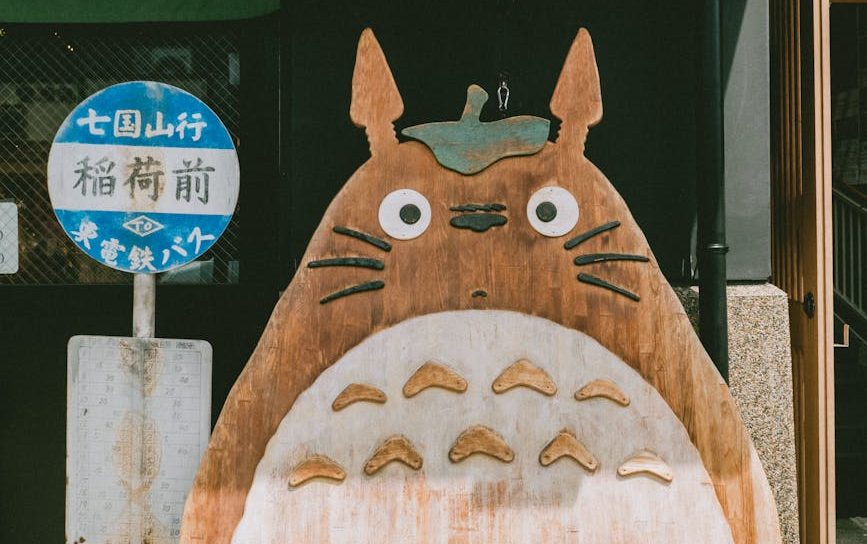
Picture this: You’re curled up on your couch in Vancouver on a rainy Saturday, watching Spirited Away for the hundredth time. But this time, instead of just enjoying the beautiful animation, you’re actually understanding what Chihiro is saying. No subtitles needed.
Sounds like a dream? It’s absolutely achievable—and Studio Ghibli films are your secret weapon for learning authentic, natural Japanese.
Whether you’re a longtime Miyazaki fan or just starting your Japanese journey, these beloved films offer something textbooks simply can’t: real language in emotional, memorable contexts. Plus, they’re way more fun than drilling grammar patterns!
Quick View 📋
Reading Time: 10-12 minutes
Best For: Beginner to intermediate Japanese learners who love Studio Ghibli films
Key Takeaway: Ghibli movies are perfect for learning natural Japanese conversation and cultural nuances
What You’ll Need: Access to Ghibli films with Japanese audio/subtitles, notebook, and ideally a teacher for guidance
Next Steps: Choose your first Ghibli film, follow our 5-step method, practice with structured lessons
- Quick View 📋
- Why Studio Ghibli Movies Are Perfect for Learning Japanese
- What You'll Actually Learn from Ghibli Films
- The Ultimate Ghibli Study Ranking: Best Films for Each Level
- The NihongoKnow 5-Step Ghibli Method
- Advanced Ghibli Study Techniques
- Common Mistakes Vancouver Students Make (And How to Avoid Them)
- Creating Your Ghibli Study Schedule
- The Science Behind Why Ghibli Works
- Advanced Applications: Beyond Basic Learning
- Beyond Ghibli: Expanding Your Film-Based Learning
- Making It Sustainable: Long-Term Success Strategies
- The Future of Your Japanese Learning Journey
Why Studio Ghibli Movies Are Perfect for Learning Japanese
The Magic Formula: Entertainment + Education
Studio Ghibli films aren’t just masterpieces of animation—they’re linguistic goldmines. Here’s why they work so well for Japanese learners:
🎭 Natural, Clear Pronunciation Unlike fast-paced anime or variety shows, Ghibli characters speak with crystal-clear articulation. The voice acting is professional, making it perfect for training your ear to authentic Japanese sounds and rhythm.
🗣️ Real Daily Conversation Forget textbook Japanese like “私の趣味は読書です” (My hobby is reading). Ghibli films feature how people actually talk—with interruptions, emotions, and natural flow.
🎌 Cultural Authenticity Every Ghibli film is steeped in Japanese culture, from the way characters bow to how they interact with nature. You’re not just learning language; you’re absorbing cultural context that makes the language meaningful.
👥 Multiple Speech Levels From Totoro’s childlike wonder to Howl’s dramatic flair, you’ll hear various politeness levels, age-appropriate speech, and regional variations—all in context.
What You’ll Actually Learn from Ghibli Films
🎧 Listening & Pronunciation Skills
Sentence Rhythm & Flow Japanese has a unique rhythm that textbooks can’t teach. By listening to Ghibli characters, you’ll internalize:
- Natural pauses and breathing patterns
- Pitch accent (the melody of Japanese)
- Emotional intonation
- Speed variations in different contexts
Sound Recognition Your brain will start recognizing Japanese sounds automatically. After watching Kiki’s Delivery Service, you might find yourself naturally hearing the difference between “きき” (Kiki) and “ききます” (to listen).
📚 Vocabulary That Actually Matters
Everyday Life Words Ghibli films excel at teaching vocabulary you’ll use daily:
- Food terms: おにぎり (rice ball), お弁当 (lunch box), おいしい (delicious)
- Family relationships: お母さん (mom), お父さん (dad), おばあちゃん (grandma)
- Emotions: うれしい (happy), 悲しい (sad), 心配 (worried)
- Nature vocabulary: 森 (forest), 海 (sea), 空 (sky)
Cultural Expressions You’ll pick up phrases that native speakers use constantly:
- いらっしゃいませ (welcome – said by shopkeepers)
- お疲れ様 (good work/thanks for your effort)
- いただきます (before eating)
- ごちそうさま (after eating)
🧠 Grammar in Living Context
Instead of memorizing isolated grammar rules, you’ll see them in action:
- Polite forms: How Chihiro speaks to adults vs. friends
- Verb conjugations: Past, present, and future tenses in natural conversation
- Particles: Understanding は, が, を, に through context rather than rules
- Conditional forms: “If” statements that flow naturally
🎎 Cultural Insights You Can’t Get from Textbooks
Respect and Hierarchy Notice how characters address each other:
- Children use different language with adults
- Formal situations require specific speech patterns
- Age and social status affect word choice
Environmental Consciousness Ghibli films reflect Japanese values about nature and harmony, teaching you cultural concepts while you learn language.
The Ultimate Ghibli Study Ranking: Best Films for Each Level
🌟 Beginner Level (N5-N4)
1. となりのトトロ (My Neighbor Totoro)
- Why it’s perfect: Simple, clear dialogue with lots of repetition
- Key vocabulary: Family terms, nature words, basic emotions
- Grammar focus: Present tense, basic particles
- Cultural bonus: Rural Japanese life, family dynamics
- Best scenes for learning: Satsuki and Mei’s conversations, meeting Totoro
2. 崖の上のポニョ (Ponyo)
- Why it’s perfect: Short, simple sentences with childlike wonder
- Key vocabulary: Ocean life, family, food
- Grammar focus: Simple present and past tense
- Cultural bonus: Japanese coastal life, environmental themes
- Best scenes for learning: Ponyo’s first words, family dinner scenes
🌟 Intermediate Level (N3-N2)
3. 魔女の宅急便 (Kiki’s Delivery Service)
- Why it’s perfect: Coming-of-age story with varied vocabulary
- Key vocabulary: Work terms, city life, independence
- Grammar focus: て-form, potential form, complex sentences
- Cultural bonus: Work ethic, independence, small town vs. city life
- Best scenes for learning: Kiki’s job interactions, conversations with Tombo
4. 千と千尋の神隠し (Spirited Away)
- Why it’s perfect: Rich dialogue with multiple politeness levels
- Key vocabulary: Supernatural terms, work vocabulary, emotions
- Grammar focus: Keigo (honorific language), complex conditionals
- Cultural bonus: Traditional Japanese spirituality, work culture
- Best scenes for learning: Chihiro’s interactions with Yubaba, working in the bathhouse
🌟 Advanced Level (N2-N1)
5. ハウルの動く城 (Howl’s Moving Castle)
- Why it’s perfect: Complex emotions, varied character speech
- Key vocabulary: War, magic, complex emotions
- Grammar focus: Advanced grammar patterns, literary expressions
- Cultural bonus: Japanese attitudes toward war, beauty, aging
6. もののけ姫 (Princess Mononoke)
- Why it’s perfect: Historical language, complex themes
- Key vocabulary: Historical terms, nature, conflict
- Grammar focus: Classical Japanese elements, complex narratives
- Cultural bonus: Ancient Japanese beliefs, environmental philosophy
The NihongoKnow 5-Step Ghibli Method
This proven approach has helped our Vancouver students and online learners worldwide improve their Japanese through films they love:
Step 1: Pure Enjoyment Watch (English Subtitles)
Goal: Understand the story and connect emotionally
What to do:
- Watch the entire film with English subtitles
- Focus on the plot, characters, and emotions
- Don’t worry about Japanese at all—just enjoy!
Why this works: When you’re emotionally connected to a story, your brain is more receptive to language learning. You need to love the film before you can learn from it.
Step 2: Recognition Watch (Japanese Subtitles)
Goal: Connect sounds to written Japanese
What to do:
- Watch again with Japanese subtitles
- Try to match what you hear with what you see
- Look for familiar words or patterns
- Don’t pause—let it flow naturally
Pro tip: Use Japanese subtitles, not romaji. Your brain needs to connect sounds directly to hiragana, katakana, and kanji.
Step 3: Active Learning Watch (Pause & Repeat)
Goal: Practice pronunciation and internalize phrases
What to do:
- Choose 5-10 favorite scenes
- Pause after each line
- Repeat what the character said (shadowing)
- Focus on rhythm, not perfect pronunciation
Vancouver students love this: Practice during your commute on the SkyTrain—just use headphones!
Step 4: Vocabulary Building (Write & Research)
Goal: Expand your active vocabulary
What to do:
- Create a “Ghibli vocabulary notebook”
- Write down interesting phrases with context
- Look up grammar patterns you notice
- Note cultural observations
Example entries:
- すごい!(Amazing!) – Used when characters are impressed
- おなかすいた (I’m hungry) – Casual way to say you’re hungry
- いってきます (I’m leaving/going) – Said when leaving the house
Step 5: Apply & Practice (Bring to Class)
Goal: Get feedback and use new language actively
What to do:
- Bring your vocabulary notebook to Japanese class
- Ask your teacher about nuances and alternatives
- Practice using phrases in conversation
- Get pronunciation feedback
This is crucial: Self-study only goes so far. A teacher can correct mistakes, explain cultural context, and help you use your new vocabulary correctly.
Advanced Ghibli Study Techniques
The Character Voice Method
Pick a character whose speaking style you want to emulate:
- Totoro: For gentle, warm communication
- Kiki: For polite but friendly young adult speech
- Chihiro: For determined, respectful conversation
- Howl: For dramatic, expressive language (advanced!)
The Scene Replay Technique
Choose one 2-minute scene and watch it 10 times:
- First viewing: General understanding
- Second viewing: Count how many words you recognize
- Third viewing: Focus on one character’s lines
- Fourth viewing: Shadow along with the dialogue
- Fifth viewing: Try to predict what they’ll say next
The Cultural Context Journal
Keep notes on:
- How characters show respect
- What makes them laugh or cry
- How they handle conflict
- What seems uniquely Japanese
Common Mistakes Vancouver Students Make (And How to Avoid Them)
❌ Mistake 1: Passive Watching
The problem: Treating Ghibli films like entertainment only The solution: Use our 5-step method actively
❌ Mistake 2: Perfectionism
The problem: Trying to understand every single word The solution: Focus on overall meaning and gradually increase comprehension
❌ Mistake 3: Ignoring Cultural Context
The problem: Only focusing on vocabulary and grammar The solution: Pay attention to why characters speak the way they do
❌ Mistake 4: Studying Alone
The problem: No feedback or correction The solution: Combine film study with structured lessons
Creating Your Ghibli Study Schedule
For Busy Vancouver Professionals
Weekday Option (30 minutes):
- Monday: Watch one scene from current film
- Tuesday: Vocabulary review and note-taking
- Wednesday: Shadowing practice
- Thursday: Grammar pattern analysis
- Friday: Class discussion of new phrases
Weekend Option (2 hours):
- Saturday: Full film viewing (Steps 1-2)
- Sunday: Active study session (Steps 3-4)
For Students and Flexible Schedules
Daily Study (45 minutes):
- 20 minutes: Film viewing/review
- 15 minutes: Vocabulary building
- 10 minutes: Shadowing practice
For Families Learning Together
Family Movie Night (Modified approach):
- Watch with English subtitles together
- Each family member tracks different vocabulary themes
- Discuss cultural observations afterward
- Practice phrases during the week
The Science Behind Why Ghibli Works
Emotional Memory Connection
When you learn language through stories you love, your brain creates stronger neural pathways. The emotional connection to Totoro or Spirited Away makes the associated Japanese words more memorable.
Contextual Learning
Instead of memorizing isolated words, you learn Japanese in meaningful contexts. When you hear “おかえり” (welcome home), you see the warmth of family reunion, making the word emotionally meaningful.
Cultural Immersion
Ghibli films provide cultural context that makes language learning more than just communication—it becomes cultural understanding.
Advanced Applications: Beyond Basic Learning
For Business Japanese Students
Use Ghibli films to understand:
- Hierarchy and respect: How characters address superiors
- Conflict resolution: Japanese approaches to disagreement
- Team dynamics: How groups work together
For Academic Japanese Students
Analyze films for:
- Narrative structure: How stories are told in Japanese
- Character development: Psychological and social themes
- Cultural symbolism: Deeper meanings in Japanese culture
For Creative Japanese Students
Use Ghibli films to:
- Improve storytelling: Learn how to narrate in Japanese
- Understand humor: What makes Japanese speakers laugh
- Express emotions: How to convey feelings authentically
Beyond Ghibli: Expanding Your Film-Based Learning
Other Japanese Films for Language Learning
Once you’ve mastered Ghibli, try:
- Your Name (君の名は): Modern teen dialogue
- Weathering with You: Contemporary language
- The Tale of Princess Kaguya: Classical Japanese elements
Japanese TV Shows and Series
- Terrace House: Real conversation practice
- Japanese dramas: Various genres and speech levels
- Anime series: More complex storylines
Making It Sustainable: Long-Term Success Strategies
Avoiding Burnout
- Rotate between films: Don’t get stuck on one movie
- Mix active and passive learning: Sometimes just enjoy the story
- Celebrate small wins: Notice when you understand more than before
- Join a community: Learn with others who share your passion
Tracking Progress
- Keep a viewing journal: Note what you understand each time
- Record yourself: Shadow scenes and compare to originals
- Regular assessments: Test comprehension monthly
- Set realistic goals: Aim for gradual improvement
The Future of Your Japanese Learning Journey
Setting Realistic Expectations
After 3 months: You’ll recognize common phrases and understand basic emotions After 6 months: You’ll follow simple conversations and enjoy films more deeply After 1 year: You’ll understand most dialogue and appreciate cultural nuances After 2 years: You’ll watch new Ghibli films without subtitles confidently
Beyond Films: Real-World Applications
Your Ghibli-enhanced Japanese will help you:
- Travel confidently in Japan
- Connect with Japanese speakers in Vancouver’s community
- Understand Japanese culture more deeply
- Appreciate other Japanese media with greater comprehension
Ready to start your magical Japanese learning journey?
🎌 Learn natural Japanese with us !
📅 Book your first lesson today
夢のような日本語学習の旅を始めよう!(Let’s begin your dreamlike Japanese journey!)


