
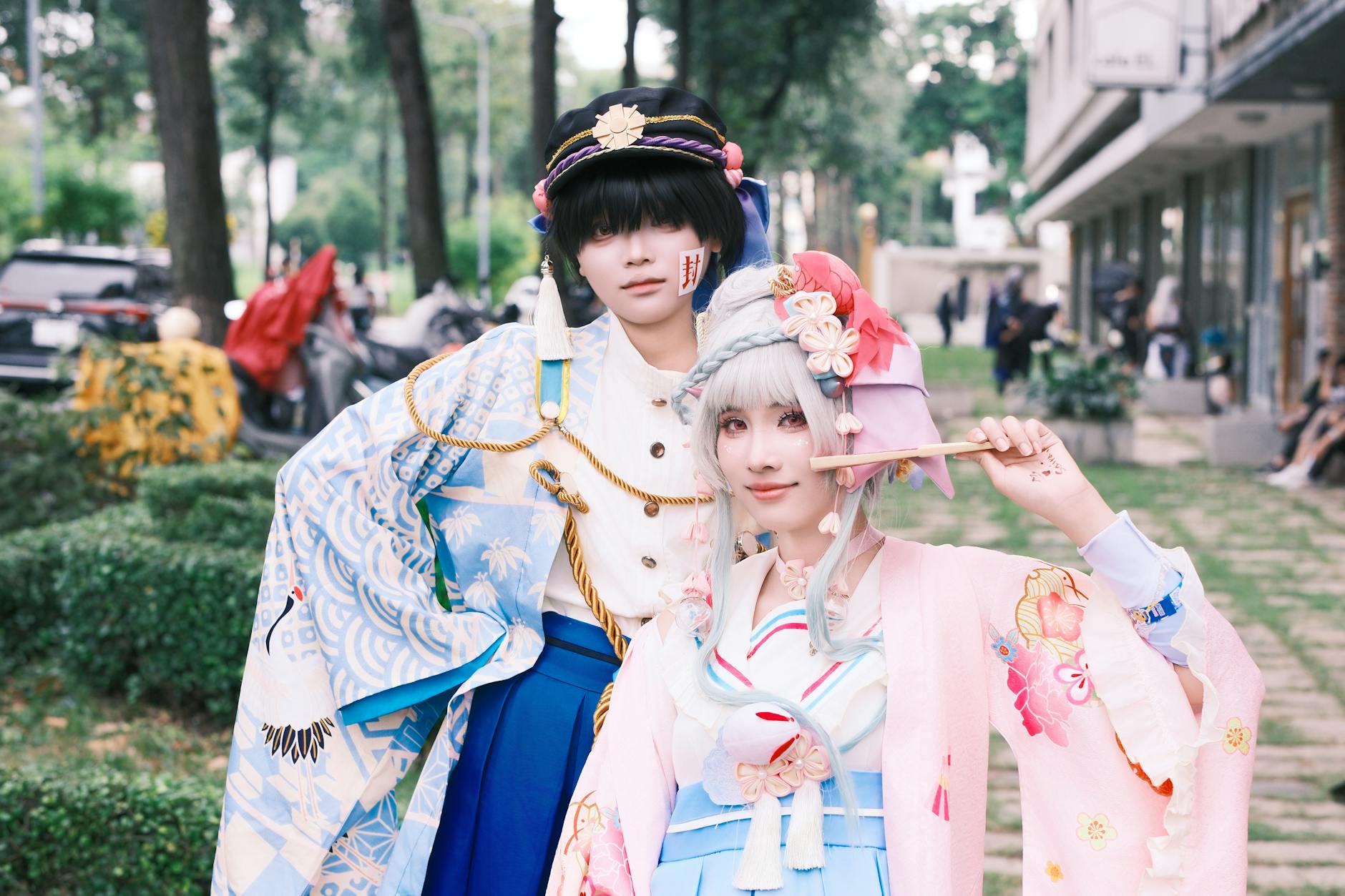
Picture this: You’re at Anime North in Toronto, chatting with Japanese exchange students, when suddenly the conversation shifts to that incredible latest episode of your favorite anime. 😱 You know exactly what you want to say in English, but in Japanese? Crickets. You end up nodding awkwardly while thinking, “I wish I knew how real Japanese fans talk about this stuff!”
Sound familiar? Whether you’re in Vancouver’s thriving anime scene, attending conventions across North America, or connecting with Japanese pop culture fans online worldwide, there’s a whole universe of otaku expressions that textbooks never teach you.
From Tokyo’s Akihabara to your local comic shop, Japanese pop culture has created its own vibrant linguistic ecosystem. Let’s dive into the essential expressions that’ll transform you from a silent observer to an active participant in otaku culture conversations! 🚀
Quick View 👀
What You’ll Master:
- 100+ essential otaku vocabulary words and expressions
- Natural conversation starters for anime, manga, and J-pop discussions
- Cultural context behind popular slang and internet expressions
- Regional differences between Japanese and international otaku culture
- How to avoid common foreigners’ mistakes when discussing pop culture
Perfect for: Anime fans, manga readers, J-pop enthusiasts, gamers, cosplayers, convention-goers Reading Time: 10 minutes Difficulty Level: Beginner to intermediate Japanese Cultural Depth: Insider knowledge from native Japanese otaku communities
- Quick View 👀
- Why Standard Japanese Isn't Enough for Pop Culture Conversations 🤔
- Core Otaku Vocabulary: Your Foundation Arsenal 🏗️
- Idol & Music Culture: Beyond the Basics 🎤✨
- Gaming Culture: Beyond Button Mashing 🎮
- Cosplay & Convention Culture 🎭
- Internet Culture & Memes 💻
- Advanced Conversation Strategies 🗣️
- Regional & Generational Differences 🌏
- Building Your Otaku Japanese Fluency 📚
- The Future of Otaku Japanese 🔮
Why Standard Japanese Isn’t Enough for Pop Culture Conversations 🤔
The Cultural Language Gap
When most people study Japanese, they learn formal expressions like これは面白い映画です (This is an interesting movie). But in the otaku world, you’d never hear someone say that about the latest Attack on Titan episode!
Real Japanese fans might say: この回、マジで神すぎる! (Kono kai, maji de kami sugiru!) This episode is seriously divine/amazing!
The difference? Native pop culture expressions carry:
- Emotional intensity that matches fan excitement
- Community belonging signals that show you’re “one of us”
- Cultural nuances that demonstrate deep understanding
- Generational relevance that connects with current trends
The Evolution of Otaku Language 📈
Japanese otaku language isn’t static—it’s a living, breathing cultural phenomenon that evolves with:
🔥 Internet Culture: Twitter, 2channel (now 5channel), and Pixiv influence 📱 Mobile Gaming: Gacha games creating new vocabulary daily
🎭 Streaming Culture: VTuber expressions entering mainstream usage 🌍 Global Influence: International fans contributing to Japanese internet slang
Understanding these dynamics helps you speak like a current fan, not someone stuck in 2010!
Core Otaku Vocabulary: Your Foundation Arsenal 🏗️
Anime & Manga Essentials 📺📖
Basic Terminology:
- アニメ (anime) – Animated works (obviously!)
- 漫画/マンガ (manga) – Comics/graphic novels
- 原作 (gensaku) – Original work (often manga that becomes anime)
- アニオリ (ani-ori) – Anime original content (not in manga)
- フィラー (firaa) – Filler episodes
- OVA/OAD – Original Video Animation/Original Animation DVD
Character & Story Discussion:
- 主人公 (shujinkou) – Main character/protagonist
- ヒロイン (hiroin) – Female lead/heroine
- 悪役 (akuyaku) – Villain/antagonist
- モブ (mobu) – Background character (from “mob”)
- 死亡フラグ (shibou furagu) – Death flag (signs a character will die)
- 俺TUEEE (ore tuee) – Overpowered main character trope
Quality & Reception:
- 神アニメ (kami anime) – Godly/legendary anime
- 神回 (kamikai) – Legendary episode
- 作画崩壊 (sakuga houkai) – Animation quality collapse
- クソアニメ (kuso anime) – Terrible anime (ironically beloved sometimes!)
- 覇権アニメ (haken anime) – Dominant anime of the season
💡 Natural Usage Example: A: 今期何見てる?(Konki nani miteru?) What are you watching this season?
B: 鬼滅の最新話、まじで神回だった!作画も最高!(Kimetsu no saishin-wa, maji de kamikai datta! Sakuga mo saikou!) The latest Demon Slayer episode was truly legendary! The animation was amazing too!
The World of “Oshi” Culture 💖
推し (oshi) is perhaps the most important word in modern Japanese pop culture. It’s evolved far beyond “favorite character”:
推し活 (oshi-katsu) – Activities supporting your oshi (buying merchandise, attending events) 推し変 (oshi-hen) – Changing your oshi (sometimes controversial!)
推しカプ (oshi-kapu) – Your favorite romantic pairing/ship 推し不足 (oshi-busoku) – Not having enough oshi content 推し被り (oshi-kaburi) – Having the same oshi as someone else
Advanced Oshi Expressions:
- 尊い (toutoi) – Precious/sacred (used for beloved characters/ships)
- �尊み (toutomi) – The feeling of something being precious
- 推せる (oseru) – Worth supporting/being a fan of
- 推し増し (oshi-mashi) – Gaining additional oshi (having multiple favorites)
Spoiler Culture & Information Sharing 🤫
ネタバレ (netabare) – Spoiler (from “ネタ” neta = material + “バレる” bareru = to be revealed)
Spoiler-Related Terms:
- ネタバレ注意 (netabare chuui) – Spoiler warning
- 未読注意 (midoku chuui) – Warning for those who haven’t read
- 既読組 (kidoku-gumi) – People who have already read/seen it
- アニメ組 (anime-gumi) – Anime-only viewers
- 原作組 (gensaku-gumi) – Original work (manga) readers
Information Control:
- 自重 (jichou) – Self-restraint (not spoiling)
- 解禁 (kaikin) – Information embargo lifted
- 先行上映 (senkou joueii) – Advance screening
- 配信開始 (haishin kaishi) – Streaming release begins
Idol & Music Culture: Beyond the Basics 🎤✨
Core Idol Vocabulary
基本用語 (kihon yougo) – Basic Terms:
- アイドル (aidoru) – Idol
- 推しメン (oshi-men) – Favorite group member
- センター (sentaa) – Center position (most prominent member)
- エース (eesu) – Ace member (most popular/skilled)
- 研究生 (kenkyuusei) – Trainee idol
Live Event Culture 🎪
ライブ参戦 (raibu sansen) – “Joining the battle” = attending a concert
Event-Specific Terms:
- セトリ (setori) – Setlist
- アンコール (ankooru) – Encore
- コール (kooru) – Audience chants/calls
- サイリウム (sairiumu) – Glow sticks/light sticks
- ヲタ芸 (wota-gei) – Fan choreography/movements
Fan Behavior & Culture:
- 厄介 (yakkai) – Problematic fan behavior
- 推し事 (oshi-goto) – Idol-related activities
- 現場 (genba) – Live event venue/scene
- 箱 (hako) – Venue (literally “box”)
- 物販 (bussan) – Merchandise sales
💡 Concert Conversation Example: A: 明日のライブ参戦する?(Ashita no raibu sansen suru?) Are you going to tomorrow’s concert?
B: もちろん!セトリに新曲入ってるといいな。(Mochiron! Setori ni shinkyoku haitteru to ii na.) Of course! I hope the new song is in the setlist.
VTuber Phenomenon 🤖💫
The VTuber (Virtual YouTuber) boom has created entirely new vocabulary:
Basic VTuber Terms:
- Vtuber/ブイチューバー – Virtual YouTuber
- ライバー (raibaa) – VTuber (alternative term)
- 箱 (hako) – Agency/company (like Hololive, Nijisanji)
- 中の人 (naka no hito) – Person behind the avatar (“person inside”)
- ガワ (gawa) – Avatar design (“skin/shell”)
VTuber Culture:
- 投げ銭 (nagenisen) – Super Chat donations
- 切り抜き (kirinuki) – Highlight clips
- 配信 (haishin) – Stream/broadcast
- アーカイブ/アーカイ (aakaib/aakai) – Archived stream
- 同接 (dousetu) – Concurrent viewers
Gaming Culture: Beyond Button Mashing 🎮
Mobile Gaming Revolution 📱
ガチャ (gacha) culture has revolutionized not just gaming, but Japanese vocabulary:
Gacha Terminology:
- 単発 (tanpatsu) – Single pull
- 10連 (juu-ren) – 10-pull
- 天井 (tenjou) – Pity system (guaranteed rare after X pulls)
- 爆死 (bakushi) – Terrible gacha luck (“explosive death”)
- 沼 (numa) – Gacha addiction (“swamp” you sink into)
Rarity & Results:
- 最高レア (saikou rea) – Highest rarity
- 爆アド (baku-ado) – Amazing advantage/luck
- 微課金 (bi-kakin) – Light spender
- 重課金 (juu-kakin) – Heavy spender
- 無課金 (mu-kakin) – Free-to-play player
Streaming & Content Creation 🎥
ゲーム実況 (geemu jikkyou) – Game streaming/commentary
Streaming Vocabulary:
- 生放送/生配信 (nama-housou/nama-haishin) – Live broadcast
- アーカイブ (aakaib) – Archived stream
- 視聴者 (shichousaa) – Viewers
- コメント/コメ (komento/kome) – Comments
- 荒らし (arashi) – Trolls/spam
Gaming Skill Levels:
- 廃人ゲーマー (haijin geemaa) – Hardcore gamer
- ライトゲーマー (raito geemaa) – Casual gamer
- プロゲーマー (puro geemaa) – Professional gamer
- ゲーム下手 (geemu beta) – Bad at games
- 神プレイ (kami purei) – Godly gameplay
Cosplay & Convention Culture 🎭
Cosplay Fundamentals
コスプレ (kosupure) – Cosplay (from “costume play”)
Cosplay Activities:
- コス (kosu) – Short for cosplay
- 併せ (awase) – Group cosplay from same series
- 個人併せ (kojin awase) – Private group cosplay meetup
- スタジオ (sutajio) – Photo studio rental
- ロケ (roke) – Location shooting (outdoor photos)
Costume & Craft Terms:
- 衣装 (ishou) – Costume
- ウィッグ (wiggu) – Wig
- 造形 (zoukei) – Prop making/crafting
- メイク (meiku) – Makeup
- 血のり (chi-nori) – Fake blood
Convention Culture 🎪
即売会 (sokubaikai) – Fan convention/doujinshi sale event
Convention Types:
- コミケ (komike) – Comic Market (Comiket)
- オンリー (onrii) – Single-series focused event
- プチオンリー (puchi onrii) – Small single-series event
- 合同誌 (goudoushi) – Collaborative doujinshi
Convention Activities:
- サークル参加 (saakuru sanka) – Circle participation (as seller)
- 一般参加 (ippan sanka) – General attendance (as buyer)
- 戦利品 (senri-hin) – Convention haul/”war spoils”
- 完売 (kanbaisu) – Sold out
- 列 (retsu) – Line/queue
Internet Culture & Memes 💻
2channel/5channel Origins
Much otaku slang originates from Japanese imageboards:
Classic Expressions:
- ワロタ (warota) – LOL (from 笑った waratta)
- 草 (kusa) – Laughter (from wwww looking like grass)
- 大草原 (dai-sou-gen) – Lots of laughter (“great grassland”)
- 乙 (otsu) – Good job/thanks (from お疲れ様 otsukaresama)
Modern Slang Evolution:
- ぴえん (pien) – Crying/sad expression
- ぽよ (poyo) – Cute expression
- やば (yaba) – Amazing/terrible (context-dependent)
- えぐ (egu) – Extreme/intense
- しんど (shindo) – Emotionally overwhelming
Twitter Culture Impact 🐦
Twitter has dramatically influenced otaku expression:
Tweet-Specific Language:
- ツイート (tsuiito) – Tweet
- リツイート/RT (ritsuiito) – Retweet
- ファボ (fabo) – Like (from “favorite”)
- フォロー (forou) – Follow
- フォロバ (foroba) – Follow back
Engagement Expressions:
- バズる (bazuru) – Go viral
- 炎上 (enjou) – Twitter controversy (“flame up”)
- 実況 (jikkyou) – Live tweeting
- 感想 (kansou) – Impressions/thoughts
- 考察 (kousatsu) – Analysis/theory
Advanced Conversation Strategies 🗣️
Natural Discussion Starters
For Anime/Manga:
- 今期何見てる? (Konki nani miteru?)
What are you watching this season? - そのアニメの推しキャラ誰? (Sono anime no oshi-kyara dare?)
Who’s your favorite character in that anime? - 原作派?アニメ派? (Gensaku-ha? Anime-ha?)
Are you team manga or team anime?
For Music/Idols:
- どこの箱推し? (Doko no hako-oshi?)
Which agency/group do you support? - 次のライブ参戦する? (Tsugi no raibu sansen suru?)
Are you going to the next concert? - 推し変した事ある? (Oshi-hen shita koto aru?)
Have you ever changed your favorite?
For Gaming:
- 今何のゲームにハマってる? (Ima nan no geemu ni hamatteru?)
What game are you obsessed with right now? - ガチャ運どう? (Gacha-un dou?)
How’s your gacha luck? - 課金してる? (Kakin shiteru?)
Do you spend money on games?
Expressing Opinions Like a Native 💭
Positive Reactions:
- これはエモい (Kore wa emoi) – This hits me in the feels
- 尊すぎる (toutosugiru) – Too precious/perfect
- 神 (kami) – Godly/perfect
- 最高 (saikou) – The best
- やばい(良い意味で) (yabai – ii imi de) – Amazing (in a good way)
Critical Responses:
- 微妙 (bimyou) – Mediocre/so-so
- 残念 (zannen) – Disappointing
- 合わなかった (awanakatta) – It didn’t suit me
- 期待外れ (kitai hazure) – Didn’t meet expectations
- う〜ん… (uun…) – Hmm… (diplomatic disagreement)
Cultural Sensitivity & Etiquette 🙏
Important Considerations:
Respect Spoiler Culture:
- Always use ネタバレ注意 warnings
- Ask ネタバレ大丈夫? before discussing plot points
- Be mindful of release timing differences globally
Understand Fan Boundaries:
- Don’t judge others’ 推し choices
- Respect different levels of involvement
- Acknowledge that tastes vary
Navigate Controversial Topics:
- Some anime/manga have passionate fan divisions
- Ship wars can be intense
- Stay respectful when opinions differ
Regional & Generational Differences 🌏
Kansai vs. Kanto Expressions
Osaka/Kansai Otaku Slang:
- めっちゃ (meccha) – Very/really
- あかん (akan) – No good/bad
- ほんま (honma) – Really/truly
- なんぼ (nanbo) – How much
Tokyo/Kanto Standard:
- めちゃくちゃ (mechakucha) – Very/really
- だめ (dame) – No good/bad
- ほんとう (hontou) – Really/truly
- いくら (ikura) – How much
Generational Language Evolution 📈
Older Otaku (30+):
- More formal expressions
- Classic anime references
- Traditional 2channel slang
Younger Otaku (Gen Z):
- Twitter/TikTok influenced
- Mobile-first vocabulary
- VTuber expressions
International Influence 🌍
Japanese otaku culture increasingly incorporates international terms:
English Loanwords:
- リアクション (riakushon) – Reaction
- レビュー (rebiyuu) – Review
- スポイラー (supoiraa) – Spoiler (alongside ネタバレ)
- ストリーミング (sutoriimingu) – Streaming
Global Platform Integration:
- YouTube references in Japanese discussions
- Netflix as a legitimate anime source
- Crunchyroll recognition in Japan
Building Your Otaku Japanese Fluency 📚
Immersion Strategies
Daily Practice Ideas:
- Follow Japanese otaku Twitter accounts – Expose yourself to natural usage
- Read Japanese fan forums – 5channel, Yahoo! Chiebukuro
- Watch Japanese reaction videos – See expressions in context
- Join Japanese Discord servers – Practice real-time chat
Content Consumption:
- Japanese gaming streams on Twitch/YouTube
- Japanese podcast discussions about anime/manga
- Japanese fan blogs and review sites
- Japanese Amazon reviews of media you know
Common Mistakes to Avoid ❌
Overusing Formal Language:
- ❌ このアニメーションは非常に興味深いです
- ✅ このアニメ、めっちゃ面白い!
Direct Translation Errors:
- ❌ 私のお気に入りのキャラクター (too stiff)
- ✅ 私の推しキャラ (natural)
Missing Cultural Context:
- Understanding when expressions are appropriate
- Recognizing sarcasm and irony
- Knowing fan community etiquette
Progress Tracking 📊
Beginner Milestones:
- Can discuss basic anime preferences
- Understands common otaku slang in context
- Recognizes major pop culture references
Intermediate Goals:
- Participates in online fan discussions
- Uses expressions naturally in conversation
- Understands generational/regional differences
Advanced Fluency:
- Creates original content using otaku expressions
- Navigates complex fan community dynamics
- Influences others’ language usage
The Future of Otaku Japanese 🔮
Emerging Trends
Virtual Reality Integration:
- VR Chat expressions entering mainstream
- Metaverse-related vocabulary
- Avatar identity language
Global Fusion:
- International fan creativity influencing Japanese
- Cross-cultural meme evolution
- Global streaming platform impact
Staying Current 📱
Essential Resources:
- NicoNico Douga – Japanese video platform
- Pixiv – Art community discussions
- Japanese gaming forums – Fresh vocabulary source
- Otaku news sites – Cultural context updates
Ready to level up your Japanese pop culture conversations? At NihongoKnow.com, we provide comprehensive guides, cultural context, and practical conversation practice to help otaku learners in Vancouver, across Canada, the US, and worldwide connect authentically with Japanese pop culture communities. From anime discussions to convention conversations, we’ll help you speak like a true insider! 🌟Stop being a silent otaku—start speaking the language of Japanese pop culture! Your favorite anime characters would be proud! 🎌✨