

📖 Quick View
What You’ll Learn:
- 50+ essential Japanese phrases used in real Japanese schools
- Proper pronunciation and cultural context for each expression
- How to use polite classroom language like a native student
- Cultural insights that make your Japanese sound natural
- Practical tips for exchange students and language learners
Perfect For:
- Students planning to study in Japan
- Parents with children in Japanese schools
- Japanese language learners seeking authentic expressions
- Anyone curious about real Japanese classroom culture
Reading Time: 8-10 minutes
- 📖 Quick View
- Introduction: Why Japanese School Language Matters
- 🎓 Understanding Japanese School Culture Through Language
- 🏫 1. Essential Teacher Commands and Instructions
- 🧑🎓 2. Student Responses and Polite Expressions
- 📚 3. School-Specific Vocabulary That Makes You Sound Natural
- 🎤 4. Common Teacher Questions and How to Respond
- 🗣️ 5. Cultural Context: Beyond Just Words
- 🌟 6. Survival Phrases for Exchange Students
- 💡 7. Learning Tips: Making These Phrases Natural
- 🎯 8. Regional Variations and Dialects
- 📱 9. Technology and Modern Classroom Language
- 🌏 10. Why Choose NihongoKnow for Your Japanese Learning Journey
- 🎉 Take Action Today: Your Japanese School Success Starts Here
Introduction: Why Japanese School Language Matters
Have you ever wondered what Japanese students actually say in their classrooms? If you’re planning to study in Japan, teach English there, or simply want to understand authentic Japanese beyond textbooks, mastering school expressions is your gateway to real Japanese communication.
Unlike formal business Japanese or casual street language, school Japanese strikes the perfect balance—it’s polite, clear, and incredibly practical. Whether you’re in Vancouver preparing for an exchange program, or anywhere in Canada or the US dreaming of studying in Japan, these expressions will give you confidence in real classroom situations.
At NihongoKnow, we’ve helped hundreds of students from Vancouver to Toronto master these essential phrases. Today, we’re sharing everything you need to know about Japanese school language, complete with cultural insights that textbooks often miss.
A note from Haruka: Before I started NihongoKnow, I taught in Japanese elementary and junior high schools, real classrooms, real students, real chaos. One thing that always struck me was how much language the school environment produces that never appears in any textbook. The phrases in this guide are the ones I heard and used every single day. When a student learns 起立・礼・着席 and understands why it exists, something clicks about Japanese culture that no grammar explanation can achieve.
🎓 Understanding Japanese School Culture Through Language
The Foundation: Respect and Harmony
Japanese schools operate on principles of 和 (wa) – harmony and mutual respect. This philosophy shapes every interaction, from how students greet their teachers to how they ask for help. Understanding this context makes learning these phrases much more meaningful.
Key Cultural Elements:
- Hierarchical respect: Students use different language levels with teachers vs. classmates
- Group consciousness: Many activities are done collectively with shared phrases
- Responsibility and self-discipline: Students clean their own classrooms and take ownership of their learning environment
- Seasonal awareness: Many expressions change based on the time of year or school events
Japanese schools follow seasonal rhythms closely. Japanese Seasonal Greetings: From Uraraka Spring to Sokobie Winter covers the expressions that change throughout the school year.
🏫 1. Essential Teacher Commands and Instructions
Japanese teachers use a specific style of polite commands that maintain authority while showing respect for students. These are some of the most important phrases you’ll hear daily:
Basic Movement Commands
- 立ってください (Tatte kudasai) – “Please stand up”
- Pronunciation: TAH-teh koo-dah-sah-ee
- Used at the beginning of class or when showing respect
- 座ってください (Suwatte kudasai) – “Please sit down”
- Pronunciation: soo-WAH-teh koo-dah-sah-ee
- Often follows greetings or announcements
- 前に来てください (Mae ni kite kudasai) – “Please come to the front”
- Pronunciation: MAH-eh nee kee-teh koo-dah-sah-ee
- Used when students need to present or demonstrate
Learning Activity Commands
- 静かにしてください (Shizuka ni shite kudasai) – “Please be quiet”
- Pronunciation: shee-ZOO-kah nee shee-teh koo-dah-sah-ee
- A gentle but firm request for silence
- 見てください (Mite kudasai) – “Please look”
- Pronunciation: mee-teh koo-dah-sah-ee
- Often used when pointing to the blackboard or demonstrations
- 書いてください (Kaite kudasai) – “Please write”
- Pronunciation: kah-ee-teh koo-dah-sah-ee
- Common during note-taking or assignments
- 読んでください (Yonde kudasai) – “Please read”
- Pronunciation: yohn-deh koo-dah-sah-ee
- Used for reading aloud or following along
- 聞いてください (Kiite kudasai) – “Please listen”
- Pronunciation: kee-ee-teh koo-dah-sah-ee
- Important for audio exercises or explanations
Advanced Instructions
- グループを作ってください (Guruupu wo tsukutte kudasai) – “Please form groups”
- 隣の人と話してください (Tonari no hito to hanashite kudasai) – “Please talk with the person next to you”
- 教科書を開けてください (Kyoukasho wo akete kudasai) – “Please open your textbook”
Grammar Note: These commands use the て-form + ください pattern, which is the polite imperative form in Japanese. It’s firm but respectful—perfect for classroom settings.
Haruka’s take: The collective greeting ritual was one of the first things I had to teach my non-Japanese students when they visited Japanese schools on exchange programs. It always caught them off guard, not because it was difficult, but because nothing in Western schooling prepares you for the synchronized precision of it. Once they understood that it was about 和 (harmony) rather than military discipline, they stopped seeing it as strange and started seeing it as beautiful. That shift in perception is exactly what language learning should do.
🧑🎓 2. Student Responses and Polite Expressions
Students in Japanese schools use remarkably consistent polite language. These expressions help create the respectful atmosphere that Japanese education is known for:
Essential Courtesy Phrases
- よろしくお願いします (Yoroshiku onegaishimasu) – “Please treat me favorably”
- Pronunciation: yoh-roh-shee-koo oh-neh-gah-ee-shee-mahs
- Used when meeting new classmates or starting group work
- Shows humility and eagerness to cooperate
- お疲れ様でした (Otsukaresama deshita) – “Thank you for your hard work”
- Pronunciation: oh-tsoo-kah-reh-sah-mah deh-shee-tah
- Said at the end of cleaning time or group activities
- Shows appreciation for shared effort
- 失礼します (Shitsurei shimasu) – “Excuse me” (when entering/leaving)
- Pronunciation: shee-tsoo-reh-ee shee-mahs
- Used when entering the teacher’s office or leaving class early
- More formal than すみません
Asking for Help
- すみません、わかりません (Sumimasen, wakarimasen) – “Excuse me, I don’t understand”
- Pronunciation: soo-mee-mah-sehn, wah-kah-ree-mah-sehn
- Honest way to ask for clarification
- もう一度お願いします (Mou ichido onegaishimasu) – “Please say it one more time”
- Pronunciation: moh ee-chee-doh oh-neh-gah-ee-shee-mahs
- More polite than just “What?” or “Huh?”
- ゆっくり話してください (Yukkuri hanashite kudasai) – “Please speak slowly”
- Pronunciation: yook-koo-ree hah-nah-shee-teh koo-dah-sah-ee
- Essential for non-native speakers
Expressing Understanding
- はい、わかりました (Hai, wakarimashita) – “Yes, I understood”
- Pronunciation: hah-ee, wah-kah-ree-mah-shee-tah
- Shows you’ve grasped the concept
- ちょっと難しいです (Chotto muzukashii desu) – “It’s a bit difficult”
- Pronunciation: choh-toh moo-zoo-kah-shee-ee deh-soo
- Polite way to express struggling with material
Building friendships beyond the classroom? Japanese Friendship Phrases: Real Japanese Expressions to Sound Natural covers the casual expressions you’ll need outside school hours.
📚 3. School-Specific Vocabulary That Makes You Sound Natural
Understanding these terms helps you navigate Japanese school life and sound like you belong:
Daily School Life
| Japanese | Hiragana | Pronunciation | Meaning |
| 宿題 | しゅくだい | shoo-koo-dah-ee | Homework |
| 小テスト | しょうテスト | shoh teh-soo-toh | Quiz |
| 中間テスト | ちゅうかんテスト | choo-kahn teh-soo-toh | Midterm exam |
| 期末テスト | きまつテスト | kee-mah-tsoo teh-soo-toh | Final exam |
| 時間割 | じかんわり | jee-kahn-wah-ree | Class schedule |
| 掃除 | そうじ | soh-jee | Cleaning time |
| 給食 | きゅうしょく | kyoo-shoh-koo | School lunch |
| 部活 | ぶかつ | boo-kah-tsoo | Club activities |
Classroom Items
| Japanese | Hiragana | Pronunciation | Meaning |
| 教科書 | きょうかしょ | kyoh-kah-shoh | Textbook |
| ノート | のーと | noh-toh | Notebook |
| 黒板 | こくばん | koh-koo-bahn | Blackboard |
| チョーク | ちょーく | choh-koo | Chalk |
| 消しゴム | けしごむ | keh-shee-goh-moo | Eraser |
| 筆箱 | ふでばこ | foo-deh-bah-koh | Pencil case |
| 制服 | せいふく | seh-ee-foo-koo | School uniform |
| 上履き | うわばき | oo-wah-bah-kee | Indoor shoes |
School Organization
| Japanese | Hiragana | Pronunciation | Meaning |
| 学年 | がくねん | gah-koo-nehn | Grade level |
| 学期 | がっき | gah-kkee | School term |
| 学級 | がっきゅう | gah-kkyoo | Class/homeroom |
| 出席 | しゅっせき | shoo-sseh-kee | Attendance |
| 欠席 | けっせき | keh-sseh-kee | Absence |
| 遅刻 | ちこく | chee-koh-koo | Being late |
| 早退 | そうたい | soh-tah-ee | Leaving early |
🎤 4. Common Teacher Questions and How to Respond
Understanding these teacher questions and knowing how to respond appropriately is crucial for classroom success:
Comprehension Checks
Teacher: 「わかりますか?」(Wakarimasu ka?) – “Do you understand?” Student Responses:
- 「はい、わかります」(Hai, wakarimasu) – “Yes, I understand”
- 「すみません、わかりません」(Sumimasen, wakarimasen) – “Sorry, I don’t understand”
- 「だいたいわかります」(Daitai wakarimasu) – “I understand mostly”
Participation Questions
Teacher: 「質問がありますか?」(Shitsumon ga arimasu ka?) – “Do you have any questions?” Student Responses:
- 「はい、質問があります」(Hai, shitsumon ga arimasu) – “Yes, I have a question”
- 「いいえ、ありません」(Iie, arimasen) – “No, I don’t have any”
- 「後で質問してもいいですか?」(Ato de shitsumon shite mo ii desu ka?) – “May I ask questions later?”
Activity Instructions
Teacher: 「〜さん、読んでください」([Name]-san, yonde kudasai) – “[Name]-san, please read” Student Response: 「はい」(Hai) – “Yes” (then proceed to read)
Teacher: 「次のページを開けてください」(Tsugi no peeji wo akete kudasai) – “Please open the next page” Student Response: 「はい」(Hai) – acknowledgment
Class Management
Teacher: 「始めましょう」(Hajimemashō) – “Let’s begin” Student Response: 「お願いします」(Onegaishimasu) – “Please” (showing readiness)
Teacher: 「終わりましょう」(Owarimashō) – “Let’s finish” Student Response: 「お疲れ様でした」(Otsukaresama deshita) – “Thank you for your hard work”
🗣️ 5. Cultural Context: Beyond Just Words
The language level shifts you’ll encounter in Japanese schools are rooted in keigo — Japan’s formal speech system. Japanese Keigo Made Simple: The Complete Beginner’s Guide explains the logic behind it.
The Importance of Collective Greetings
Japanese schools emphasize group unity through synchronized greetings:
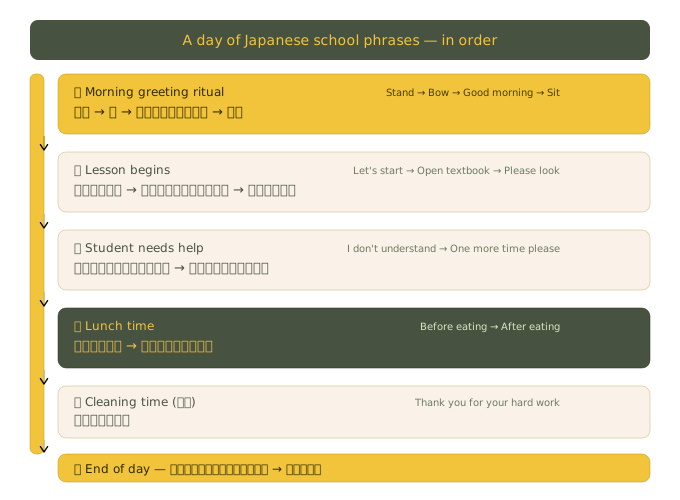
Morning Greeting Ritual:
- Stand up together: 「起立」(Kiritsu) – command to stand
- Bow together: 「礼」(Rei) – command to bow
- Greet together: 「おはようございます」(Ohayou gozaimasu) – “Good morning”
- Sit down together: 「着席」(Chakuseki) – command to sit
End of Day Ritual:
- Stand up together
- 「今日はありがとうございました」(Kyou wa arigatou gozaimashita) – “Thank you for today”
- Bow together
- 「さようなら」(Sayounara) – “Goodbye”
Meal Time Expressions
Japanese schools teach gratitude through meal-time phrases:
Before eating:
- 「いただきます」(Itadakimasu) – “I humbly receive this meal”
- Said with palms together in a brief prayer-like gesture
After eating:
- 「ごちそうさまでした」(Gochisousama deshita) – “Thank you for the meal”
- Expresses gratitude to everyone who made the meal possible
Seasonal and Event-Specific Expressions
Japanese schools celebrate seasons and events with special phrases:
Spring (New School Year):
- 「新学期よろしくお願いします」(Shingakki yoroshiku onegaishimasu) – “Please treat me well in the new term”
Sports Festival:
- 「頑張って」(Ganbatte) – “Do your best/Good luck”
- 「お疲れ様」(Otsukaresama) – “Good job” (after events)
Cultural Festival:
- 「楽しかったです」(Tanoshikatta desu) – “It was fun”
- 「上手ですね」(Jouzu desu ne) – “You’re skilled at that”
🌟 6. Survival Phrases for Exchange Students
If you’re studying in Japan or planning to, these phrases will be your lifeline:
Emergency Classroom Phrases
- 「トイレに行ってもいいですか?」(Toire ni itte mo ii desu ka?) – “May I go to the bathroom?”
- 「気分が悪いです」(Kibun ga warui desu) – “I feel sick”
- 「保健室に行きたいです」(Hokenshitsu ni ikitai desu) – “I want to go to the nurse’s office”
Communication Helpers
- 「もう一度言ってください」(Mou ichido itte kudasai) – “Please say that again”
- 「ちょっと待ってください」(Chotto matte kudasai) – “Please wait a moment”
- 「英語で言ってもいいですか?」(Eigo de itte mo ii desu ka?) – “May I say it in English?”
- 「辞書を使ってもいいですか?」(Jisho wo tsukatte mo ii desu ka?) – “May I use a dictionary?”
Task-Related Phrases
- 「忘れました」(Wasuremashita) – “I forgot”
- 「できました」(Dekimashita) – “I finished/I did it!”
- 「難しいです」(Muzukashii desu) – “It’s difficult”
- 「もう少し時間をください」(Mou sukoshi jikan wo kudasai) – “Please give me a little more time”
Social Integration Phrases
- 「一緒にやりませんか?」(Issho ni yarimasen ka?) – “Would you like to do it together?”
- 「手伝ってもらえませんか?」(Tetsudatte moraemasen ka?) – “Could you help me?”
- 「教えてください」(Oshiete kudasai) – “Please teach me”
💡 7. Learning Tips: Making These Phrases Natural
Practice Strategies That Work
1. Shadowing Technique:
- Watch Japanese school dramas or anime
- Repeat phrases immediately after hearing them
- Focus on intonation and rhythm, not just pronunciation
2. Roleplay Practice:
- Practice teacher-student interactions with a partner
- Switch roles to understand both perspectives
- Use realistic scenarios like asking for help or participating in class
3. Daily Integration:
- Use one new phrase each day in your regular study routine
- Practice with Japanese tutors or conversation partners
- Join online communities where you can practice these expressions
Common Mistakes to Avoid
1. Over-formality:
- Don’t use business-level keigo with classmates
- Adjust your politeness level based on the situation
2. Incorrect Timing:
- Learn when to use collective vs. individual greetings
- Understand the flow of Japanese classroom rituals
3. Pronunciation Pitfalls:
- Pay attention to long vowels (like in すみません)
- Practice the difference between similar sounds (like し and しゅ)
Building Confidence
Start Small:
- Master 3-5 essential phrases first
- Practice them until they become automatic
- Gradually add more complex expressions
Cultural Immersion:
- Watch Japanese school documentaries
- Follow Japanese school social media accounts
- Learn about Japanese school events and traditions
🎯 8. Regional Variations and Dialects
While standard Japanese is used in schools, you might encounter some regional variations:
Kansai Region (Osaka, Kyoto, Kobe)
- 「おおきに」(Ookini) instead of ありがとう in casual settings
- Different intonation patterns, especially for questions
Tohoku Region (Northern Japan)
- Softer consonants and unique vowel pronunciation
- Some schools may use local expressions alongside standard Japanese
Okinawa
- 「ちゅらさん」(Churasan) – beautiful (from Okinawan language)
- Mix of standard Japanese with Okinawan expressions
Important Note: In formal classroom settings, standard Japanese is always used, but understanding regional variations helps with social integration.
📱 9. Technology and Modern Classroom Language
Modern Japanese schools incorporate technology, bringing new expressions:
Digital Classroom Phrases
- 「タブレットを出してください」(Taburetto wo dashite kudasai) – “Please take out your tablets”
- 「オンラインで提出してください」(Onrain de teishutsu shite kudasai) – “Please submit online”
- 「QRコードを読んでください」(QR koudo wo yonde kudasai) – “Please scan the QR code”
Distance Learning Expressions
- 「マイクをオンにしてください」(Maiku wo on ni shite kudasai) – “Please turn on your microphone”
- 「画面を共有します」(Gamen wo kyouyuu shimasu) – “I’ll share my screen”
- 「チャットで質問してください」(Chatto de shitsumon shite kudasai) – “Please ask questions in the chat”
🌏 10. Why Choose NihongoKnow for Your Japanese Learning Journey
Our Vancouver-Based Approach to Japanese Education
At NihongoKnow, we understand the unique needs of Canadian students preparing for Japanese language challenges. Whether you’re in Vancouver, Toronto, or anywhere across Canada and the US, our programs are designed to bridge the gap between classroom theory and real-world application.
What Makes Our Teaching Method Special
1. Authentic Context Learning:
- Real Japanese school scenarios and roleplay
- Cultural insights that textbooks miss
- Practical applications for study abroad preparation
2. Local Community Focus:
- Understanding of Canadian education system transitions
- Support for Vancouver-area students with study abroad dreams
- Connection to local Japanese communities and cultural events
3. Flexible Learning Options:
- Online lessons perfect for busy schedules
- One-on-one tutoring for personalized attention
- Group classes for peer learning and cultural exchange
🎉 Take Action Today: Your Japanese School Success Starts Here
Learning Japanese school expressions isn’t just about memorizing phrases—it’s about understanding a culture that values respect, harmony, and continuous learning. These expressions will open doors to meaningful connections with Japanese students, teachers, and communities.
Whether you’re planning to study in Japan, working with Japanese students in Canada, or simply passionate about Japanese culture, mastering these expressions gives you authentic communication skills that textbooks can’t teach.
Ready to sound like a real Japanese student?
- Practice these expressions daily
- Join our community of learners
- Experience authentic Japanese classroom culture
Remember: Every expert was once a beginner. Your journey to fluent, natural Japanese starts with these fundamental expressions.
Ready to master authentic Japanese school expressions? Join thousands of students who’ve transformed their Japanese skills with NihongoKnow. Start your journey today and discover the confidence that comes from speaking real, natural Japanese.
Contact NihongoKnow today and take the first step toward mastering Japanese school expressions that will serve you throughout your language learning journey!


