
Quick View 📋
Reading Time: 8 minutes
Level: Beginner to Intermediate
Best For: J-pop fans, concert-goers, Japanese language learners, and anyone curious about modern Japanese youth culture
What You’ll Learn:
- 20+ essential idol fandom terms used at concerts and events
- Proper etiquette for handshake events and live performances
- How to respectfully interact with your favorite idols
- Cultural context behind Japan’s unique idol-fan relationship
- Practical phrases for fan letters and meet-and-greets
- Quick View 📋
- Why Learning Idol Fandom Vocabulary Matters 💫
- Understanding Idol Culture: More Than Just Music 🎭
- Essential Fan Interaction Vocabulary 📖
- Practical Tips: How to Use These Terms Like a True Fan 💡
- Teacher's Insight: Language Learning Through Fandom 👩🏫
- Going Deeper: Advanced Fan Culture Concepts 🎓
- Regional Variations and Group-Specific Terms 🗾
- Digital Fandom: Online Terms to Know 💻
- Preparing for Your First Idol Event: Complete Checklist ✅
- Connecting with Vancouver's J-Pop Community 🇨🇦
- Conclusion: Small Words, Deep Cultural Connections 🌸
- Mini Practice Exercise 📝
Why Learning Idol Fandom Vocabulary Matters 💫
Have you ever watched a Japanese concert video and wondered why everyone’s waving the same color glowsticks? Or scrolled through J-pop Twitter and seen fans talking about their “oshi”? Welcome to the vibrant world of Japanese idol culture! 🌟
If you’re into J-pop, variety shows, or Japanese youth culture, you’ve probably noticed that idol fandom has its own unique language. These aren’t just random slang terms — they’re cultural keys that unlock a deeper understanding of:
- Concert etiquette (so you don’t accidentally break an unspoken rule! 😅)
- Online fan communities (where most conversations happen)
- The emotional bond between idols and fans
- Respectful fan behavior that Japanese audiences value
Whether you’re planning your first trip to Tokyo Dome, joining online fan communities, or just want to understand what your Japanese friends are talking about, mastering these terms will make you feel like an insider rather than an outsider. Plus, it’s a fun and natural way to improve your Japanese language skills! 📚
Understanding Idol Culture: More Than Just Music 🎭
The Unique Japanese Idol-Fan Relationship
Here’s something that might surprise you: In Japan, idol culture isn’t just about music — it’s an entire social system. Think of it as a carefully choreographed relationship where performers (idols) and fans create something special together through:
- Mutual support 🤝 — Fans support idols’ growth; idols thank fans for their devotion
- Ritualized events 🎪 — Handshake events, signing sessions, and live performances with specific etiquette
- Special fan services 💝 — Personalized gestures, acknowledgments, and interactions
This relationship has developed its own vocabulary that reflects respect, affection, and shared community behavior. Much of this language is casual and can vary by region or idol group, but there are core terms that every learner should know!
Throughout this guide, you’ll see Japanese words written like this: 推し (oshi) — your favorite member / the one you support
Essential Fan Interaction Vocabulary 📖
Core Identity Terms: Who’s Who in the Fandom
🎤 アイドル (aidoru — idol)
A performer in Japanese pop culture, typically young and multi-talented (singing, dancing, variety show appearances). Unlike Western pop stars, Japanese idols are marketed as “approachable” and maintain close connections with fans.
Example: 「彼女は人気アイドルです。」(Kanojo wa ninki aidoru desu.) — She’s a popular idol.
🤓 オタク (otaku — fan / geek)
A devoted fan or enthusiast. While this term once had negative connotations, it’s now widely used affectionately within fan communities. Many fans proudly call themselves “ドルオタ” (doru-ota — idol otaku).
Example: 「私はアイドルオタクです。」(Watashi wa aidoru otaku desu.) — I’m an idol fan.
💖 推し / 推しメン (oshi / oshimen — your favorite member / “the one you support”)
This is THE most important word in idol fandom! Your oshi is the member you support most passionately. It’s not just “favorite” — it implies active support through buying merchandise, attending events, and promoting them on social media.
Example: 「私の推しは佐藤さんです!」(Watashi no oshi wa Satou-san desu!) — My oshi is Satou!
Pro tip: People will often ask 「推しは誰?」(Oshi wa dare?) — “Who’s your oshi?” This is small talk gold in fan communities! 🌟
💎 担当 (tantou — the member you’re in charge of supporting)
Similar to oshi, but implies even deeper dedication. Used more in Johnny’s (male idol groups) fandom.
😭 箱推し (hakooshi — supporting the whole group)
When you can’t choose just one member and love the entire group equally. “箱” (hako) means “box,” referring to the whole package!
Event & Interaction Terms: Where Fans Meet Idols 🎪
📸 チェキ (cheki — instant photo with an idol)
Derived from “check it!” (the old Fujifilm slogan), this refers to taking an instant photo with your idol at events. These are treasured keepsakes! Fans often collect multiple cheki from different events.
Example: 「今日、推しとチェキを撮った!」(Kyou, oshi to cheki o totta!) — Today I took a cheki with my oshi!
🤝 握手会 (akushukai — handshake event)
One of the most iconic idol fan experiences! Fans purchase CDs or tickets that include a brief handshake and conversation with their idol (usually 5-10 seconds). These events can have LONG lines, but fans say it’s worth every minute! ⏰
Cultural note: AKB48 popularized this format, and it’s now standard across the idol industry.
✍️ サイン会 (sainkai — autograph signing event)
Fans get merchandise, CDs, or photo books signed by idols. Often combined with a brief conversation opportunity.
👋 お見送り (omiokuri — send-off / farewell event)
After some concerts or events, idols line up to wave goodbye to departing fans. It’s a sweet way to end the experience and shows the mutual appreciation between performers and audience.
💝 ファンサ (fansa — fan service / special attention from idol to fan)
This is the moment every fan dreams about! Fan service includes special gestures like:
- A direct wink 😉 aimed at you
- Pointing at your fan board
- Calling out your name
- Making eye contact during a performance
- Responding to your call with a specific gesture
Example: 「コンサートで推しからファンサもらった!神!」(Konsaato de oshi kara fansa moratta! Kami!) — I got fan service from my oshi at the concert! Amazing!
🎁 特典会 (tokuten-kai — bonus/benefit event)
Special events included with CD or merchandise purchases — could be mini-concerts, Q&A sessions, or photo opportunities.
Live Performance Behavior & Tools 🎵
✨ ペンライト / サイリウム (penraito / sairiumu — LED glowstick / lightstick)
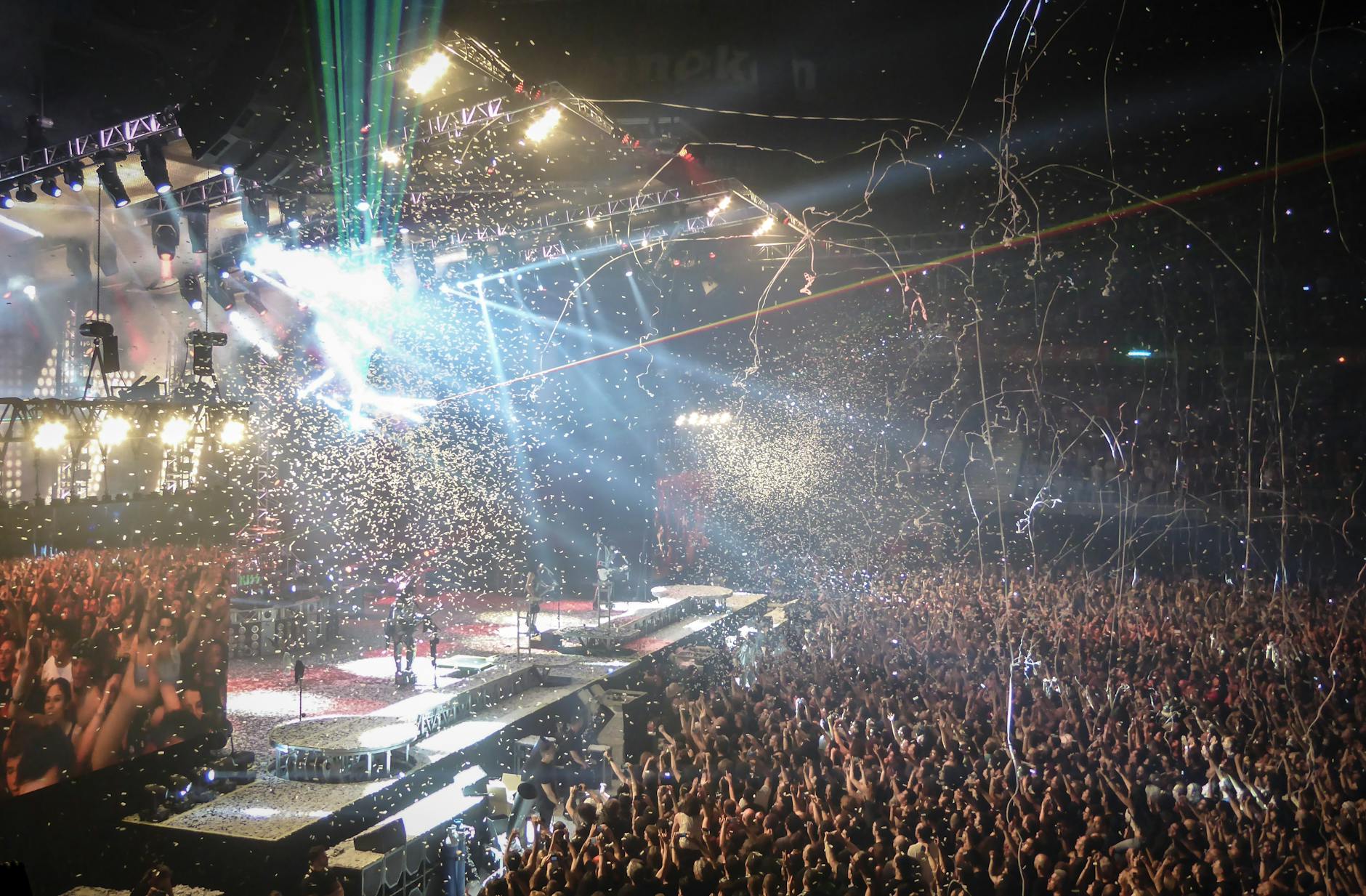
The essential concert tool! Modern penlights are multi-color LED devices that can change colors for different members or songs. This is how fans show visual support — imagine thousands of coordinated lights creating a sea of color! 🌊
Pro tip: Official group penlights (公式ペンライト – koushiki penraito) are preferred, though generic ones work too.
🎨 Color-coded fandom culture:
- Each member typically has an assigned color
- Fans set their penlights to their oshi’s color during that member’s solo parts
- The entire venue might coordinate colors for special songs
- It creates stunning visual effects that idols can see from the stage!
🪭 うちわ (uchiwa — decorative hand fan / fanboard)
These aren’t just fans for cooling off! Uchiwa are decorated with messages, member names, or requests for fan service. They’re typically around 28-30cm and follow specific size rules set by venues.
Popular uchiwa messages:
- 「ファンサください」(Fansa kudasai) — Please give me fan service!
- 「推しです」(Oshi desu) — You’re my oshi!
- 「ピースして」(Piisu shite) — Make a peace sign!
- Member’s name in bold letters
Important: Don’t block other fans’ views by holding your uchiwa too high! 🙏
📣 コール (kooru — call / chant)
Choreographed group chants or shout patterns during songs. Each song often has specific calls that fans do in unison. Learning these beforehand is HIGHLY recommended!
Example types:
- MIX: A specific chant pattern used at the beginning of songs
- Wotagei: Complex hand/arm movements synchronized with calls
- Member calls: Shouting members’ names at specific timing
Example: 「コールを覚えてください。」(Kooru o oboete kudasai.) — Please learn the calls.
Where to learn calls: Search “[Group name] コール” on YouTube — fan-made tutorials are everywhere! 📱
👏 サビ (sabi — chorus)
The chorus part of a song — often when calls are most energetic!
🎤 掛け声 (kakegoe — call-and-response / audience shouts)
Similar to calls, but more spontaneous responses to the performance.
Fan-Speak & Affection: Expressing Your Feelings ❤️
✨ 神 (kami — literally “god,” used to praise exceptional performances or moments)
The ultimate compliment! When something is so good you can barely process it, it’s “kami.”
Example: 「昨日のライブ、神だった!」(Kinou no raibu, kami datta!) — Yesterday’s live was god-tier!
🙌 神対応 (kami taiou — “god-tier response” / exceptional fan interaction)
When an idol gives unexpectedly wonderful attention or service to a fan. This becomes legendary in fan communities!
Example: 「握手会で神対応された!」(Akushukai de kami taiou sareta!) — I received god-tier treatment at the handshake event!
💪 推し活 (oshikatsu — activities done to support your oshi)
All the things you do to support your favorite: buying merchandise, attending events, streaming their music, voting in popularity contests, making fan content, etc.
Example: 「最近、推し活が忙しい。」(Saikin, oshikatsu ga isogashii.) — I’ve been busy with oshi activities lately.
😱 やばい (yabai — amazing / crazy / intense)
A versatile slang term expressing strong emotion (positive or negative, but usually positive in idol fandom). Can mean “incredible,” “shocking,” or “unbelievable.”
Example: 「今日の推しのパフォーマンス、やばかった!」(Kyou no oshi no pafoomansu, yabakatta!) — Today my oshi’s performance was insanely good!
😭 尊い (toutoi — precious / sacred / too pure for this world)
Used when something is so beautiful, pure, or touching that it makes your heart ache. Very common in idol fandom!
Example: 「メンバーの絆が尊い。」(Menbaa no kizuna ga toutoi.) — The members’ bond is so precious.
🔥 エモい (emoi — emotional / moving / nostalgic)
From the English word “emotional,” this describes moments that hit you right in the feelings. Perfect for ballad performances or sentimental group moments.
💀 死ぬ / しぬ (shinu — “I’m dying” / overwhelmed with emotion)
Used hyperbolically when something is so good you can’t handle it. Don’t worry, no one’s actually dying! 😅
Example: 「推しが可愛すぎて死ぬ。」(Oshi ga kawai-sugite shinu.) — My oshi is so cute I’m dying.
Rules & Warnings: How to Be a Respectful Fan ⚠️
📵 撮影禁止 (satsuei kinshi — no photography / no recording)
This rule is SERIOUS in Japanese idol culture. Most concerts, handshake events, and meet-and-greets strictly prohibit photography and video recording. Breaking this rule can result in:
- Immediate removal from the event
- Permanent ban from future events
- Legal consequences
- Ruining the experience for other fans
Why? To protect idols’ privacy, prevent piracy, and create a special moment that exists only in shared memory. 📸🚫
🙅 触らない・触れない (sawaranai / furenai — don’t touch / no touching)
Respect personal space! Even at handshake events where you’re “shaking hands,” there are boundaries. Never:
- Grab or hold an idol’s hand longer than appropriate
- Touch their arms, shoulders, face, or body
- Try to hug without explicit permission
- Invade personal space in photo opportunities
⚠️ 迷惑行為 (meiwaku koui — nuisance behavior / disruptive actions)
Forbidden behaviors that can get you ejected or banned:
- Pushing/shoving other fans
- Blocking views
- Being excessively loud outside designated call times
- Following idols to their homes or private locations (this is stalking!)
- Bringing prohibited items to events
- Ignoring staff instructions
🚫 厄介 (yakkai — troublesome fan / disruptive superfan)
Fans who cause problems: overly aggressive calls, dangerous jumps, ignoring rules. Don’t be a yakkai! The community will notice and call you out.
👥 出待ち・出入り待ち (demachi / deiri machi — waiting at exits / stage doors)
Waiting for idols outside venues. This is generally frowned upon and often prohibited by agencies who want to protect their artists’ privacy and safety.
Practical Tips: How to Use These Terms Like a True Fan 💡
Learn Essential Polite Phrases 🗣️
For meet-and-greets or handshake events:
「応援しています!」(Ouen shiteimasu!)
— I’m supporting you! / I’m your fan!
This is THE classic phrase that always makes idols smile!
「いつもありがとう」(Itsumo arigatou)
— Thank you always / Thanks for everything
Simple but powerful — shows your ongoing support
「元気をもらってます」(Genki o morattemasu)
— You give me energy / You cheer me up
Idols love hearing how they positively impact fans’ lives
「大好きです」(Daisuki desu)
— I love you (platonic) / I’m a huge fan
Common and appropriate in fan contexts
「頑張ってください」(Ganbatte kudasai)
— Do your best! / Good luck!
Encouraging and supportive
「お体に気を付けてください」(O-karada ni ki o tsukete kudasai)
— Please take care of your health
Shows you care about them as a person, not just a performer
For fan letters (ファンレター – fan retaa):
Start with: 「いつも応援しています。」(Itsumo ouen shiteimasu.)
End with: 「これからも応援しています。お体に気を付けてください。」
Prepare for Calls (コール) Before the Concert 🎶
Step-by-step call preparation:
- Find tutorial videos: Search “[Group name] + コール + 振り付け” on YouTube
- Start with rhythm: Copy the timing before worrying about exact words
- Practice common patterns:
- MIX calls (standard opening chant)
- Member name calls
- Song-specific responses
- Watch live fan-cam videos: See what actual audiences do
- Arrive early: Veteran fans near you can help guide you during the show! 😊
Pro tips:
- Clap where others clap
- Sing along where they sing
- Jump when they jump (carefully!)
- It’s okay to start quiet and build confidence as you learn
- Nobody will judge you for being a beginner — everyone was new once! 🌱
Respect Color Codes for Penlights 🌈
Understanding member colors:
Most idol groups assign official colors to each member. This helps fans visually show their support and creates beautiful coordinated moments during concerts.
How to use colors properly:
- General rule: Set your penlight to your oshi’s color during their solo or center parts
- Group songs: Many fans use their oshi’s color throughout or switch to the group’s official color
- Special moments: Sometimes the venue coordinates everyone to use the same color for dramatic effect
- Respect the rainbow: During member introductions, the sea of different colors is gorgeous! 🎨
Popular color examples:
- Red (情熱的 – passionate members)
- Blue (クール – cool/calm members)
- Pink (かわいい – cute members)
- Yellow (元気 – energetic members)
- Purple (神秘的 – mysterious members)
Note: Always check the official group website for confirmed member colors before the concert!
Follow Rules on Photography and Touch 📸🚫
The golden rule: When in doubt, DON’T!
Japanese idol events take these rules seriously, and both security and the fan community enforce them strictly.
What happens if you break photography rules:
- Security will approach you immediately
- Your phone/camera may be checked
- You’ll be escorted out (no refund!)
- You may be banned from future events
- Other fans will be disappointed in you
What IS usually allowed:
- Photos in designated areas before/after the concert
- Photos of your purchased merchandise
- Photos of the venue exterior
- Selfies in the lobby area (check first!)
What about social media?
- Sharing your experience: ✅ Great!
- Posting about moments without photos/videos: ✅ Perfect!
- Posting official promotional photos from the group’s account: ✅ Usually okay with proper credit
Use Fan Vocabulary in Context 💬
Casual conversations with fellow fans (informal Japanese):
「昨日のライブ、神だった!推しのファンサもらえて死んだ!」
(Kinou no raibu, kami datta! Oshi no fansa moraete shinda!)
— Yesterday’s live was god-tier! I got fan service from my oshi and I died!
「新曲、エモすぎてやばい。」
(Shinkyoku, emo-sugite yabai.)
— The new song is so emotional it’s crazy.
「握手会でめっちゃ神対応だった!」
(Akushukai de meccha kami taiou datta!)
— The treatment at the handshake event was amazing!
Polite writing for fan letters or official comments (formal Japanese):
「いつも元気をもらっています。これからも応援しています。」
(Itsumo genki o moratteimasu. Korekara mo ouen shiteimasu.)
— I’m always energized by you. I’ll continue supporting you from now on.
「素敵なパフォーマンスをありがとうございました。お体に気を付けてください。」
(Suteki na pafoomansu o arigatou gozaimashita. O-karada ni ki o tsukete kudasai.)
— Thank you for the wonderful performance. Please take care of your health.
Teacher’s Insight: Language Learning Through Fandom 👩🏫
Why Idol Vocabulary is a Powerful Learning Tool
Studying idol culture vocabulary teaches you much more than trendy slang — it’s a masterclass in:
📊 Register and politeness levels:
Fans naturally switch between casual speech (with friends) and respectful keigo (in fan letters). This code-switching is essential for real-world Japanese fluency!
👥 Group behavior and social norms:
Understanding when to be loud (calls during concerts) vs. quiet (meeting idols) teaches you Japanese social awareness.
🎭 Sociolinguistic nuance:
The difference between 推し (oshi) and ただの好きな人 (tada no suki na hito – just someone you like) reveals how Japanese creates specific vocabulary for different relationship depths.
Practical Learning Strategies 📚
1. Translate short fan tweets (keeping tone):
- Find Japanese fan tweets about your favorite group
- Translate them while maintaining the emotional tone and register
- Note which words are casual vs. polite
- Try writing your own tweets in Japanese!
2. Mimic chant rhythms aloud (helps pronunciation and intonation):
- Call practice isn’t just for concerts — it’s rhythm training!
- Japanese has pitch accent; calls help you hear natural rise and fall
- Repeat energetic phrases to build confidence in speaking
3. Write polite fan letters (gentle keigo exposure):
- Start simple: “I support you. Thank you for the wonderful performance.”
- Gradually add more complex respectful forms
- This builds writing skills in a fun, low-pressure way
- Real motivation: you might actually send it! ✉️
4. Watch variety shows with idol guests:
- See how idols switch between formal TV language and casual banter
- Learn reaction phrases and expressions
- Understand Japanese humor and timing
Going Deeper: Advanced Fan Culture Concepts 🎓
The Economics of Idol Fandom 💰
Understanding these terms helps you grasp the business model:
総選挙 (sousenkyo — general election/popularity contest)
Major annual voting events where fans’ votes determine member rankings, positions, or opportunities. AKB48’s Sousenkyo is the most famous example. Votes are often included with CD purchases, leading to…
複数買い (fukusuu kai — bulk buying multiple copies)
Fans buy many copies of the same CD to get more handshake tickets or voting rights. This controversial practice drives massive sales numbers.
劇場公演 (gekijou kouen — theater performances)
Regular performances at dedicated venues (like AKB48 Theater). These are smaller, more intimate than arena concerts.
Idol Types and Concepts 🎭
地下アイドル (chika aidoru — underground idols)
Independent idols not signed to major agencies. More intimate fan experiences, often performing at small live houses. “Chika” means underground/basement.
男性アイドル・女性アイドル (dansei aidoru / josei aidoru — male idols / female idols)
Important distinction! Male idol culture (Johnny’s & Associates, etc.) has different traditions and vocabulary than female idol culture.
清楚系 (seiso-kei — pure/innocent image)
Idols marketed with a wholesome, girl-next-door image. This “purity” concept is controversial but deeply rooted in idol culture.
卒業 (sotsugyou — graduation / leaving the group)
When a member leaves, it’s called “graduation” (like finishing school). Often emotional farewell concerts occur.
Regional Variations and Group-Specific Terms 🗾
Different groups develop unique vocabulary!
AKB48 family:
- じゃんけん大会 (janken taikai — rock-paper-scissors tournament)
- 選抜メンバー (senbatsu menbaa — selected members for main single)
Johnny’s groups:
- ジャニーズJr. (Janiizu Jr. — junior members in training)
- コン (kon — short for concert)
Idol groups with specific colors or themes:
- Each group’s official chants and responses
- Unique uchiwa traditions
- Special anniversary events
Pro tip: When you join a new group’s fandom, search for “[Group name] + 用語” (yougo – terminology) to find group-specific dictionaries! 📱
Digital Fandom: Online Terms to Know 💻
🐦 Twitter/X and online spaces:
リプ (ripu — reply)
Replying to someone’s tweet.
いいね (ii ne — like)
Clicking the like button. Sometimes expressed as “いいね押した!” (ii ne oshita! — I liked it!)
RT / リツイート (ritweet — retweet)
Sharing someone’s tweet. “拡散希望” (kakusan kibou) means “please spread/share.”
TL (timu rain / タイムライン — timeline)
Your Twitter feed.
トレンド入り (torendo iri — trending)
When your idol or group appears in trending topics — a big celebration moment!
配信 (haishin — streaming / broadcast)
Live streaming events. “配信観る” (haishin miru) = watching the stream.
🎥 YouTube and video platforms:
切り抜き (kiri nuki — clip / highlight)
Short clips cut from longer videos, often with subtitles.
歌ってみた (utatte mita — song cover)
“I tried singing” — cover performances.
踊ってみた (odotte mita — dance cover)
“I tried dancing” — dance covers.
Preparing for Your First Idol Event: Complete Checklist ✅
Before the Event (1-2 months prior):
- [ ] Purchase tickets (チケット – chiketto)
- [ ] Join fan clubs if needed (ファンクラブ – fan kurabu)
- [ ] Learn the setlist and practice calls
- [ ] Purchase or prepare penlight
- [ ] Make your uchiwa (if desired)
- [ ] Plan your outfit (many fans coordinate colors!)
- [ ] Book accommodation if traveling
- [ ] Learn key polite phrases
Week Before:
- [ ] Review venue rules and prohibited items
- [ ] Check weather and plan accordingly
- [ ] Practice calls one final time
- [ ] Prepare your fan letter if writing one
- [ ] Charge your penlight (test it!)
- [ ] Pack a small bag (venues often limit bag size)
Day Of:
- [ ] Arrive early (doors often open 1 hour before)
- [ ] Bring ID (required for ticket matching)
- [ ] Turn off phone or set to airplane mode
- [ ] Locate emergency exits
- [ ] Be friendly to neighboring fans
- [ ] Hydrate before going in
- [ ] Prepare to have the time of your life! 🎉
After the Event:
- [ ] Share your experience on social media (without photos/videos!)
- [ ] Connect with fans you met
- [ ] Rest your voice (you’ll need it!) 😅
- [ ] Write in your fan journal while memories are fresh
- [ ] Start planning for the next event!
Connecting with Vancouver’s J-Pop Community 🇨🇦
Local Resources:
Vancouver Japanese Language Meetups:
Many meetup groups discuss J-pop and idol culture while practicing Japanese. Great for beginners!
Anime Evolution (Anime Revolution):
Annual convention featuring J-pop performances and idol culture panels.
Japanese Cultural Centre Events:
Occasional J-pop themed events and language exchanges.
Online Communities:
- Vancouver J-Pop Fans (Facebook group)
- Local Discord servers for anime/J-pop fans
- Reddit: r/vancouver + r/jpop crossover discussions
Where to buy merchandise in Vancouver:
- Anime Extreme (Commercial Drive)
- Sakura Media (International Village Mall)
- Online: CDJapan, YesAsia (ships to Canada)
Conclusion: Small Words, Deep Cultural Connections 🌸
Learning idol fandom vocabulary might seem like a niche interest at first, but it opens an incredible window into modern Japanese society. Through these terms, you discover:
🎭 How communities form and bond — The shared language creates instant connection between fans
🙏 How respect is performed — The balance of casual and polite speech shows Japanese social values
💬 How language evolves — New slang emerges constantly in youth culture
❤️ How passion is expressed — The specific vocabulary for devotion reveals emotional depth
🌏 How global culture mixes — J-pop influences worldwide now spread back to Japan
Whether you’re a casual listener streaming music at home, an enthusiastic fan planning your first Tokyo concert trip, or a dedicated Japanese learner looking for engaging study material, these vocabulary terms are your passport to deeper cultural understanding.
Remember:
- Learn the core terms first (especially 推し, ファンサ, and コール)
- Follow concert and event etiquette carefully
- Practice both casual and polite forms
- Don’t be afraid to make mistakes — the community is generally welcoming!
- Most importantly: have fun and show respect 🎵
The next time you’re at a J-pop concert or browsing Japanese fan communities online, you won’t just be observing from the outside — you’ll be communicating in a way that’s both respectful and authentic. That’s the power of language learning through culture! ✨
Mini Practice Exercise 📝
Try writing these two sentences using today’s vocabulary:
Casual (for Twitter/friends):
「今日の推しのパフォーマンス、マジでやばかった!神すぎて死んだ!」
(Kyou no oshi no pafoomansu, maji de yabakatta! Kami-sugite shinda!)
— Today my oshi’s performance was seriously crazy! It was so god-tier I died!
Polite (for a fan letter):
「いつも素敵なパフォーマンスをありがとうございます。毎日元気をもらっています。これからも応援しています。お体に気を付けてください。」
(Itsumo suteki na pafoomansu o arigatou gozaimasu. Mainichi genki o moratteimasu. Korekara mo ouen shiteimasu. O-karada ni ki o tsukete kudasai.)
— Thank you always for your wonderful performances. I receive energy from you every day. I’ll continue supporting you. Please take care of your health.
Your turn! Try writing one casual sentence and one polite sentence about YOUR favorite idol or group! 💪

Leave a Reply