
Quick View ⚡
Reading Time: 12 minutes
Best For: Japanese learners, travelers to Japan, Vancouver foodies, culture enthusiasts
Key Takeaway: Japanese drinking culture is about connection, not intoxication. Learn the types of sake and shochu, drinking etiquette, and how to experience authentic izakaya culture.
What You’ll Learn:
- 🍶 The difference between sake, nihonshu, and shochu
- 🎌 Essential drinking etiquette and manners
- 🏮 How to order like a local at izakaya
- 🌸 Seasonal drinking traditions in Japan
- 📍 Where to find authentic Japanese drinking experiences in Vancouver
- Quick View ⚡
- Have You Ever Wondered How Japanese People Really Drink? 🤔
- Why Alcohol is Deeply Connected to Japanese Society 🏯
- Types of Japanese Alcohol You Should Know 🍺🍶🥃
- How to Drink Like a Local: Essential Etiquette 🎌
- Seasonal Drinking Traditions in Japan 🌸🍂❄️🌺
- Where to Experience Japanese Drinking Culture in Vancouver 🍁
- Understanding Through Language: Key Drinking Phrases 🗣️
- Teacher's Deep Insight: The Soul of Japanese Drinking 💭
- Practical Tips for Your First Japanese Drinking Experience 🎯
- Health and Safety: Drinking Responsibly 🚨
- The Future of Japanese Drinking Culture 🔮
- Conclusion: Japanese Drinking as a Language of Connection 🌉
- 乾杯 — To Your Japanese Journey! 🍶✨
- Want to Learn More? Join the NihongoKnow Community! 🌟
- Share This Guide! 📲
Have You Ever Wondered How Japanese People Really Drink? 🤔
Picture this: You’re walking through the narrow streets of Tokyo on a chilly evening. Through steaming windows, you see groups of people laughing, toasting, and connecting over small ceramic cups and glasses. The warm glow of red lanterns (提灯 / chochin) beckons you inside a cozy 居酒屋 (izakaya – Japanese pub).
But what are they actually drinking? And more importantly, how are they drinking it?
You might hear the word “sake” everywhere, but here’s a secret that surprises most foreigners: in Japan, 「酒」(さけ / sake)actually means any alcoholic beverage. What the world calls “sake” is actually called 日本酒(にほんしゅ / nihonshu)— literally “Japanese alcohol” or Japanese rice wine.
This is just the beginning of understanding Japanese drinking culture. 🍶
Why This Matters for Language Learners 📚
If you’re learning Japanese in Vancouver or anywhere in Canada and the US, understanding drinking culture isn’t just about vocabulary. It’s about:
- Social dynamics — How Japanese people build relationships
- Business etiquette — Essential for working with Japanese companies
- Cultural literacy — Understanding anime, dramas, and real conversations
- Travel preparation — Navigating Japan confidently
- Authentic connection — Bonding with Japanese friends and colleagues
At NihongoKnow.com, we believe language learning goes beyond textbooks. Culture is the heart of language, and drinking culture reveals the Japanese heart. ❤️
Why Alcohol is Deeply Connected to Japanese Society 🏯
In Japan, drinking isn’t just recreational — it’s ritualistic, social, and emotional.
The Cultural Roles of Alcohol 🎭
Japanese drinking culture serves several important functions:
1. Work Culture (仕事 / shigoto) 💼
After-work drinking sessions called 飲み会 (nomikai) are where real team bonding happens. Your boss becomes more human. Colleagues become friends. This is where the unspoken hierarchy softens.
2. Seasonal Events (季節の行事 / kisetsu no gyouji) 🌸
From spring cherry blossom parties (花見 / hanami) to year-end gatherings (忘年会 / bounenkai), each season has its drinking tradition. These aren’t just parties — they’re cultural milestones that mark time and celebrate community.
3. Religious Rituals (神事 / shinji) ⛩️
Sake has been offered to Shinto gods for over 2,000 years. At weddings, festivals, and New Year’s celebrations, sake connects the human world to the spiritual realm.
4. Social Bonding (人間関係 / ningen kankei) 🤝
Japanese society values harmony (和 / wa) and often requires emotional restraint in daily life. Alcohol provides a safe space for 本音 (honne – true feelings) to emerge from behind 建前 (tatemae – social facade).
5. Emotional Release (ストレス発散 / sutoresu hassan) 😌
In a society known for politeness and self-control, alcohol offers permission to relax, laugh louder, and be more authentic.
The Philosophy: “Communicate Without Words” 🎎
There’s a Japanese concept called 以心伝心 (ishin-denshin) — communicating heart to heart without speaking. Drinking culture embodies this perfectly. The act of pouring for each other, the silent toast, the shared moment — these speak louder than words ever could.
This is why understanding alcohol in Japan = understanding Japanese hearts. 💕
Types of Japanese Alcohol You Should Know 🍺🍶🥃
Let’s explore the main categories of Japanese alcohol, from traditional to modern.
🌾 1. 日本酒 (Nihonshu) — Japanese Rice Wine
What foreigners call “sake” is actually nihonshu!
The Basics 📖
Made from:
- Rice (preferably 酒米 / sakamai — sake rice)
- Water (軟水 / nansui — soft water is prized)
- Yeast (酵母 / koubo)
- Koji mold (麹菌 / kouji-kin — converts starch to sugar)
Alcohol content: 15-16% typically
Flavor profile: Ranges from fruity and floral to rich and umami-forward
Best enjoyed: Cold, room temperature, or warm depending on type and season
Key Types of Nihonshu 🏆
| Type | Japanese | Meaning | Characteristics |
| Junmai-shu | 純米酒 | Pure rice sake | No added alcohol, rich rice flavor, fuller body |
| Honjozo | 本醸造 | Basic premium sake | Small amount of alcohol added, lighter, smooth |
| Ginjo | 吟醸 | Premium sake | Rice polished to 60%, fruity, aromatic, elegant |
| Daiginjo | 大吟醸 | Super premium | Rice polished to 50% or less, delicate, refined |
| Nigorizake | にごり酒 | Cloudy sake | Unfiltered, creamy, slightly sweet, opaque |
| Nama-zake | 生酒 | Unpasteurized | Fresh, lively, fruity, must be refrigerated |
| Koshu | 古酒 | Aged sake | Matured 3+ years, amber color, complex flavor |
Temperature Matters! 🌡️
How sake is served changes everything:
- 冷酒 (reishu) — Chilled (5-10°C) ❄️
Perfect for: Ginjo, daiginjo, nama-zake
Brings out: Fruity aromas, refreshing qualities - 常温 (jouon) — Room temperature (20°C) 🏠
Perfect for: Junmai
Brings out: Balanced flavors, true character - ぬる燗 (nurukan) — Warm (40°C) ♨️
Perfect for: Junmai, honjozo
Brings out: Umami, comforting warmth - 熱燗 (atsukan) — Hot (50°C) 🔥
Perfect for: Robust junmai
Brings out: Rich, bold flavors
Popular in: Winter months, with hearty foods
Pro tip for Vancouver learners: During our rainy Vancouver winters, try warm sake at local izakayas like Guu or Kingyo — it’s the ultimate comfort drink! ☔→☀️
Sake Regions to Know 🗾
- Niigata — Clean, crisp, dry styles
- Kyoto — Elegant, refined, traditional
- Hiroshima — Soft, smooth, balanced
- Akita — Aromatic, floral, sake rice homeland
🥃 2. 焼酎 (Shochu) — Japanese Distilled Spirit
Shochu is Japan’s other star, especially beloved in Kyushu (the southern island).
The Basics 📖
Alcohol content: 20-25% (sometimes up to 35%)
Distillation: Can be distilled once (authentic, flavorful) or multiple times (cleaner, lighter)
Flavor profile: Earthy, complex, varies dramatically by base ingredient
Best enjoyed: Versatile — straight, on ice, diluted with water or hot water
Main Types by Ingredient 🌿
| Type | Japanese | Made From | Flavor Profile | Best Region |
| Imo-shochu | 芋焼酎 | Sweet potato | Earthy, robust, slightly sweet | Kagoshima |
| Mugi-shochu | 麦焼酎 | Barley | Clean, mild, nutty | Oita |
| Kome-shochu | 米焼酎 | Rice | Delicate, aromatic, sake-like | Kumamoto |
| Kokutou-shochu | 黒糖焼酎 | Brown sugar | Sweet, smooth, rum-like | Amami Islands |
| Soba-shochu | そば焼酎 | Buckwheat | Nutty, complex, unique | Miyazaki |
| Awamori | 泡盛 | Thai rice (long grain) | Bold, aged, distinctive | Okinawa |
How to Enjoy Shochu 🍹
水割り (mizuwari) — With cold water
Ratio: 6 parts water to 4 parts shochu
Effect: Opens up flavors, refreshing, easy drinking
お湯割り (oyuwari) — With hot water 🔥
Ratio: Hot water first, then shochu (prevents cloudiness)
Effect: Warming, aromatic, perfect for winter
This is the most traditional Kyushu way!
ロック (rokku) — On the rocks 🧊
Pure shochu over ice
Effect: Gradual dilution, evolving flavors
ストレート (sutoreeto) — Straight up
No mixer, no ice
Effect: Full flavor experience, for connoisseurs
炭酸割り (tansan-wari) — With soda water
Refreshing, bubbly, casual
Effect: Light, easy, summer-friendly
🍺 3. ビール (Biiru) — Japanese Beer Culture
Japan’s beer culture is massive and sophisticated! 🎉
The Big Four Brands 🏅
- Asahi Super Dry (アサヒ) — Crisp, dry, clean finish
- Kirin Ichiban (キリン) — Rich, full-bodied, malt-forward
- Sapporo (サッポロ) — Balanced, smooth, historic
- Suntory Premium Malts (サントリー) — Premium, aromatic, creamy head
Beer Styles You’ll Find 🍻
- Lager — Most common, light, refreshing
- Craft beer (地ビール / ji-biiru) — Growing scene in cities
- Happoshu (発泡酒) — Low-malt “beer-like” beverage, cheaper
- Third beer — Even lower malt content, most affordable
The Sacred First Order 🙏
At any Japanese drinking gathering, you’ll hear:
「とりあえずビール!」
(Toriaezu biiru!)
“Beer for now!”
This phrase is legendary in Japanese culture. It means:
- Let’s start with something everyone likes
- We can order other drinks later
- Let’s not overthink it
- Unity through simplicity
Cultural note: Even if you prefer wine or cocktails, ordering beer first shows you understand Japanese social flow. You can switch drinks on your second order! 🎯
🍹 4. チューハイ・サワー (Chu-hai / Sour) — The Modern Favorite
These are Japan’s answer to hard seltzers and mixed drinks! 🌟
What is Chu-hai? 🤷♀️
- Chu = shochu (焼酎)
- Hai = highball (ハイボール)
- Mix of shochu + carbonated water + fruit flavor
Alcohol content: 3-9% (perfect for casual drinking)
Popularity: Huge among young people, women, and casual drinkers
Popular Flavors 🍋🍑
- Lemon (レモン) — The classic, refreshing, tart 🍋
- Grapefruit (グレープフルーツ) — Citrus, slightly bitter 🍊
- Peach (ピーチ) — Sweet, gentle, popular with beginners 🍑
- Ume (梅) — Plum, tangy, uniquely Japanese 🫐
- Yuzu (ゆず) — Aromatic citrus, sophisticated 🍊
- Shikuwasa (シークヮーサー) — Okinawan citrus, tropical 🌴
Where to Find Them 🏪
- Convenience stores (コンビニ / konbini) — Canned, cheap, everywhere
- Izakaya — Freshly made, stronger, more authentic
- Supermarkets — Wide variety, easy to take home
Warning for beginners: These taste like juice but pack a punch! Easy to drink too many. 😅🚨
🥃 5. ハイボール (Highball) — Whisky’s Comeback
Japanese whisky + soda water = pure refreshment! ✨
Why Highballs Exploded in Popularity 📈
In the 2000s, Suntory launched a brilliant marketing campaign showing highballs as:
- Light and refreshing (not heavy like straight whisky)
- Perfect with food
- Affordable luxury
Now they’re everywhere — from fancy bars to karaoke rooms!
How to Order 🗣️
「ハイボールください」
(Haiboru kudasai)
“Highball, please”
Variations:
- 角ハイ (kaku-hai) — Made with Suntory Kakubin (most common)
- ジムハイ (jimu-hai) — Made with Jim Beam
- 濃いめ (koime) — Stronger whisky ratio
- 薄め (usume) — Lighter whisky ratio
🍷 6. 梅酒 (Umeshu) — Plum Wine
The gateway to Japanese alcohol for many people! 🌸
What is Umeshu? 🫐
- Ume (Japanese plums) steeped in shochu or sake
- Sugar added for sweetness
- Aged for months to years
- Sweet, fruity, smooth, dangerous for beginners!
Alcohol content: 10-15%
How to Drink It 🥂
- ストレート (straight) — Full flavor, dessert-like
- ロック (on rocks) — Diluted, refreshing
- ソーダ割り (soda) — Fizzy, light, summer drink
- お湯割り (hot water) — Warming, aromatic, winter treat
Popular in: Home-made versions, women’s gatherings, dessert replacement
How to Drink Like a Local: Essential Etiquette 🎌
This is where culture becomes language! Follow these rules to show respect and fit in seamlessly.
🚫 Rule #1: Never Pour Your Own Drink
In Japanese culture, pouring your own drink is considered lonely and even a bit rude.
The proper way:
- Pour for others first 🍶
- Wait for someone to notice your empty glass
- They will pour for you 🙏
- Hold your glass with both hands while receiving
- Say 「ありがとうございます」 (Arigatou gozaimasu — Thank you)
Why this matters: It creates mutual care and attention. You’re constantly watching others’ needs. This is harmony (和 / wa) in action.
Pro tip: Hold your cup slightly elevated when someone is pouring for you — it shows appreciation! 🙌
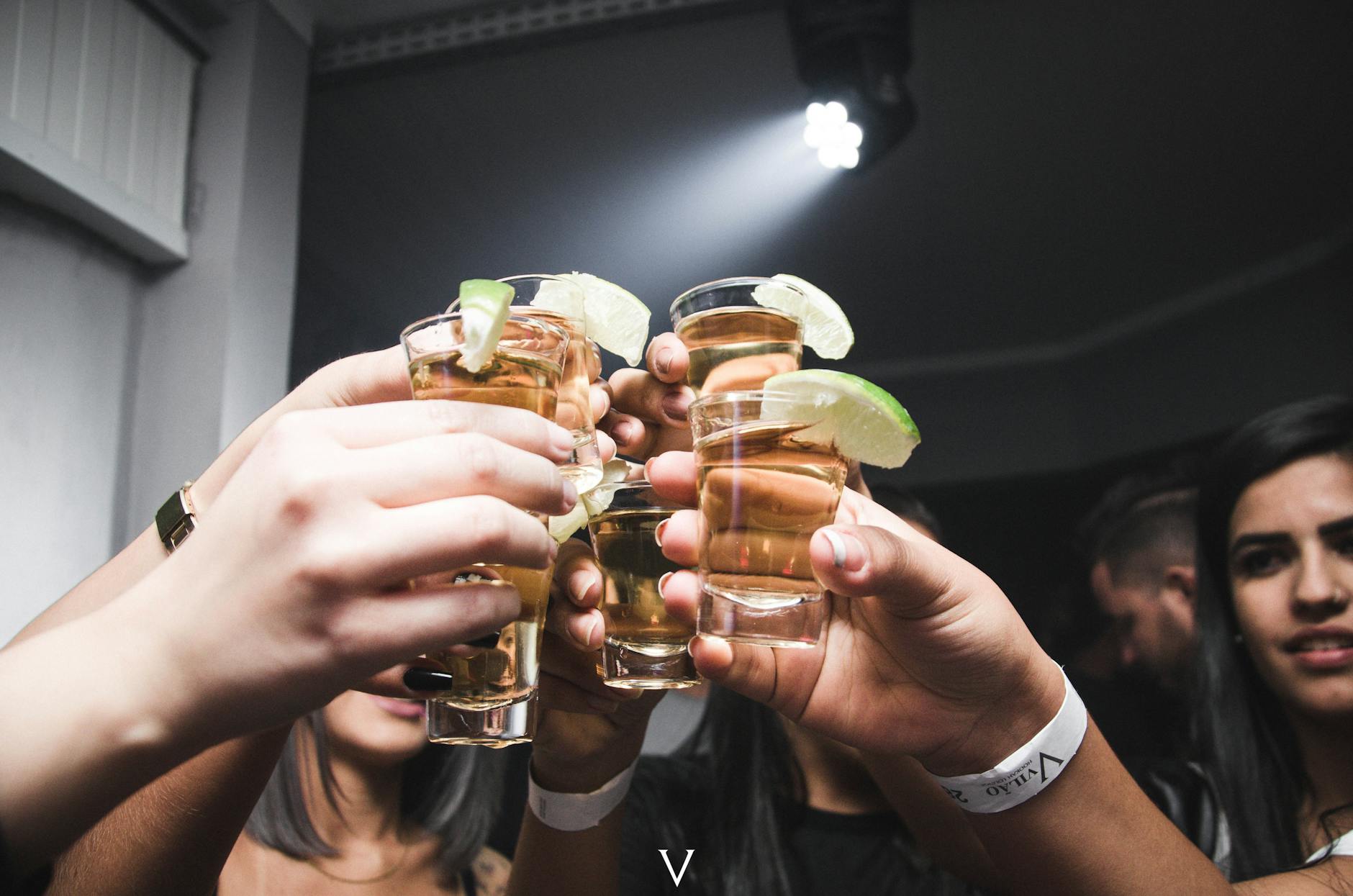
🥂 Rule #2: The First Toast is Sacred
Before anyone takes a sip, there must be a toast!
The process:
- Everyone receives their first drink 🍺
- Wait! Don’t drink yet! ⏸️
- Someone (usually the most senior person) raises their glass
- Everyone raises their glass together
- Make eye contact and say: 「乾杯!」 (Kanpai! — Cheers!)
- Clink glasses (optional, but common)
- Now you can drink! ✅
Important: At formal events, glasses should be lower than senior people’s glasses when toasting — a sign of respect.
Cultural insight: This moment isn’t just about alcohol. It’s about group unity, shared experience, and beginning something together. It’s almost sacred in Japanese gatherings. 🙏✨
🍱 Rule #3: Always Eat While Drinking
In Japan, drinking without food is almost unthinkable!
The concept is called 「飲みながら食べる」 (nominagara taberu) — eating while drinking.
Classic Drinking Foods (おつまみ / otsumami) 🍢
Cold dishes:
- 枝豆 (edamame) — Boiled soybeans, salty, addictive 🫛
- 冷奴 (hiyayakko) — Cold tofu with toppings 🧊
- 刺身 (sashimi) — Fresh raw fish 🐟
- たこわさ (tako-wasa) — Octopus with wasabi 🐙
Hot dishes:
- 焼き鳥 (yakitori) — Grilled chicken skewers 🍗
- 唐揚げ (karaage) — Japanese fried chicken 🍗
- 餃子 (gyoza) — Pan-fried dumplings 🥟
- もつ煮込み (motsu-nikomi) — Stewed offal, hearty 🍲
Why food matters: It balances alcohol absorption, extends the drinking session, and provides conversation topics. Plus, certain foods pair beautifully with certain drinks! 🤝
Perfect pairings:
- Sake + sashimi = 最高 (saikou — the best!) 🍶🐟
- Beer + karaage = classic combo 🍺🍗
- Shochu + yakitori = Kyushu style 🥃🍢
🙇 Rule #4: Respect Drinking Hierarchy
Age and position matter in Japanese drinking culture.
What this means:
- Seniors drink first
- Pour for seniors before peers
- Let seniors choose the venue
- Pay attention to their glass — refill before they ask
But here’s the beautiful part: After a few drinks, hierarchy softens. Juniors can speak more freely. This is the gift of alcohol in Japanese culture — temporary equality. ⚖️
📱 Rule #5: Reading the Air (空気を読む / kuuki wo yomu)
This concept is HUGE in Japanese culture!
“Reading the air” means sensing the atmosphere and adjusting your behavior accordingly.
In drinking situations:
- Don’t drink too fast or too slow (match the group pace)
- Don’t get drunk before seniors
- Notice when it’s time to leave
- Don’t force people to drink more
- Sense the mood — is it time for jokes or serious talk?
This is advanced social intelligence, and it applies to language learning too! 🧠✨
Seasonal Drinking Traditions in Japan 🌸🍂❄️🌺
Japanese culture marks time through seasonal events, and alcohol plays a starring role.
🌸 Spring: 花見 (Hanami) — Cherry Blossom Viewing
When: Late March to early April
What: Picnics under blooming cherry trees
Drinks: Sake, beer, chu-hai, whatever you like!
Vibe: Celebration of beauty and impermanence
Tradition: Spread out tarps (blue plastic sheets are iconic), eat, drink, and appreciate the fleeting blossoms. This is Japanese philosophy in action: 物の哀れ (mono no aware) — the beauty of transience.
In Vancouver: Join hanami events at VanDusen Garden or Stanley Park’s cherry trees! 🌸🍶
☀️ Summer: ビアガーデン (Beer Garden)
When: June to August
What: Outdoor beer terraces on rooftops
Drinks: Draft beer (生ビール / nama-biiru), highballs, cold sake
Vibe: Relief from humidity, casual and fun
Why it’s special: Summer in Japan is brutally humid. Cold beer under the stars is pure relief! 🍺⭐
🍂 Autumn: 紅葉狩り (Momiji-gari) — Autumn Leaf Hunting
When: October to November
What: Viewing fall foliage with seasonal foods and drinks
Drinks: Warm sake, shochu oyuwari
Vibe: Appreciation of change, comfort as winter approaches
Pairing: Autumn sake often features rich, umami flavors perfect with seasonal foods like mushrooms and chestnuts. 🍄🌰
❄️ Winter: 忘年会 (Bounenkai) — Year-End Parties
When: December
What: “Forget the year” parties to leave stress behind
Drinks: Everything! Hot sake, shochu, beer, whatever flows
Vibe: Release, gratitude, exhaustion, hope
This is THE drinking season in Japan. Every company, friend group, and club holds bounenkai. It’s a cultural obligation and a joyful release. You’ll hear 「お疲れ様でした」 (Otsukaresama deshita — Thank you for your hard work) constantly. 🙏🎉
Where to Experience Japanese Drinking Culture in Vancouver 🍁
Want authentic Japanese drinking experiences without flying to Tokyo? Vancouver has you covered!
Top Izakayas in Vancouver 🏮
1. Guu Garden (Downtown)
Loud, energetic, authentic chaos. Staff shouts greetings. Tiny space. Pure izakaya energy!
📍 1698 Robson St
2. Kingyo Izakaya (Downtown)
Classy, extensive menu, great sake selection.
📍 871 Denman St
3. Suika (Kitsilano)
Modern Japanese, beautiful ambiance, creative drinks.
📍 1626 W Broadway
4. Zakkushi (Multiple locations)
Robata grill focus, smoky, delicious, lively.
5. Jinya Ramen Bar (Downtown)
Ramen + izakaya hybrid, great for late night.
📍 833 Granville St
Japanese Liquor Stores in Vancouver 🛒
Sakuraya (Denman St) — Best sake selection in Vancouver
Granville Island Sake Shop — Unique BC-made sake
Legacy Liquor Store — Good Japanese whisky selection
JAL Mart (Powell St) — Japanese groceries + alcohol
Understanding Through Language: Key Drinking Phrases 🗣️
Let’s learn essential phrases you’ll need in real drinking situations!
Before Drinking 🥂
「乾杯!」 (Kanpai!)
“Cheers!” — The most important word!
「いただきます」 (Itadakimasu)
“I humbly receive” — Said before eating/drinking
During Drinking 🍶
「おいしい!」 (Oishii!)
“Delicious!”
「もう一杯いかがですか?」 (Mou ippai ikaga desu ka?)
“How about another cup?” — Polite offer
「もう十分です」 (Mou juubun desu)
“I’ve had enough” — Polite decline
「お代わりください」 (Okawari kudasai)
“Refill, please”
Toasting and Compliments 🎉
「お疲れ様です」 (Otsukaresama desu)
“Thank you for your hard work” — Common work toast
「お先に失礼します」 (Osaki ni shitsurei shimasu)
“Excuse me for leaving first” — When leaving early
「ごちそうさまでした」 (Gochisousama deshita)
“Thank you for the meal” — After finishing
Levels of Drunkenness 🥴
ほろ酔い (horoyoi) — Pleasantly tipsy, ideal state! ✨
酔っ払い (yopparai) — Drunk person
二日酔い (futsukayoi) — Hangover (literally “two-day drunk”) 😵
Teacher’s Deep Insight: The Soul of Japanese Drinking 💭
As a Japanese teacher living in Vancouver but carrying Japan in my heart, I’ve watched hundreds of students experience Japanese drinking culture for the first time.
Some are surprised by the strength.
Some are moved by the ritual.
Some are confused by the endless politeness.
But the most beautiful moments happen when students finally understand:
Drinking in Japan is not about alcohol.
It’s about:
- Permission to be vulnerable 🥺
- Creating shared memories 📸
- Lowering social walls 🧱➡️❤️
- Expressing gratitude without awkwardness 🙏
- Connecting hearts without speaking too much 💕
The Concept of 飲みニケーション (Nomi-nication)
This is a Japanese-made word combining:
- 飲み (nomi) — drinking
- コミュニケーション (komyunikeeshon) — communication
It means using drinking as a communication tool. In a society where direct expression is often avoided, alcohol creates a safe space for honesty.
Is this healthy? Debatable. But it’s deeply cultural.
What I tell my students:
You don’t need to drink to learn Japanese. But understanding why Japanese people drink the way they do will unlock deeper cultural comprehension than any textbook can provide.
A Personal Memory 🌙
When I first moved to Vancouver, I missed the quiet intimacy of small Tokyo izakayas — places where the chef knows your name, your sake temperature preference, your recent struggles.
I found similar moments here, in Vancouver’s Japanese restaurants, with students who became friends over warm sake on rainy nights.
That’s when I realized:
Japanese drinking culture isn’t about being in Japan.
It’s about creating moments of connection wherever you are.
And that is what we teach at NihongoKnow.com — not just language, but the heart behind the words. 💙
Practical Tips for Your First Japanese Drinking Experience 🎯
For Beginners 🌱
- Start with something light — Nama-biiru (draft beer) or lemon chu-hai
- Pace yourself — Remember, it’s a marathon, not a sprint
- Eat plenty — Edamame and karaage are your friends
- Observe before acting — Watch what others do first
- Don’t feel pressure — It’s okay to say “no more” politely
For Intermediate Learners 🌿
- Try seasonal sake — Ask what’s recommended (おすすめは?/ Osusume wa?)
- Practice pouring etiquette — Watch others’ cups
- Engage in conversation — Alcohol is a conversation catalyst
- Learn your limits — Know when to stop
- Try regional specialties — Kyushu shochu, Niigata sake, etc.
For Advanced Enthusiasts 🌲
- Explore premium sake — Daiginjo territory
- Visit sake breweries — In Japan or even in BC!
- Host your own izakaya night — Share culture with friends
- Study sake brewing — Deepen your appreciation
- Build a home collection — Curate your favorites
Health and Safety: Drinking Responsibly 🚨
While we celebrate culture, safety always comes first!
Know Your Limits ⚠️
- Japanese alcohol tolerance varies person to person
- Genetics play a role (ALDH2 enzyme deficiency is common in East Asians)
- Never feel pressured to drink more than comfortable
Hydration is Key 💧
- Drink water between alcoholic drinks
- Ask for 「お水ください」 (Omizu kudasai — Water, please)
- Alternate: one drink, one water
Getting Home Safely 🚕
- Vancouver transit runs late on weekends
- Taxis and ride-shares are readily available
- Never drink and drive — this is taken VERY seriously in Japan and Canada
Recognizing Problem Drinking 🆘
If drinking stops being cultural and becomes coping, reach out:
- Vancouver Coastal Health: Mental health support
- HealthLink BC: 8-1-1 for health questions
- Your doctor: Always a good starting point
Remember: Healthy drinking culture celebrates connection, not excess. 🙏
The Future of Japanese Drinking Culture 🔮
Modern Trends 📊
1. Non-alcoholic alternatives rising 🚫🍺
- Non-alcohol beer (ノンアルコールビール)
- Amazake (fermented rice drink, naturally sweet)
- Respect for those who don’t drink increasing
2. Craft sake and shochu boom 🌟
- Younger brewers experimenting
- International recognition growing
- BC even has sake breweries now!
3. Solo drinking culture (ひとり飲み) 🧘
- Less pressure, more personal enjoyment
- Special “solo-friendly” izakayas appearing
4. Women’s drinking culture evolving 👩
- Breaking old stereotypes
- More inclusive spaces
- Female sake brewers increasing
Japanese Drinking Culture Goes Global 🌍
From Vancouver to New York to London to Sydney, Japanese drinking culture is spreading!
Why?
- It’s sophisticated yet approachable
- It emphasizes quality and craftsmanship
- It promotes social connection
- It offers variety for every preference
And that’s where NihongoKnow.com comes in! 🎌
Conclusion: Japanese Drinking as a Language of Connection 🌉
Sake and shochu are not just drinks.
They are:
- History poured into a cup 📜
- Identity shared through ritual 🎭
- Emotion expressed without words 💭
- Community built one toast at a time 🥂
When you choose your drink in Japan or at a Japanese restaurant in Vancouver, you’re also choosing:
- How you want to be seen 👀
- How close you want to become 🤝
- How much of your heart you want to open 💖
This is language beyond grammar.
This is culture you can taste.
This is connection you can feel.
So next time you visit Japan or step into a Vancouver izakaya:
Don’t just order alcohol. 🚫
Experience culture in a glass. ✅
And remember what I always tell my students:
If you want to truly understand Japan, don’t only study grammar from textbooks. Experience a quiet izakaya with a small cup of nihonshu beside you, warm conversations around you, and the soft glow of lanterns above you.
That is Japanese language without words.
That is cultural fluency.
That is Nihongo Know. 🏮
乾杯 — To Your Japanese Journey! 🍶✨
Whether you’re learning Japanese in Vancouver, planning a trip to Japan, or simply curious about authentic culture, understanding drinking traditions opens doors to deeper connections.
Ready to go beyond textbooks and experience real Japanese culture?
Visit NihongoKnow.com for:
- 🎌 Online Japanese lessons that include cultural insights
- 📚 In-person classes in Vancouver
- 🎯 Business Japanese with real-world etiquette
- 🌸 Cultural workshops and events
- 💬 Conversation practice with native speakers
Follow us on social media for daily Japanese tips, Vancouver Japanese community events, and cultural deep dives!
Want to Learn More? Join the NihongoKnow Community! 🌟
Understanding Japanese drinking culture is just the beginning of your cultural journey!
What We Offer at NihongoKnow.com 🎌
✅ Online Japanese Lessons — Flexible, personalized, cultural
✅ Vancouver In-Person Classes — Small groups, conversation-focused
✅ Business Japanese — Real workplace etiquette and language
✅ Travel Preparation — Get ready for your Japan trip with confidence
✅ Community Events — Meet other learners in Vancouver’s Japanese community
Ready to go beyond textbooks and experience real Japanese culture?
Let’s learn Japanese the way it’s actually lived — with heart, culture, and connection.
一緒に学びましょう! (Issho ni manabimeshou!)
Let’s learn together! 🤝
Share This Guide! 📲
Found this helpful? Share it with friends planning a Japan trip, fellow language learners, or foodies curious about Japanese culture!
Tag us when you try your first authentic Japanese drinking experience! We’d love to see your journey. 📸
🍶 Kanpai to cultural learning!
🎌 Kanpai to connection!
💙 Kanpai to you!
— Your friends at NihongoKnow.com 🏮✨


