
📋 Quick View
Reading Time: 14 minutes
Best For: Japanese learners, travelers planning a winter trip, culture enthusiasts
What You’ll Discover:
- The 9 most magical December events and traditions in Japan
- Cultural differences between Japanese and Canadian Christmas celebrations
- Essential vocabulary and phrases for each event
- Insider tips for experiencing authentic Japanese winter culture
- How to prepare if you’re visiting Japan in December
Perfect for: Canadians in Vancouver, Toronto, and across Canada who are learning Japanese, planning a winter trip to Japan, or simply want to understand Japanese winter culture! 🇨🇦❄️🇯🇵
Quick Stats:
- 🎄 Christmas in Japan = romantic holiday (not family-focused!)
- ✨ 500+ winter illumination events across the country
- 🍻 December = peak 忘年会 (year-end party) season
- 🔔 New Year’s Eve = Japan’s most important celebration
- 📋 Quick View
- 🌸 Why December in Japan Feels Magical (And Different from Canada!)
- ✨ Event #1: Winter Illuminations (イルミネーション) — Japan's Sparkling Light Shows
- 🎄 Event #2: Christmas Markets (クリスマスマーケット) — European Vibes in Japan
- 🎁 Event #3: Japanese Christmas Traditions — Romantic, Not Religious!
- 🍻 Event #4: Year-End Parties (忘年会 / ぼうねんかい) — Forget the Year, Celebrate Together! (Continued)
- 🎌 Event #5: Winter Solstice (冬至 / とうじ) — Yuzu Baths & Pumpkin Traditions
- 🎍 Event #6: New Year Preparations (年末 / ねんまつ) — Getting Ready for Oshōgatsu
- 🔔 Event #7: New Year's Eve (大晦日 / おおみそか) — Soba, Bells, and Reflection
- 🎍 Event #8: First Shrine Visit of the Year (初詣 / はつもうで) — Technically January, But Starts Dec 31!
- 🎁 Event #9: Winter Gift-Giving Season (お歳暮 / おせいぼ) — Obligation Gifts
- 🎓 Learning Japanese Through December Traditions
- 🌟 Final Thoughts: Embracing Japanese December Magic
🌸 Why December in Japan Feels Magical (And Different from Canada!)
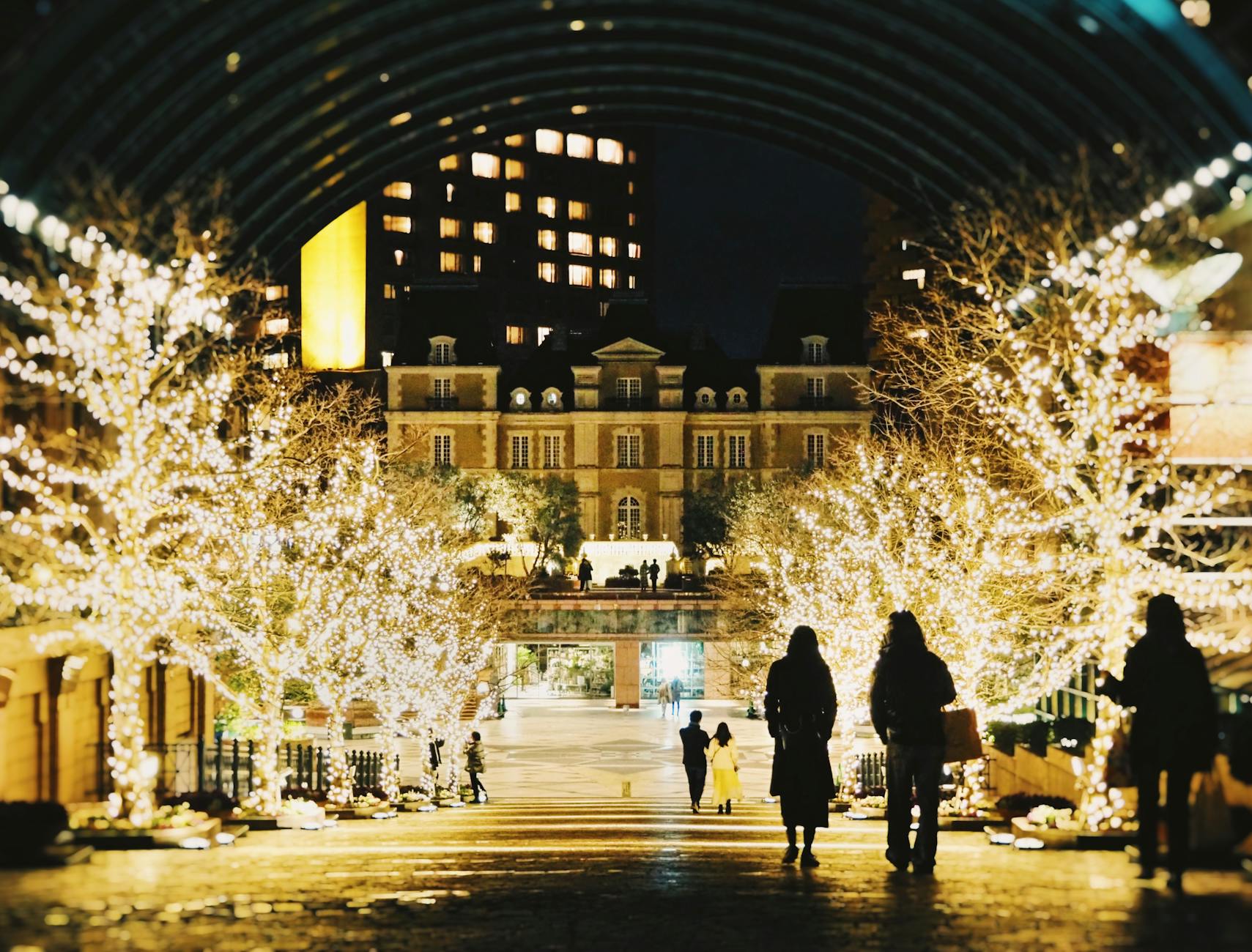
Picture this: You’re walking through Tokyo’s Roppongi district on a December evening. Christmas music plays softly. Millions of LED lights transform the streets into a glowing wonderland. Couples stroll hand-in-hand. The air smells like roasted chestnuts and warm amazake (sweet rice drink). ✨
But something feels… different from Christmas in Vancouver or Toronto, doesn’t it? 🤔
Here’s the secret:
December in Japan is NOT like December in Canada!
While Canada treats December as a religious, family-centered month culminating in Christmas Day, Japan approaches December as a festive, romantic season that builds toward the REAL cultural event: New Year’s (お正月 / Oshōgatsu).
Key cultural differences:
| Canadian December | Japanese December |
| 🎅 Christmas = main event | 🎍 New Year = main event |
| 👨👩👧 Family gatherings on Dec 25 | 💑 Romantic dates on Dec 24-25 |
| 🎁 Gift exchanges among adults | 🍻 Year-end parties (忘年会) |
| 📅 New Year = party night | 🔔 New Year’s Eve = peaceful reflection |
| 🎄 Religious traditions | 🏮 Secular festivities + Shinto/Buddhist rituals |
For Canadian Japanese learners, understanding these December events gives you:
- 🗣️ Cultural context for conversations with Japanese friends
- 📚 Seasonal vocabulary for your studies
- 🎌 Deeper appreciation of Japanese values and traditions
- ✈️ Better preparation if you’re planning a winter trip!
Ready to explore Japan’s winter wonderland? Let’s dive into the 9 most important December events! 🎉
✨ Event #1: Winter Illuminations (イルミネーション) — Japan’s Sparkling Light Shows
What Are Winter Illuminations?
Imagine this: Entire parks, shopping districts, and public spaces transformed into breathtaking LED light displays—think millions of twinkling lights creating tunnels, sculptures, themed worlds, and synchronized projection shows! 🌟
Winter illuminations (イルミネーション) are Japan’s answer to Christmas lights… but on an absolutely MASSIVE scale! 😍
When Do They Happen?
- 📅 Start: Late October to early November
- 📅 Peak season: December
- 📅 End: January to February (some run until March!)
December is the most popular time to visit illuminations because:
- Perfect weather (cold but not freezing)
- Romantic atmosphere for Christmas dates
- Peak tourist season
Must-See Illumination Spots
🗼 Tokyo:
1. Tokyo Midtown (東京ミッドタウン)
- 🎨 Theme changes yearly
- 💡 Sophisticated, artistic light designs
- 🎵 Live music performances
- 📍 Location: Roppongi
- 💰 Free admission!
2. Roppongi Hills (六本木ヒルズ)
- 💙 Famous blue LED “snow & blue” theme
- 🌳 Keyakizaka street illumination (beautiful tree-lined avenue)
- 🛍️ Perfect for shopping + illumination combo
- 📍 Location: Roppongi
3. Shibuya Blue Cave (渋谷青の洞窟)
- 💎 Blue LED tunnel along Shibuya River
- 🚶 Walk-through experience
- 📸 Instagram paradise!
- ⚠️ Warning: VERY crowded on weekends!
4. Yomiuri Land Jewellumination
- 🎢 Theme park + illuminations
- 🎡 Ferris wheel with illumination views
- 👨👩👧👦 Family-friendly
- 💰 Admission fee required
🌸 Kansai Region:
5. Kobe Luminarie (神戸ルミナリエ)
- 🕯️ Memorial illumination (honors 1995 earthquake victims)
- 🇮🇹 Italian-style light arches
- 😢 Emotional, beautiful, meaningful
- 📅 Usually held for ~10 days in early December
- 👥 Draws 3+ million visitors!
6. Osaka Hikari Renaissance (大阪・光の饗宴)
- 🏰 Osaka Castle illuminated
- 🌉 Nakanoshima area light displays
- 🎨 Projection mapping shows
- 🆓 Free!
🌺 Other Regions:
7. Nabana no Sato (なばなの里) — Mie Prefecture
- 🏆 One of Japan’s largest and most famous!
- 💡 8 million LED lights
- 🌸 Themed areas (flower gardens, light tunnels)
- 🎫 Admission fee (~¥2,300)
- ⏰ Worth the trip from Nagoya or Osaka!
8. Sapporo White Illumination (さっぽろホワイトイルミネーション)
- ❄️ Japan’s first-ever illumination event (started 1981!)
- ⛄ Snowy backdrop makes it extra magical
- 🎄 Christmas market atmosphere
- 📍 Odori Park
Essential Vocabulary for Illuminations
| Japanese | Reading | English | Example Sentence |
| イルミネーション | irumineeshon | Illuminations | イルミネーションを見に行きませんか? |
| 点灯式 | tentō-shiki | Lighting ceremony | 今日が点灯式です。 |
| LED | LED / エルイーディー | LED lights | LED で作られています。 |
| 光の祭典 | hikari no saiten | Festival of lights | 光の祭典が始まりました。 |
| 夜景 | yakei | Night view | 夜景がきれいですね! |
| デート | deeto | Date | イルミネーションデートをしました。 |
Cultural Tips for Canadian Visitors
💑 Illuminations = Date Spots
- In Japan, illuminations are considered romantic date destinations
- You’ll see LOTS of couples (especially on Dec 24-25!)
- Going solo is fine, but expect a romantic atmosphere
📸 Photography Tips:
- Most illuminations allow photos
- Tripods often prohibited (too crowded)
- Use your phone’s night mode
- Best time: Right after sunset (5:30-6:30 PM in December)
🚇 Transportation:
- Major illuminations are VERY crowded on weekends
- Go on weekdays if possible
- Plan your train route in advance
- Some locations offer special shuttle buses
👨👩👧 Family-Friendly vs. Date-Focused:
- Family: Yomiuri Land, Nabana no Sato
- Couples: Roppongi Hills, Shibuya Blue Cave
- Both: Tokyo Midtown, Kobe Luminarie
At NihongoKnow.com, we teach seasonal vocabulary like this so Vancouver students can talk about Japanese culture naturally! 🎓✨
🎄 Event #2: Christmas Markets (クリスマスマーケット) — European Vibes in Japan
The Rise of Christmas Markets in Japan
Fun fact: Christmas markets are a relatively NEW tradition in Japan! 🎅
Starting in the early 2000s, Japan began importing the European Christmas market concept—and it exploded in popularity! Now every major city hosts at least one. 🎉
What You’ll Find at Japanese Christmas Markets
🍷 Food & Drinks:
- グリューワイン (glühwein / mulled wine) — warm spiced wine ☕
- ホットチョコレート (hot chocolate)
- ドイツソーセージ (German sausages)
- ローストチキン (roasted chicken)
- チーズフォンデュ (cheese fondue)
- シュトーレン (stollen / German Christmas bread)
🎁 Shopping:
- Handmade ornaments (手作りオーナメント)
- Christmas wreaths (クリスマスリース)
- Candles and home decorations
- German nutcrackers and wooden toys
- Local craft goods
🎶 Entertainment:
- Live music performances (caroling, classical, pop)
- Gospel choirs
- Children’s workshops
- Light shows
Major Christmas Markets in Japan
🗼 Tokyo Area:
1. Tokyo Christmas Market (東京クリスマスマーケット)
- 📍 Location: Hibiya Park (日比谷公園)
- 📅 Dates: Mid-November to late December
- 🎪 Features: Huge German-style pyramid tower
- 🎨 Atmosphere: Most authentic European feel!
2. Yokohama Red Brick Warehouse Market (横浜赤レンガ倉庫)
- 📍 Location: Yokohama waterfront
- 🌊 Seaside views
- 🎡 Often includes ice skating rink
- 📸 Beautiful photo spot!
3. Roppongi Hills Christmas Market
- 📍 Location: Roppongi Hills Arena
- 🛍️ Shopping + market combo
- 💰 Free admission
- 🗼 Tokyo Tower views nearby
🏯 Kansai Region:
4. Osaka Christmas Market (大阪クリスマスマーケット)
- 📍 Location: Umeda Sky Building area
- 🏰 German-themed
- 🍺 Beer and sausages galore!
- 🎄 Giant Christmas tree centerpiece
5. Kyoto Rohmtheater Christmas Market (ロームシアター京都)
- 📍 Location: Near Heian Shrine
- 🌸 Kyoto atmosphere + European market
- 🎨 More refined, artistic vibe
- ☕ Great for cafe-hopping afterward
❄️ Sapporo:
6. Munich Christmas Market in Sapporo (ミュンヘン・クリスマス市)
- 📍 Location: Odori Park
- 🇩🇪 Official partnership with Munich, Germany!
- ⛄ Snowy, authentic winter atmosphere
- 🏆 One of Japan’s best!
Essential Vocabulary for Christmas Markets
| Japanese | Reading | English | Example |
| クリスマスマーケット | kurisumasu maaketto | Christmas market | マーケットに行きましょう! |
| 屋台 | yatai | Food stall | 屋台で食べ物を買いました。 |
| グリューワイン | guryuuwain | Mulled wine | グリューワインを飲みました。 |
| 手作り | tezukuri | Handmade | 手作りのオーナメント |
| 雑貨 | zakka | Miscellaneous goods | かわいい雑貨を買いました。 |
| 出店 | shutten | Shop booth | 出店がたくさんあります。 |
Canadian vs. Japanese Christmas Markets: Key Differences
🇨🇦 Vancouver Christmas Market:
- Strong European immigrant influence (German, Austrian)
- Emphasis on authenticity and tradition
- Major community event (families, friends)
- Long-standing tradition (decades old)
🇯🇵 Japanese Christmas Markets:
- Imported concept (novelty factor!)
- Japanese interpretation of European style
- Date-focused atmosphere (romantic!)
- Relatively recent phenomenon (20 years)
- Often combined with illuminations
Why Japanese people love Christmas markets:
- ✨ Exotic, European atmosphere
- 📸 Instagram-worthy photo opportunities
- 💑 Romantic date destinations
- 🍷 Unique food/drink experiences
- 🎁 Gift shopping in festive environment
At NihongoKnow.com Vancouver classes, we discuss these cultural comparisons so students understand CONTEXT, not just vocabulary! 🌍🎓
🎁 Event #3: Japanese Christmas Traditions — Romantic, Not Religious!
The Biggest Cultural Difference: Christmas in Japan ≠ Christmas in Canada
Let’s be clear:
❌ Christmas in Japan is NOT:
- A family holiday
- A religious observance
- A national holiday (people work!)
- A gift-giving season (for adults)
- Centered around December 25th
✅ Christmas in Japan IS:
- A romantic holiday (like Valentine’s Day!)
- A festive, fun celebration
- Centered around December 24th (Christmas Eve!)
- All about dates, lights, and special dinners
- Commercialized and secular
Think of it as: “Valentine’s Day + pretty lights + special food” 💑✨🍰
The 4 Pillars of Japanese Christmas
🍰 1. Christmas Cake (クリスマスケーキ)
The MOST important Japanese Christmas tradition! 🎂
What it is:
- Fluffy white sponge cake
- Whipped cream frosting
- Fresh strawberries on top
- Often decorated with “Merry Christmas” message
Cultural significance:
- Eating Christmas cake = THE tradition
- Families buy them on Dec 24 or 25
- Convenience stores sell them everywhere!
- Must pre-order from popular bakeries (they sell out!)
Fun fact: The strawberry shortcake Christmas tradition started as a marketing campaign by Japanese cake companies in the 1950s—and it stuck! 🍓
Vocabulary:
- クリスマスケーキ (kurisumasu keeki) — Christmas cake
- ショートケーキ (shooto keeki) — shortcake
- 予約 (yoyaku) — reservation/pre-order
- 「ケーキを予約しましたか?」 — “Did you reserve your cake?”
🍗 2. KFC Christmas Buckets (ケンタッキーのクリスマス)
Yes, this is real. And it’s HUGE. 😂🍗
The phenomenon:
- KFC = Japan’s #1 Christmas food
- 3.6 million Japanese families eat KFC on Christmas!
- Must pre-order weeks in advance or wait in 2-hour lines!
- Special Christmas Party Barrels sell for ¥3,000-5,000
How did this happen?
- 1970s: KFC ran a “Kentucky for Christmas” campaign
- Positioned fried chicken as substitute for turkey (which Japan doesn’t have)
- Brilliant marketing + no existing Christmas tradition = perfect storm! 🌪️
Canadians find this hilarious, but for Japanese people, it’s genuinely a beloved tradition! 🇯🇵❤️🍗
Vocabulary:
- ケンタッキー (kentakkii) — KFC (Kentucky)
- フライドチキン (furaido chikin) — fried chicken
- 予約必須 (yoyaku hissu) — reservation required
- パーティーバーレル (paatii bareru) — party barrel
💑 3. Illumination Dates (イルミネーションデート)
Christmas Eve (Dec 24) is THE date night of the year! 💕
Typical date plan:
- Meet in the evening (6:00 PM)
- Visit illuminations together (Roppongi, Shibuya, etc.)
- Fancy dinner at nice restaurant (reservations essential!)
- Exchange small gifts (for couples)
- Optional: Stay at a hotel (Christmas Eve hotel prices skyrocket!)
Why Dec 24, not Dec 25?
- Dec 25 is a work day!
- Christmas Eve has romantic, anticipatory energy
- Aligns with European tradition of celebrating on the eve
Single people on Christmas?
- Some feel lonely (similar to Valentine’s Day pressure)
- Others have “Christmas parties” with friends
- Increasingly, people are rejecting the “you must have a date” pressure
Vocabulary:
- デート (deeto) — date
- カップル (kappuru) — couple
- 恋人 (koibito) — lover/partner
- イルミネーションデート — illumination date
- 「デートの予定はありますか?」— “Do you have date plans?”
🎶 4. Christmas Music & Atmosphere
Everywhere you go in December:
- 🎵 Christmas songs playing (American + Japanese Christmas pop)
- 🎄 Decorations in stores, train stations, cafes
- 🎅 Santa imagery (but not religious symbolism)
- ✨ Festive, joyful atmosphere
Popular Japanese Christmas songs:
- 恋人がサンタクロース (Koibito ga Santa Claus) — classic 1980s hit
- クリスマス・イブ (Christmas Eve) by Tatsuro Yamashita
- ラストクリスマス (Last Christmas) by Wham! (extremely popular!)
The vibe: Christmas is FUN and FESTIVE, not solemn or religious. 🎉
Things Japanese Christmas Does NOT Have (That Canada Does)
❌ No family gatherings on Dec 25
- Japanese families don’t treat Christmas as family time
- Family time = New Year’s (お正月)
❌ No religious church services
- Only ~1-2% of Japanese are Christian
- Churches may have services, but most people don’t attend
❌ No tradition of gift-giving among adults
- Kids might get gifts
- Couples exchange small presents
- But no “everyone buys everyone gifts” culture
❌ No big Christmas dinner at home
- Going OUT to restaurants is the norm
- Or eating KFC + cake at home
- Not elaborate home-cooked meals
❌ No Christmas Day off work
- December 25 is a regular work day!
- Businesses operate normally
- Only foreign companies might give the day off
Useful Phrases for Christmas Season
🎄 Greetings:
- メリークリスマス! (merii kurisumasu) — Merry Christmas!
- 楽しいクリスマスを! (tanoshii kurisumasu wo!) — Have a fun Christmas!
🎁 Making plans:
- クリスマスの予定は? (kurisumasu no yotei wa?) — What are your Christmas plans?
- ケーキを予約しましたか? (keeki wo yoyaku shimashita ka?) — Did you reserve cake?
- デートの予定はありますか? (deeto no yotei wa arimasu ka?) — Do you have a date planned?
💬 Conversation:
- クリスマスはどう過ごしますか? (kurisumasu wa dou sugoshimasu ka?) — How will you spend Christmas?
- 恋人と過ごします。 (koibito to sugoshimasu) — I’ll spend it with my partner.
- 友達とパーティーをします。 (tomodachi to paatii wo shimasu) — I’ll have a party with friends.
At NihongoKnow.com, we teach cultural context alongside language so Canadian students understand WHY Japanese Christmas feels so different! 🎓🌍
🍻 Event #4: Year-End Parties (忘年会 / ぼうねんかい) — Forget the Year, Celebrate Together! (Continued)
What Happens at a 忘年会?
Typical format:
1. Venue:
- 居酒屋 (izakaya – Japanese pub) — most common!
- レストラン (restaurant) — for fancier gatherings
- カラオケ (karaoke) — for the after-party (二次会 / nijikai)
2. Food & Drink:
- 飲み放題 (nomihodai) — all-you-can-drink (usually 2-3 hours)
- 食べ放題 (tabehodai) — all-you-can-eat (sometimes)
- Course meals (コース料理)
- Endless beer, sake, shochu, and soft drinks
3. Activities:
- Toasts and speeches (乾杯 / kanpai!)
- Eating, drinking, chatting
- Games or bingo (ビンゴ)
- Karaoke performances
- Gift exchanges (sometimes)
- Thank-you speeches to bosses/seniors
4. Duration:
- First party (一次会 / ichijikai): 2-3 hours
- Second party (二次会 / nijikai): Karaoke or bar, 1-2 hours
- Third party (三次会 / sanjikai): For the diehards! 🍻
Cultural Significance
🎌 Why 忘年会 matters in Japanese culture:
1. Hierarchical relationships reset:
- Normally strict workplace hierarchies loosen
- Junior staff can speak more freely
- Bosses show their “human” side
- Creates harmony (和 / wa) for the new year
2. Stress release:
- Japanese work culture is intense
- This is socially acceptable time to let loose
- Drinking is excuse for speaking honestly
- “What’s said at 忘年会 stays at 忘年会”
3. Team bonding:
- Strengthens relationships
- Builds trust for next year
- Shows company/group loyalty
- Networking opportunities
4. Cultural ritual:
- Marks the end of one year
- Prepares mentally for fresh start
- Deeply ingrained tradition (centuries old!)
忘年会 Etiquette & Expectations
If you’re invited to a 忘年会:
✅ DO:
- Attend! (It’s often expected, especially work ones)
- Dress appropriately (business casual unless specified)
- Participate in toasts
- Pour drinks for others (especially seniors)
- Thank the organizers
- Drink moderately (or fake it if you don’t drink)
- Have fun and socialize!
❌ DON’T:
- Skip without good reason (bad impression!)
- Arrive late
- Only talk to people you already know
- Refuse to participate in activities
- Get too drunk (some leeway, but don’t overdo it)
- Complain about the venue/food
- Leave too early (at least stay for 一次会)
Special note: If you can’t drink alcohol, it’s perfectly acceptable! Say:
- お酒が飲めません。(Osake ga nomemasen. – I can’t drink alcohol.)
- Order ウーロン茶 (oolong tea) or other soft drinks
Canadian vs. Japanese Year-End Parties
🇨🇦 Canadian Office Christmas Party:
- Optional attendance (usually)
- Spouses/partners often invited
- Held at hotels or restaurants
- More formal, polite atmosphere
- 1-2 drinks per person average
- Goes home after party
🇯🇵 Japanese 忘年会:
- Attendance expected (social pressure)
- Coworkers only (usually)
- Held at izakayas or restaurants
- Can get quite rowdy/informal
- All-you-can-drink (飲み放題)
- Often continues to 二次会, 三次会
Essential 忘年会 Vocabulary
| Japanese | Reading | English | Usage |
| 忘年会 | bōnenkai | Year-end party | 忘年会に行きますか? |
| 一次会 | ichijikai | First party | 一次会は何時からですか? |
| 二次会 | nijikai | After-party | 二次会はカラオケです。 |
| 飲み放題 | nomihodai | All-you-can-drink | 飲み放題がついています。 |
| 乾杯 | kanpai | Cheers! | 乾杯しましょう! |
| お疲れ様でした | otsukaresama deshita | Thank you for your hard work | 今年もお疲れ様でした。 |
| 締め | shime | Closing/final dish | 締めはラーメンにしよう。 |
| 幹事 | kanji | Organizer | 幹事は誰ですか? |
Useful Phrases
Accepting invitation:
- 参加します! (Sankai shimasu!) – I’ll participate!
- 楽しみにしています。 (Tanoshimi ni shiteimasu.) – I’m looking forward to it.
At the party:
- 今年もお疲れ様でした。 (Kotoshi mo otsukaresama deshita.) – Thank you for your hard work this year.
- 来年もよろしくお願いします。 (Rainen mo yoroshiku onegaishimasu.) – Please continue to treat me well next year.
- 乾杯! (Kanpai!) – Cheers!
Declining (politely):
- 申し訳ございませんが、先約があります。 (Moushiwake gozaimasen ga, senyaku ga arimasu.) – I’m sorry, but I have a prior commitment.
- 体調が悪いので、今回は遠慮させていただきます。 (Taichou ga warui node, konkai wa enryo sasete itadakimasu.) – I’m not feeling well, so I’ll refrain this time.
Pro tip from NihongoKnow.com: Understanding 忘年会 culture is essential for anyone planning to work in Japan or interact with Japanese business culture! 💼🇯🇵
🎌 Event #5: Winter Solstice (冬至 / とうじ) — Yuzu Baths & Pumpkin Traditions
What Is 冬至 (Tōji)?
Date: Around December 21-22 (shortest day/longest night of the year) 🌙
Cultural significance:
- Traditional solar term in East Asian calendar
- Marks the turning point toward longer days
- Associated with health and wellness rituals
- Believed to ward off illness during winter
The Two Main Traditions
🍊 1. Yuzu Bath (柚子湯 / ゆずゆ)
The tradition:
- Float whole yuzu citrus fruits in your bath
- Soak in the aromatic, warm water
- Believed to prevent colds and warm the body
Why yuzu?
- 柚子 (yuzu) sounds like 融通 (yuzuu – flexibility/adaptability)
- 冬至 (touji) sounds like 湯治 (touji – hot spring cure)
- Wordplay creates auspicious meaning!
- Yuzu contains vitamin C (actually does boost immunity)
- The citrus scent is invigorating and relaxing
Where to experience:
- 🏠 At home: Buy yuzu at grocery stores, add to bath
- ♨️ Public baths (銭湯 / sentō): Many offer yuzu baths on tōji
- 🏨 Ryokan and hotels: Special yuzu bath events
Cultural note: This is one of Japan’s most beloved traditional customs—families across the country participate! 🛁✨
🎃 2. Eating Kabocha (かぼちゃ / Pumpkin)
The tradition:
- Eat kabocha (Japanese pumpkin/squash) on winter solstice
- Usually prepared as nimono (simmered dish) or soup
Why kabocha?
- Stored from autumn harvest
- Nutritious (vitamin A, helps fight illness)
- Yellow/orange color = symbolic of sun returning
- Believed to bring good luck
Common preparations:
- かぼちゃの煮物 (kabocha no nimono) – simmered pumpkin
- かぼちゃのスープ (kabocha no suupu) – pumpkin soup
- かぼちゃのいとこ煮 (kabocha no itoko-ni) – pumpkin with adzuki beans
Other Winter Solstice Foods
Foods containing “ん” (n): Traditionally, eating foods with “ん” in the name brings good luck:
- にんじん (ninjin – carrot)
- だいこん (daikon – radish)
- れんこん (renkon – lotus root)
- ぎんなん (ginnan – ginkgo nut)
- きんかん (kinkan – kumquat)
- かんてん (kanten – agar)
- うんどん/うどん (udon – noodles)
Why “ん”? The logic is that “ん” is the last character in Japanese syllabary, representing the cycle completing and beginning anew! 🔄
Experiencing Winter Solstice in Japan
If you’re in Japan:
- Visit a sentō (public bath) on December 21-22
- Look for signs: 本日柚子湯 (Today: Yuzu Bath!)
- Buy yuzu at supermarket (usually sold in bags)
- Try kabocha dishes at restaurants or cook at home
In Vancouver/Canada:
- Japanese grocery stores (Konbiniya, Fujiya) sometimes sell yuzu
- H Mart or T&T may have kabocha
- Draw your own yuzu bath at home!
- Try making kabocha nimono (recipe online)
Essential Vocabulary
| Japanese | Reading | English |
| 冬至 | tōji | Winter solstice |
| 柚子 | yuzu | Yuzu citrus |
| 柚子湯 | yuzuyu | Yuzu bath |
| かぼちゃ | kabocha | Japanese pumpkin |
| 風邪 | kaze | Cold/flu |
| 銭湯 | sentō | Public bath |
| 運 | un | Luck |
Useful Phrases
- 冬至に柚子湯に入りますか? (Tōji ni yuzuyu ni hairimasu ka?) – Will you take a yuzu bath on winter solstice?
- 柚子湯は体が温まります。 (Yuzuyu wa karada ga atatemarimasu.) – Yuzu baths warm up your body.
- かぼちゃを食べると運が良くなります。 (Kabocha wo taberu to un ga yoku narimasu.) – Eating kabocha brings good luck.
At NihongoKnow.com Vancouver classes, we explore these traditional customs so students understand Japanese cultural rituals beyond language! 🎓🛁
🎍 Event #6: New Year Preparations (年末 / ねんまつ) — Getting Ready for Oshōgatsu
Understanding 年末 (Nemmatsu – Year-End)
The last week of December is absolutely critical in Japanese culture! This isn’t just “holiday break”—it’s serious preparation time for the most important holiday of the year: お正月 (Oshōgatsu – New Year). 🎍
Key dates:
- 📅 December 28-30: Main preparation days
- 📅 December 31: 大晦日 (Ōmisoka – New Year’s Eve) – the final push!
The Big Year-End Clean (大掃除 / おおそうじ)
What it is: A thorough, deep-cleaning of the entire house/office to welcome the new year with fresh energy! 🧹✨
Cultural meaning:
- Clean out the old year’s dirt and bad luck
- Purify space for Toshigami (year god) to visit
- Start new year fresh and organized
- Symbolic renewal
What gets cleaned:
- ✅ Every room, top to bottom
- ✅ Windows and curtains
- ✅ Behind furniture
- ✅ Kitchen thoroughly (especially range hood!)
- ✅ Bathrooms
- ✅ Throw out unnecessary items
- ✅ Organize closets
When: Usually December 28-30 (NOT Dec 31—that’s too last-minute!)
Office version:
- Companies also do 大掃除
- All employees participate
- Usually December 28 afternoon
- Everything must be clean for new year!
Vocabulary:
- 大掃除 (oosouji) – big cleaning
- 掃除 (souji) – cleaning
- きれいにする (kirei ni suru) – to make clean
- 「大掃除は終わりましたか?」 – “Have you finished the big cleaning?”
New Year Decorations (正月飾り / しょうがつかざり)
After cleaning, it’s time to decorate! 🎍
1. 門松 (Kadomatsu) – Gate Pine:
- Bamboo and pine arrangements
- Placed at entrance gates/doors
- Symbolize longevity and steadfastness
- Welcome the year god
- Set up: December 28-30
- Do NOT put up on December 29 (number 9 is unlucky!)
- Removed: January 7
2. しめ縄 (Shimenawa) – Sacred Rope:
- Twisted straw rope decoration
- Often with white paper strips (紙垂 / shide)
- Marks sacred, purified space
- Hung above doorways
- Keeps evil spirits out
3. 鏡餅 (Kagami Mochi) – Mirror Rice Cake:
- Two round mochi stacked
- Topped with orange (daidai)
- Placed on home altar or prominent spot
- Offering to gods
- Eaten on January 11 (鏡開き / kagami biraki)
Where to buy decorations:
- Supermarkets (December section)
- Home centers (Tokyu Hands, etc.)
- Flower shops
- 100-yen stores (budget options!)
Year-End Food Shopping (年末の買い物)
December 29-30: Supermarkets are PACKED! 😱🛒
What people buy:
- Ingredients for おせち料理 (osechi – New Year’s food)
- Fresh fish and vegetables
- Mochi (rice cakes)
- Ingredients for 年越しそば (toshikoshi soba – year-crossing noodles)
- Sake and beer for New Year toasts
- Snacks for家族 gathering
Pro tip: Shop early to avoid crowds! Or order online in advance.
Year-End TV Specials
紅白歌合戦 (Kōhaku Uta Gassen) – Red and White Song Battle:
- NHK’s annual music show (since 1951!)
- Airs December 31, evening
- Japan’s most-watched TV program
- Red team (women) vs. White team (men)
- Top artists perform hit songs of the year
- Families watch together while preparing New Year’s Eve soba
Other popular shows:
- お笑い番組 (comedy specials)
- Year-in-review programs
- Celebrity countdown shows
- Period dramas (時代劇)
Sending Year-End Gifts (お歳暮 / おせいぼ)
The tradition: Give gifts to people you’re indebted to—bosses, teachers, mentors, clients, etc.
Typical gifts:
- Beer or sake sets
- Fancy food items (crab, ham, fruit)
- Coffee or tea sets
- Cooking oil sets
- Department store gift boxes
Timing:
- Early December to mid-December
- Delivered by department stores
- Or hand-delivered with formal visit
Similar to: Canadian Christmas gift-giving to colleagues/bosses, but more formal and obligation-based.
Essential Vocabulary
| Japanese | Reading | English |
| 年末 | nemmatsu | Year-end |
| 大掃除 | ōsouji | Big cleaning |
| 正月飾り | shōgatsu kazari | New Year decorations |
| 門松 | kadomatsu | Gate pine decoration |
| しめ縄 | shimenawa | Sacred rope |
| 鏡餅 | kagami mochi | Mirror rice cake |
| お歳暮 | oseibo | Year-end gift |
| 準備 | junbi | Preparation |
Useful Phrases
- 大掃除は大変ですね。 (Ōsouji wa taihen desu ne.) – The big cleaning is tough, isn’t it?
- お正月の準備はできましたか? (Oshōgatsu no junbi wa dekimashita ka?) – Have you finished your New Year preparations?
- 門松を飾りました。 (Kadomatsu wo kazarimashita.) – I decorated with kadomatsu.
- 年末は忙しいです。 (Nemmatsu wa isogashii desu.) – The year-end is busy.
Understanding 年末 preparations helps Canadian learners appreciate how seriously Japanese people take New Year! 🎍✨
🔔 Event #7: New Year’s Eve (大晦日 / おおみそか) — Soba, Bells, and Reflection
What Is 大晦日 (Ōmisoka)?
Date: December 31st
Meaning: The last day of the year—a day of reflection, family, and preparation for the most important holiday: New Year’s Day! 🌅
Cultural significance:
- NOT a party night (like in Canada!)
- Quiet, family-oriented
- Reflective and peaceful
- Focus on transition to new year
The Essential Traditions
🍜 1. Year-Crossing Noodles (年越しそば / としこしそば)
The most important December 31 tradition! 🥢
What it is:
- Eating soba (buckwheat noodles) on New Year’s Eve
- Usually eaten late evening (around 11 PM)
- Hot soba in broth (温かいそば)
- Simple toppings: green onions, tempura, kamaboko
Symbolism:
- Long noodles = long life (longevity wish)
- Easy to cut = cut away last year’s misfortune
- Buckwheat is resilient = strength for new year
Variations:
- かけそば (kake soba) – simple soba in broth
- 天ぷらそば (tempura soba) – with shrimp tempura
- 月見そば (tsukimi soba) – with raw egg (looks like moon)
- きつねそば (kitsune soba) – with fried tofu
Where to eat:
- 🏠 At home (most common!)
- 🍜 Soba restaurants (open late on Dec 31)
- 🏨 Hotels/Ryokan (if staying there)
Important: You MUST finish your soba before midnight! Leaving it unfinished is bad luck. 🕛
Vocabulary:
- 年越しそば (toshikoshi soba) – year-crossing noodles
- そば屋 (soba-ya) – soba restaurant
- 細く長く (hosoku nagaku) – thin and long (idiom for longevity)
🔔 2. Temple Bells (除夜の鐘 / じょやのかね)
At midnight, Buddhist temples ring their bells 108 times. 🔔
The meaning:
- Buddhism teaches humans have 108 earthly desires/defilements (煩悩 / bonnō)
- Each bell ring purifies one desire
- By the 108th ring, you’re cleansed for the new year
- The final ring occurs just after midnight
The experience:
- Solemn, peaceful atmosphere
- People gather at temples
- Some temples let visitors ring the bell
- Often broadcast on TV/radio
Famous temples for 除夜の鐘:
- 知恩院 (Chion-in) – Kyoto (huge bell!)
- 増上寺 (Zōjō-ji) – Tokyo
- 浅草寺 (Sensō-ji) – Tokyo
- Local neighborhood temples everywhere
The sound:
- Deep, resonant gong
- Heard across neighborhoods
- Creates reflective mood
- Marks the transition to new year
Vocabulary:
- 除夜の鐘 (joya no kane) – New Year’s Eve bells
- 煩悩 (bonnō) – earthly desires/defilements
- お寺 (otera) – temple
- 鐘をつく (kane wo tsuku) – to ring the bell
📺 3. Watching Kōhaku Uta Gassen (紅白歌合戦)
As mentioned earlier, this is THE TV event of the year! 📺🎤
Details:
- Airs: December 31, ~7:15 PM to 11:45 PM
- Network: NHK
- Format: Red team (female artists) vs. White team (male artists)
- Performers: Top J-pop artists, enka singers, bands
- Viewers: 40%+ of Japanese households!
Why it matters:
- National ritual—families watch together
- Performance on Kōhaku = career peak for artists
- Nostalgia (song selections review the year)
- Background while preparing year-crossing soba
Modern viewing:
- Older generations watch religiously
- Younger people may watch highlights or skip
- Still culturally significant even if you don’t watch
🏠 4. Family Time at Home
Unlike Canadian New Year’s Eve parties, Japanese New Year’s Eve is quiet family time. 👨👩👧👦
Typical evening:
- Final preparations (last-minute cleaning, food prep)
- Family dinner together
- Watching Kōhaku on TV
- Eating toshikoshi soba around 11 PM
- Listening for temple bells at midnight
- Maybe visiting shrine for 初詣 (hatsumōde) right after midnight
The mood:
- Calm, reflective
- Not rowdy or party-like
- Focus on family bonds
- Anticipation for tomorrow (New Year’s Day!)
Canadian vs. Japanese New Year’s Eve
🇨🇦 Canada (Toronto/Vancouver):
- 🎉 Party night! Celebrations, countdowns
- 🍾 Drinking, going out with friends
- 🎆 Fireworks at midnight
- 📅 Jan 1 = recovery day
- 🎊 Emphasis on fun, excitement, revelry
🇯🇵 Japan:
- 🏠 Quiet family time at home
- 🍜 Eating soba, watching TV
- 🔔 Temple bells, reflection
- 📅 Jan 1 = MOST IMPORTANT day
- 🙏 Emphasis on purification, renewal, gratitude
The philosophy:
- Canada: “Go out with a bang!”
- Japan: “Purify and prepare for the sacred new beginning”
If You’re in Japan on December 31
Do:
- ✅ Eat toshikoshi soba (try it!)
- ✅ Visit a temple to hear the bells
- ✅ Experience the quiet, reflective atmosphere
- ✅ Stay up until midnight (or go to shrine right after!)
Don’t:
- ❌ Expect wild parties (you won’t find them)
- ❌ Go to bars expecting crowds (most close early!)
- ❌ Make loud noise (it’s a solemn night)
- ❌ Miss the cultural significance
Best experience: Stay at a ryokan (traditional inn) or with a Japanese family to experience authentic Ōmisoka! 🏨🎍
Essential Phrases
- 良いお年を! (Yoi otoshi wo!) – Have a good year! (said Dec 31)
- 年越しそばを食べましたか? (Toshikoshi soba wo tabemashita ka?) – Did you eat year-crossing soba?
- 除夜の鐘を聞きに行きます。 (Joya no kane wo kiki ni ikimasu.) – I’m going to hear the New Year’s Eve bells.
- 来年もよろしくお願いします。 (Rainen mo yoroshiku onegaishimasu.) – Please treat me well next year too.
At NihongoKnow.com, we teach these cultural practices so Vancouver students understand Japanese traditions deeply! 🎓🔔
🎍 Event #8: First Shrine Visit of the Year (初詣 / はつもうで) — Technically January, But Starts Dec 31!
What Is 初詣 (Hatsumōde)?
The first shrine or temple visit of the new year! ⛩️✨
Timing:
- Can be done right after midnight on January 1
- Or anytime during the first three days of January (三が日 / san-ga-nichi)
- Most crowded: January 1, 12 AM – 3 AM
Purpose:
- Pray for good fortune in the new year
- Thank gods for last year’s blessings
- Set intentions for the coming year
- Participate in sacred New Year ritual
Why it starts December 31: Many people go to shrines/temples RIGHT AFTER MIDNIGHT—technically making it a December 31 night activity that transitions into January 1! 🕛➡️🎍
The Hatsumōde Experience
What you do:
1. Purification (手水 / chōzu or temizu):
- Wash hands and rinse mouth at purification fountain
- Left hand → right hand → mouth → left hand again
2. Offering:
- Toss coin into offering box (usually ¥5 or ¥50)
- ¥5 (go-en) sounds like 御縁 (goen – good relationship), so it’s lucky!
3. Prayer:
- Bow twice
- Clap twice
- Pray silently
- Bow once
- (At temples, no clapping—just bow, pray, bow)
4. Fortune slip (おみくじ / omikuji):
- Draw random fortune
- 大吉 (daikichi – great blessing) = best!
- 凶 (kyou – curse/bad luck) = worst
- Tie bad fortunes to designated tree/rack (leave bad luck at temple)
- Keep good fortunes in wallet/purse
5. Lucky charms (お守り / omamori):
- Buy protective amulets for the year
- Return last year’s charms (どんど焼き / dondo-yaki – ritual burning)
- Different types: health, love, success, traffic safety, etc.
6. Amazake & Street Food:
- Warm sweet sake (non-alcoholic version available!)
- Takoyaki, yakisoba, taiyaki (fish-shaped cake)
- Food stalls line the approach to popular shrines
Most Popular Hatsumōde Shrines
Tokyo:
- ⛩️ Meiji Shrine (明治神宮) – 3+ million visitors!
- ⛩️ Sensō-ji Temple (浅草寺) – Historic, crowded
- ⛩️ Kawasaki Daishi (川崎大師) – Major temple
Kyoto:
- ⛩️ Fushimi Inari Shrine (伏見稲荷大社) – Thousands of torii gates
- ⛩️ Yasaka Shrine (八坂神社) – Gion district
- ⛩️ Kiyomizu-dera (清水寺) – Hilltop temple
Osaka:
- ⛩️ Sumiyoshi Taisha (住吉大社)
- ⛩️ Osaka Tenmangu (大阪天満宮)
Expect:
- MASSIVE crowds (millions of people!)
- Long wait times (1-2 hours at popular spots)
- Police directing traffic
- Festive, joyful atmosphere
- Cold weather—dress warmly!
Essential Vocabulary
| Japanese | Reading | English |
| 初詣 | hatsumōde | First shrine visit |
| 神社 | jinja | Shinto shrine |
| お寺 | otera | Buddhist temple |
| 参拝 | sanpai | Worship/prayer |
| お守り | omamori | Lucky charm/amulet |
| おみくじ | omikuji | Fortune slip |
| 賽銭 | saisen | Offering money |
| 手水 | chōzu/temizu | Purification water |
| 絵馬 | ema | Wooden wishing plaque |
Useful Phrases
- 初詣に行きましたか? (Hatsumōde ni ikimashita ka?) – Did you go for hatsumōde?
- どこに参拝しますか? (Doko ni sanpai shimasu ka?) – Where will you worship?
- 今年の運勢は何でしたか? (Kotoshi no unsei wa nan deshita ka?) – What was your fortune for this year?
- 大吉を引きました! (Daikichi wo hikimashita!) – I drew a great blessing fortune!
🎁 Event #9: Winter Gift-Giving Season (お歳暮 / おせいぼ) — Obligation Gifts
What Is お歳暮 (Oseibo)?
Year-end gift-giving to express gratitude! 🎁
Different from:
- Canadian Christmas gifts (personal, mutual)
- More like: formal thank-you gifts to people you’re indebted to
Who gives gifts:
- Employees → bosses
- Junior colleagues → senior colleagues
- Students → teachers
- Clients → business partners
- Younger people → elderly relatives
Cultural concept: 恩 (on) – debt of gratitude/obligation
- Japanese culture emphasizes reciprocal relationships
- Gifts acknowledge ongoing indebtedness
- Strengthens social bonds
Timing
📅 Early December to mid-December
- Too early (November) = strange
- Too late (after Dec 20) = rude
- Perfect: First two weeks of December
Delivery:
- Department stores arrange delivery
- Or hand-delivered with formal visit
- Include formal gift card
Typical Oseibo Gifts
Traditional choices:
- 🍺 Beer sets (always popular!)
- 🍶 Sake sets
- 🦀 Seafood (crab, salmon)
- 🥩 Ham or meat sets
- 🍎 Fruit boxes (expensive melons, apples)
- ☕ Coffee or tea sets
- 🫒 Cooking oil sets
- 🧴 Soap or detergent sets
Price range:
- ¥3,000 – ¥5,000 (standard)
- ¥5,000 – ¥10,000 (important relationships)
- ¥10,000+ (very important clients/bosses)
Where to buy:
- Department stores (デパート) – best selection!
- Online (楽天, Amazon Japan)
- Specialty gift shops
- Never discount stores (considered cheap)
The Reciprocal System
If you receive お歳暮:
- Send thank-you card (礼状 / reijō)
- May need to send return gift (especially if unexpected)
- Continue the obligation next year
- Can’t just “accept and forget”!
Summer counterpart: お中元 (Ochūgen)
- Mid-year gifts (July)
- Same people, same concept
- Twice-yearly obligation cycle
Oseibo vs. Canadian Christmas Gifts
🇨🇦 Canadian Gifts:
- Personal, thoughtful
- Based on recipient’s interests
- Mutual exchange (friends, family)
- Focus: joy, love, generosity
🇯🇵 Oseibo:
- Formal, standardized
- Generic “safe” choices
- Hierarchical (upward flow mostly)
- Focus: obligation, gratitude, social maintenance
Declining Tradition?
Reality check:
- Younger Japanese less enthusiastic
- Some see it as burdensome obligation
- Corporate culture still maintains it strongly
- Rural areas more traditional than urban
- But still very much practiced!
Essential Vocabulary
| Japanese | Reading | English |
| お歳暮 | oseibo | Year-end gift |
| お中元 | chūgen | Mid-year gift |
| 贈り物 | okurimono | Gift |
| 礼状 | reijō | Thank-you letter |
| 恩 | on | Debt of gratitude |
| お世話になる | osewa ni naru | To be indebted to |
🎓 Learning Japanese Through December Traditions
At NihongoKnow.com in Vancouver, we believe cultural context makes language learning meaningful! 🌟
Why Understanding December Events Matters
1. Vocabulary in context:
- Learning 忘年会 isn’t just memorizing a word
- It’s understanding Japanese work culture, drinking customs, and social obligations
- Context = deeper retention!
2. Conversation skills:
- “What are your Christmas plans?” hits differently in Japan vs. Canada
- Knowing cultural differences prevents awkwardness
- You can have real, meaningful exchanges
3. Cultural competence:
- Impresses Japanese friends/colleagues
- Shows genuine interest beyond anime/sushi
- Opens doors to deeper relationships
4. Travel preparation:
- If visiting Japan in December, you’ll know what to expect
- Can participate authentically in traditions
- Won’t be confused by cultural differences
Practical Language Learning Tips
Use December vocabulary NOW (even in Canada!):
With Japanese friends:
- 忘年会はいつですか? (When is your year-end party?)
- クリスマスケーキは予約しましたか? (Did you reserve Christmas cake?)
- 大掃除はもう終わりましたか? (Have you finished the big cleaning yet?)
In language exchange:
- Discuss Canadian vs. Japanese December traditions
- Practice seasonal expressions
- Learn cultural nuances through conversation
Through media:
- Watch Japanese Christmas dramas/movies
- Listen to Japanese Christmas songs
- Read Japanese blogs about year-end preparations
Seasonal Vocabulary Sets to Master
December events:
- イルミネーション, クリスマス, 忘年会, 冬至, 年末, 大晦日, 初詣, お歳暮
New Year related:
- お正月, 門松, しめ縄, 鏡餅, おせち料理, 年越しそば, 除夜の鐘
Winter general:
- 冬, 寒い, 雪, イルミネーション, 温かい, こたつ, 鍋
🌟 Final Thoughts: Embracing Japanese December Magic
December in Japan is a beautiful paradox: secular yet spiritual, festive yet reflective, borrowed yet distinctly Japanese. 🎄🎍
What makes it special:
For Canadians learning Japanese, understanding these December traditions gives you:
- 💬 Meaningful conversation topics with Japanese friends
- 🎓 Cultural literacy beyond textbook learning
- ✈️ Confidence if you visit Japan in winter
- 🌍 Appreciation for how cultures create unique celebrations
The core message:
There’s no “right way” to celebrate December—whether you’re in Vancouver enjoying Christmas with family, or in Tokyo experiencing illuminations and year-end parties, what matters is:
- Understanding and respecting different traditions
- Being open to new cultural experiences
- Finding joy in seasonal celebrations
- Connecting with others through shared rituals
Your December learning challenge: 📚
- Learn 10 new December vocabulary words this month
- Try one Japanese December tradition (yuzu bath? Eat soba? Watch Kōhaku?)
- Have a conversation with a Japanese friend about their December plans
- Share what you learned with someone interested in Japanese culture
Remember:
- Language learning is cultural learning
- Traditions connect us across borders
- Every celebration teaches us something about values
- Understanding Japan = understanding ourselves better too
From all of us at NihongoKnow.com: 🎅🎍
良いお年を!
(Yoi otoshi wo! – Have a wonderful year!)
メリークリスマス、そして良いお年をお迎えください!
(Merry Christmas, and please welcome a wonderful new year!)
Come learn with us—where language meets culture, and students become cultural ambassadors! 🌟🇨🇦🇯🇵
© 2025 NihongoKnow.com | Vancouver, BC, Canada Connecting Canadian learners with authentic Japanese language and culture
📍 Local Vancouver classes | 🌐 Online lessons worldwide
🎓 Cultural workshops | 💬 Conversation practice | 📚 JLPT preparationMaking Japanese learning meaningful, one tradition at a time. ✨


