
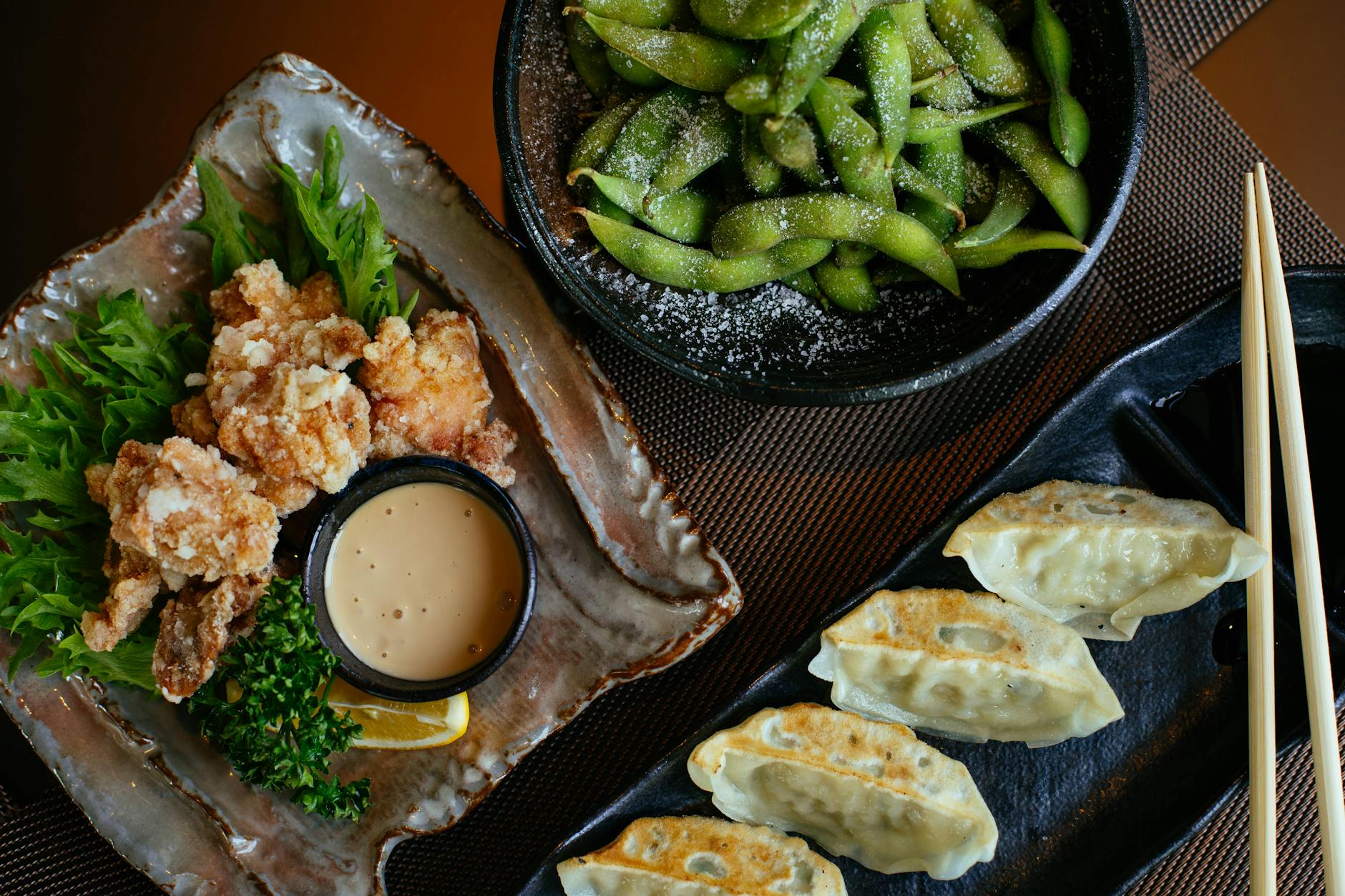
Discover what sushi, tempura, and ramen really mean in Japanese – plus essential food vocabulary that every Japanese learner in Vancouver (and beyond) should know!
Have you ever wondered what your favorite Japanese dishes actually mean in their original language? If you’re learning Japanese in Vancouver, Toronto, or anywhere across North America, understanding food vocabulary is one of the most practical and enjoyable ways to expand your language skills.
Whether you’re preparing for a trip to Japan, trying to impress at your local Japanese restaurant, or simply curious about the culture behind the cuisine, this comprehensive guide will unlock the fascinating stories behind Japan’s most beloved dishes.
- Why Japanese Food Vocabulary Matters for Language Learners
- Sushi (寿司 / すし): More Than Just Raw Fish
- Tempura (天ぷら / てんぷら): A Portuguese-Japanese Fusion Story
- Ramen (ラーメン): The Noodle Revolution
- Beyond the Big Three: Essential Japanese Food Vocabulary
- Learning Strategies for Japanese Food Vocabulary
- Cultural Context: Why Food Matters in Japanese Society
- Practical Applications for Japanese Learners
- Advanced Food Vocabulary for Intermediate Learners
- Regional Japanese Cuisine: Expanding Your Vocabulary
- Building Your Japanese Food Vocabulary: A Structured Approach
- Common Mistakes to Avoid
- Resources for Continued Learning
- Conclusion: Your Journey into Japanese Food Culture
Why Japanese Food Vocabulary Matters for Language Learners
Before we dive into specific dishes, let’s talk about why food vocabulary is so crucial for Japanese learners:
Practical Benefits:
- Restaurant confidence: Order with ease at Japanese restaurants across Vancouver, Seattle, or Tokyo
- Cultural connection: Understand the history and meaning behind what you’re eating
- Conversation starters: Food is a universal topic that makes speaking practice natural and fun
- Memory boost: Food words are often easier to remember because they connect to sensory experiences
For Vancouver Japanese learners specifically: With Vancouver’s incredible Japanese food scene (from Davie Street to Richmond), knowing these terms will enhance every dining experience and help you connect with the local Japanese community.
Sushi (寿司 / すし): More Than Just Raw Fish
What Does “Sushi” Really Mean?
Here’s a surprise: sushi doesn’t actually mean “raw fish”! Let’s break down the etymology:
Sushi (寿司)
- “Su” (酢) = Vinegar
- “Shi” derives from “meshi” (飯) = Rice
The real meaning: Sushi literally translates to “vinegared rice.” The fish, vegetables, or other toppings are secondary to the specially seasoned rice that forms the foundation of every sushi dish.
Historical Context
Sushi originated as a preservation method in Southeast Asia, where fish was fermented with rice. The modern version we know and love developed in Edo (now Tokyo) during the 19th century, when street vendors began serving fresh fish over seasoned rice for quick meals.
Common Types of Sushi Every Japanese Learner Should Know:
Nigiri-zushi (握り寿司)
- Meaning: “Hand-shaped sushi”
- Pronunciation: nee-gee-ree ZOO-shee
- Description: Hand-molded rice topped with fish or seafood
Maki-zushi (巻き寿司)
- Meaning: “Rolled sushi”
- Pronunciation: mah-kee ZOO-shee
- Description: Rice and fillings wrapped in nori (seaweed)
Temaki-zushi (手巻き寿司)
- Meaning: “Hand-rolled sushi”
- Pronunciation: teh-mah-kee ZOO-shee
- Description: Cone-shaped hand rolls
Pro tip for Vancouver learners: When visiting Japanese restaurants in Richmond or downtown Vancouver, try using these terms with the staff – many will appreciate your effort to speak Japanese!
Tempura (天ぷら / てんぷら): A Portuguese-Japanese Fusion Story
The Surprising Origin of Tempura
Tempura (天ぷら)
- Origin: Portuguese word “tempero”
- Original meaning: “Seasoning” or “to season”
- Japanese meaning: Battered and deep-fried vegetables and seafood
The Cultural Exchange Story
Tempura arrived in Japan during the 16th century through Portuguese missionaries and traders. This culinary technique was adapted and perfected by Japanese cooks, becoming one of the country’s most iconic dishes.
What makes tempura special:
- Light, airy batter made with cold water and minimal mixing
- Quick frying at high temperatures
- Served immediately for maximum crispiness
- Often accompanied by tentsuyu (dipping sauce) and grated daikon radish
Popular tempura ingredients:
- Ebi tempura (海老天ぷら): Shrimp tempura
- Yasai tempura (野菜天ぷら): Vegetable tempura
- Kakiage (かき揚げ): Mixed vegetable fritters
Ramen (ラーメン): The Noodle Revolution
From Chinese Roots to Japanese Soul Food
Ramen (ラーメン)
- Origin: Chinese “lāmiàn” (拉麺)
- “La” (拉): Pull
- “Mian” (麺): Noodles
- Original meaning: “Pulled noodles”
The Japanese Evolution
While ramen began as Chinese-style noodles, Japan transformed it into something uniquely its own. Today’s ramen is a complex, rich soup-based dish that varies dramatically by region.
Essential Ramen Types Every Japanese Learner Should Know:
Shoyu Ramen (醤油ラーメン)
- Base: Soy sauce
- Characteristics: Clear, brown broth with a salty, savory flavor
- Origin: Tokyo-style, the oldest form of ramen
Miso Ramen (味噌ラーメン)
- Base: Fermented soybean paste
- Characteristics: Rich, hearty, often with corn and butter toppings
- Origin: Sapporo, Hokkaido
Shio Ramen (塩ラーメン)
- Base: Salt
- Characteristics: Clear, light broth that highlights other ingredients
- Origin: Hakodate, Hokkaido
Tonkotsu Ramen (豚骨ラーメン)
- Base: Pork bone broth
- Characteristics: Creamy, white, extremely rich broth
- Origin: Kyushu region
Vancouver connection: The city’s ramen scene has exploded in recent years, with authentic shops serving all these styles. Knowing these terms will help you navigate menus and understand what you’re ordering!
Beyond the Big Three: Essential Japanese Food Vocabulary
Let’s expand your culinary Japanese vocabulary with other popular dishes you’ll encounter:
Noodle Dishes
Udon (うどん)
- Meaning: Thick wheat noodles
- Texture: Chewy and substantial
- Serving styles: Hot in broth, cold with dipping sauce
Soba (蕎麦)
- Meaning: Buckwheat noodles
- Characteristics: Nutty flavor, served hot or cold
- Cultural note: Eaten on New Year’s Eve for long life
Rice and Grilled Dishes
Onigiri (おにぎり)
- Meaning: Rice ball (握り = to grab/squeeze)
- Description: Triangular or oval rice balls with various fillings
- Perfect for: Quick meals, picnics, convenience store snacks
Yakitori (焼き鳥)
- Meaning: Grilled chicken (焼き = grill, 鳥 = bird)
- Varieties: Different cuts of chicken on skewers
- Social aspect: Popular drinking food (izakaya culture)
Donburi (丼)
- Meaning: Rice bowl dishes
- Examples: Gyudon (beef bowl), Katsudon (pork cutlet bowl)
- Convenience: Complete meal in one bowl
Street Food and Comfort Food
Takoyaki (たこ焼き)
- Meaning: Octopus balls (tako = octopus, yaki = grilled)
- Origin: Osaka specialty
- Description: Round balls of batter with octopus pieces
Okonomiyaki (お好み焼き)
- Meaning: “Grill what you like” (お好み = preference, 焼き = grilled)
- Description: Savory pancake with various ingredients
- Regional variations: Osaka-style vs. Hiroshima-style
Katsu (カツ)
- Origin: Shortened from “cutlet” (English loanword)
- Types: Tonkatsu (pork), chicken katsu
- Preparation: Breaded and deep-fried
Learning Strategies for Japanese Food Vocabulary
For Vancouver Japanese Students:
1. Restaurant Practice Visit Japanese restaurants in different Vancouver neighborhoods:
- Richmond: Authentic family-run establishments
- Robson Street: Modern Japanese dining
- Davie Village: Casual Japanese spots
- Downtown: High-end Japanese cuisine
2. Japanese Grocery Shopping Explore stores like:
- Fujiya (Vancouver & Richmond): A very well-known and popular Japanese grocery store with a wide selection of imported Japanese foods, fresh sushi, bento boxes, and more. They have multiple locations.
- Konbiniya Japan Centre (Vancouver): Living up to its name (“konbini” means convenience store), Konbiniya offers a great range of Japanese snacks, drinks, instant noodles, bentos, and daily essentials. They have a few locations in Vancouver, including a large one downtown.
- Sakuraya (Vancouver): Another excellent Japanese supermarket offering a good variety of Japanese products, often at competitive prices.
- Aburi Market (West Vancouver & Yaletown, Vancouver): While also known for their restaurants (Miku, Minami), Aburi Market offers high-quality Japanese groceries, including premium wagyu beef, fresh seafood (often “Hyoketsu” frozen fish for sashimi quality), and unique Japanese products. They also offer ready-to-eat meals.
- Fukuya Japanese Food (Online/Delivery, Vancouver based): Specializes in high-quality Japanese ingredients, including uni, bluefin tuna, and seasonal fruits, often offering complimentary home delivery for larger orders.
Practice reading labels and asking staff questions in Japanese.
3. Local Japanese Cultural Events Attend Vancouver’s Japanese cultural festivals and food events to practice vocabulary in context.
General Learning Tips:
Memory Techniques:
- Visual association: Connect food images with Japanese characters
- Taste memory: Say the Japanese name while eating the dish
- Story method: Remember the historical origins we discussed
- Practice ordering: Role-play restaurant scenarios
Digital Resources:
- Use apps to practice food vocabulary with spaced repetition
- Watch Japanese cooking shows with subtitles
- Follow Japanese food bloggers and YouTubers
Cultural Context: Why Food Matters in Japanese Society
Understanding Japanese food vocabulary goes beyond just knowing what to order. Food plays a central role in Japanese culture:
Seasonal Awareness (季節感 – kisetsukan) Japanese cuisine emphasizes seasonal ingredients and preparation methods. Learning food vocabulary helps you understand this cultural value.
Social Bonding Sharing meals is crucial in Japanese social and business culture. Knowing food terms helps you participate more meaningfully in these interactions.
Respect and Gratitude The phrases “itadakimasu” (before eating) and “gochisousama” (after eating) reflect the Japanese values of gratitude and respect for food.
Practical Applications for Japanese Learners
For Travelers to Japan:
- Navigate restaurant menus confidently
- Understand food stall options at festivals
- Communicate dietary restrictions or preferences
- Appreciate regional specialties during your travels
For Japanese Language Students:
- Expand vocabulary in a practical, memorable way
- Understand cultural nuances behind the cuisine
- Improve conversation skills through food-related topics
- Connect with Japanese speakers through shared food experiences
For Food Enthusiasts:
- Deepen appreciation for Japanese cuisine
- Understand the stories behind your favorite dishes
- Impress friends and family with your cultural knowledge
- Enhance your dining experiences
Advanced Food Vocabulary for Intermediate Learners
Cooking Methods:
- 焼く (yaku): To grill, roast, or bake
- 煮る (niru): To boil or simmer
- 揚げる (ageru): To deep fry
- 蒸す (musu): To steam
- 炒める (itameru): To stir-fry
Flavor Profiles:
- 甘い (amai): Sweet
- 辛い (karai): Spicy (hot)
- 塩辛い (shiokarai): Salty
- 酸っぱい (suppai): Sour
- 苦い (nigai): Bitter
- うまい (umai): Delicious
Textures:
- やわらかい (yawarakai): Soft
- かたい (katai): Hard
- もちもち (mochi-mochi): Chewy (like mochi)
- さくさく (saku-saku): Crispy
- ふわふわ (fuwa-fuwa): Fluffy
Regional Japanese Cuisine: Expanding Your Vocabulary
Hokkaido Specialties:
- Kaisendon (海鮮丼): Seafood bowl
- Jingisukan (ジンギスカン): Grilled lamb
- Soup curry (スープカレー): Hokkaido-style curry
Kansai Region:
- Kushikatsu (串カツ): Fried skewers
- Kitsune udon (きつねうどん): Udon with sweet fried tofu
- Takoyaki (たこ焼き): Osaka’s famous octopus balls
Kyushu Flavors:
- Mentaiko (明太子): Spicy cod roe
- Champon (ちゃんぽん): Nagasaki noodle soup
- Tonkotsu ramen (豚骨ラーメン): Rich pork bone broth ramen
Building Your Japanese Food Vocabulary: A Structured Approach
Week 1: Master the Basics
Focus on the “Big Three” we covered: sushi, tempura, and ramen. Practice pronunciation and writing.
Week 2: Expand to Rice and Noodles
Add udon, soba, onigiri, and donburi to your vocabulary.
Week 3: Street Food and Snacks
Learn takoyaki, okonomiyaki, yakitori, and other casual foods.
Week 4: Cooking Terms and Descriptions
Practice flavor words, cooking methods, and texture descriptions.
Ongoing Practice:
- Use new vocabulary when dining out
- Try cooking Japanese dishes and narrate in Japanese
- Join online Japanese food communities
- Watch Japanese cooking content
Common Mistakes to Avoid
Pronunciation Pitfalls:
- Sushi: It’s “soo-shee,” not “sue-shee”
- Ramen: Equal emphasis on both syllables: “rah-men”
- Tempura: The ‘u’ is very light: “tem-pu-ra”
Cultural Misunderstandings:
- Sushi doesn’t always include raw fish
- Not all Japanese noodles are ramen
- Tempura isn’t originally Japanese
- Teriyaki as Americans know it is quite different from Japanese preparations
Grammar Notes:
- When counting items, use appropriate counters (e.g., 一本 for long items like yakitori skewers)
- Politeness levels matter when discussing food preferences
- Seasonal greetings often reference food
Resources for Continued Learning
Online Resources:
- Japanese food vocabulary apps
- YouTube channels focused on Japanese cooking
- Online Japanese tutoring platforms
- Japanese food blogs with language learning components
Books and Materials:
- Japanese cooking books with language components
- Food-focused Japanese textbooks
- Cultural guides to Japanese dining etiquette
Conclusion: Your Journey into Japanese Food Culture
Learning Japanese food vocabulary is more than memorizing words – it’s your gateway into understanding Japanese culture, history, and daily life. From the vinegared rice of sushi to the Portuguese-influenced tempura to the Chinese-rooted ramen that became uniquely Japanese, each dish tells a story of cultural exchange and evolution.
Whether you’re a Vancouver local exploring the city’s amazing Japanese food scene, planning a trip to Japan, or simply passionate about both language learning and great food, this vocabulary will serve you well. Remember, language learning is most effective when it’s connected to real experiences and genuine interest.
Your next steps:
- Visit a Japanese restaurant this week and practice using these terms
- Try cooking a Japanese dish while narrating the process in Japanese
- Join a local Japanese language or cultural group
- Start following Japanese food content online
- Plan your vocabulary learning around foods you genuinely enjoy
The world of Japanese cuisine is vast and varied, and we’ve only scratched the surface. But with this foundation, you’re well-equipped to continue exploring, learning, and most importantly, enjoying the incredible intersection of language and food culture.
Ready to dive deeper into Japanese language learning? Visit NihongoKnow.com for more comprehensive guides, local Vancouver resources, and practical tips for mastering Japanese in Canada and beyond!
This comprehensive guide was created to help Japanese language learners in Vancouver, across Canada, and throughout North America connect with Japanese culture through its incredible cuisine. For more Japanese learning resources tailored to your location and needs, visit NihongoKnow.com.